


 105 / 210

[
] 103
C
onfronting
F
amily
P
overty
any special training or previous experience except for having
completed secondary school, passed a psychological exam
and participated in training courses. In practice, service
providers are poor housewives with children who open
childcare centres in their homes. This initiative resulted in
a considerable expansion of early childcare services in the
country. However, it currently faces the challenge of both
consolidating basic quality standards, and guaranteeing that
caregivers under the programme do not become informal
and low-paid female workers themselves.
Uruguay has also significantly increased coverage of child-
care services through the expansion of the Childhood and
Family Care Centres (CAIF) Plan. The plan follows a service
model managed by social organizations but financed entirely
by the state, directed at low-income families. The centres
are for the most part located in areas of high social vulner-
ability. Currently the CAIF Plan serves more than 45,000
children aged between birth and three years, providing inte-
gral quality care which combines educational and nutritional
components, as well as counselling with the families.
Finally, some countries in the region have also imple-
mented legislation that requires companies of a certain
size to provide childcare services. For example, in Chile
this requirement applies to companies with more than 20
employees. Should this figure be reduced, the employer
may stop providing the service (except for mothers whose
children were using the service prior to the change in the
number of employees). Currently, only mothers are entitled
to this benefit, except in cases where the mother dies, in
which case the father is entitled.
While it is encouraging that childcare policies seem to be
entering the public agenda and it is increasingly recognized
that the provision of this care requires the active partici-
pation of the state, for the most part, these advances are
concentrated in a few countries of the region. Much remains
to be done in order to achieve the goal of implementing
public policies that create a greater balance between work
and family life, to provide quality and affordable alternatives
that would meet the specific needs of the most vulnerable
families, and to promote cultural changes with regard to the
division of housework and care between men and women
within households. It is clear that family policies, particu-
larly those aimed at improving work-family balance, relate
directly to social protection and productive potential by
promoting female employment and labour conditions among
workers. These policies are an investment in the future.
Without these types of policies, countries in the region
will continue to bear the high costs of the underutilization
of female employment potential and its direct effects on
economic development and poverty.
Above all these challenges, although the expansion of child-
care helps reduce the burden of unpaid care for women, these
policies largely reinforce traditional notions regarding the
organization of care work within the home, by placing the
responsibility to provide or to find someone to provide care
exclusively on women, especially poor women. Policies and
programmes still rely heavily on an outdated and traditional
family model, with a male breadwinner and female caregiver.
In view of this and the patriarchal patterns that persist in the
family in Latin American society, it is absolutely essential to
develop policies aimed at both men and women, in order to
promote responsibility and redistribution of the burden of
unpaid work and care. Without such an emphasis and incen-
tives, policies will not achieve a better reconciliation of work
and family life, because family responsibilities will continue
to fall disproportionately on women.
0
20
40
60
80
100
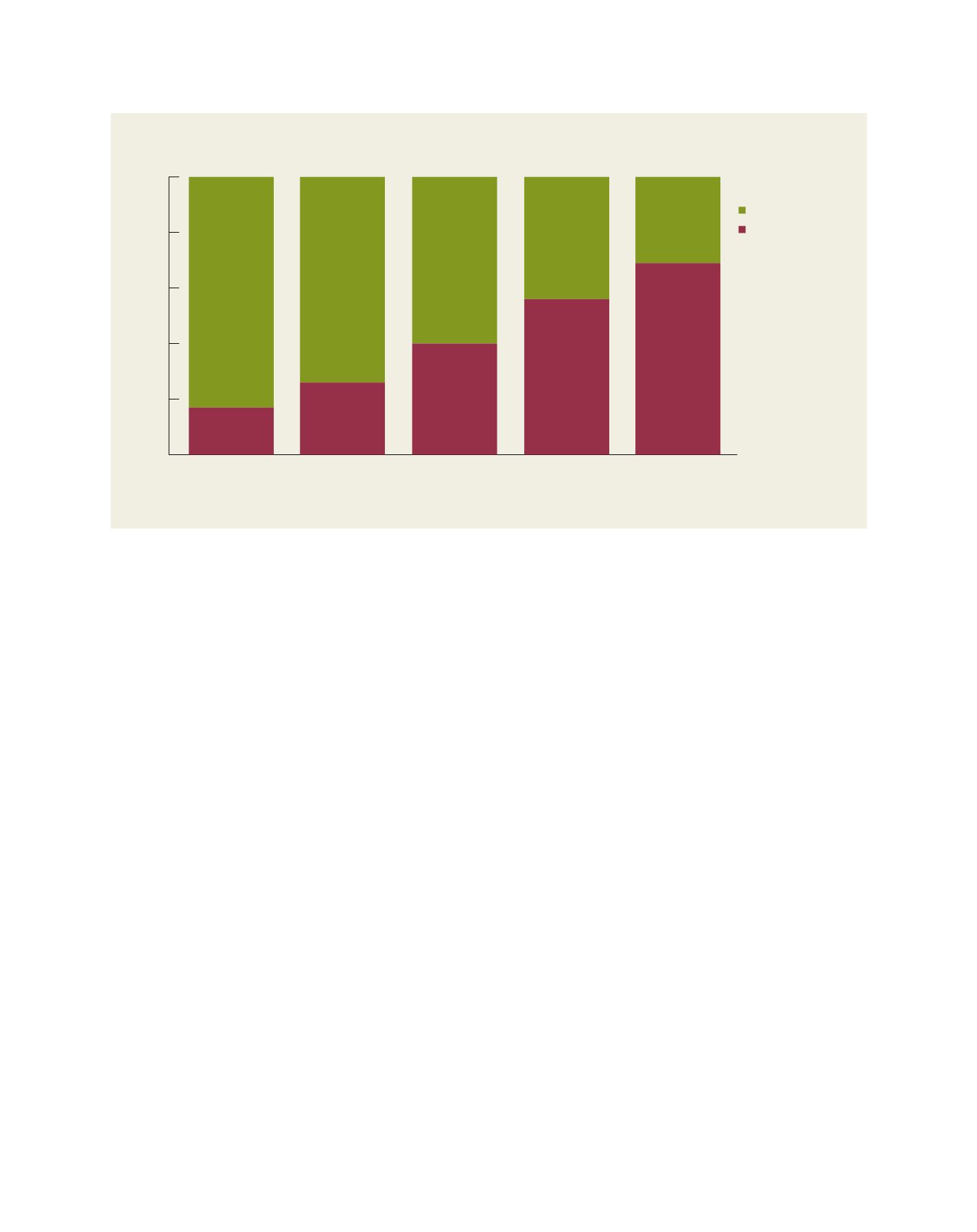
With children (<18)
Without children (<18)
Quintile I
17
83
Quintile II
26
74
Quintile III
40
60
Quintile IV
56
44
Quintile V
69
31
Per cent
Latin America (16 countries): households with and without children (<18 years of age) by income quintile, around 2010
Source: ECLAC, on the basis of tabulations of household surveys in the region