



 169 / 208

Participants in the GreenEvo project are ready to
share their technologies, experience and expertise, with
countries facing environmental problems.
Small and medium-sized enterprises (SMEs) on the green path
SMEs have an important role in the Polish economy,
not only because they make up the vast majority of all
companies, but because they are responsible for a large
part of the GDP. It is essential to ensure they operate
according to environmental standards and contribute
to a green economy.
Financing is of major importance to SMEs, so the focus
should be on ensuring accessible and affordable solutions
for these enterprises. In Poland, SMEs are encouraged
to use the Eco-Management and Audit Scheme manage-
ment system, ISO14000 or corporate social responsibility
standards. This helps them to voluntarily create their
own strategies for environmentally friendly actions and,
at the same time, improve their economic and financial
performance. The role of the Government in this process
is to provide SMEs with relevant information and demon-
strate the potential benefits.
In addition, Poland is also taking action in the following:
• Identifying and evaluating sustainable production
patterns used by SMEs, along with current trends
and development in this area
• Identifying SME sectors with the greatest influence
on the environment and assessing their capabilities
in implementing sustainable production
• Identifying barriers to implementing sustainable
production
• Recognizing competency gaps – including
knowledge and skills – of entrepreneurs and those
employed in SMEs, within a green economy context
• Defining appropriate forms of support, incentives
and proposals, for changes in the law.
Research and investment are vital
The strategies adopted in Poland are supported by a
number of measures as described here, with limited
funds channelled towards stimulating sustainable and
green growth. As the global situation is dynamic, it
is difficult to build the framework so that it is resil-
ient to new challenges within it, but we are doing our
utmost to be flexible and adapt quickly. To maintain
a competitive edge, the emphasis must be on research
and development, investment in human capital, and
sustainable and green-based growth.
We know that Poland has a relatively short history
on the path to green growth. However, the country has
an excellent record in managing the transformation to a
market-based economy and steady growth; switching to
sustainable mode is simply another transformation we
are initiating. With this in mind, coupled with the fact
that our transformation was prompted by the Solidarity
movement and has always been based on the principle
of solidarity, we are ready to share our experience and
hope some countries will find this helpful on their way
towards a green and sustainable economy.
only for investment projects in line with the objectives of the inter-
national environmental agreements. Decisions to finance projects
were made on the basis of their eligibility, after the project effective-
ness had been established. All decisions had to be approved by the
Foundation Council, which was made up of representatives from
Poland and the donor countries.
Given that many developing countries are facing significant prob-
lems in mobilizing financial resources for greening their domestic
economies – while being committed to paying their debts – the
eco-conversion approach is a widely used support tool that is flex-
ible enough to be tailored to specific national circumstances, needs
and priorities. Poland is ready to share its experience to facilitate
progression towards a green economy.
Green Technology Accelerator
The aim of this project is to help Polish green technologies win
foreign market share. The Accelerator (GreenEvo) is designed
to make it easier for companies to find appropriate sources of
co-financing for the projects they undertake. It provides entrepre-
neurs with help to navigate a complex maze of legislation, rules and
regulations, in order to make use of the support available to produc-
ers of environmental solutions.
The project involves carrying out studies of selected international
markets and identifying the needs of countries to which technologies
could be transferred. Companies selected for GreenEvo participate
in a series of specialized training sessions in which they learn how to
manage their products in a competitive environment. Training also
covers the appropriate legal regulations and the technical standards
relevant to the markets they are interested in.
[
] 169
S
ustainability
P
olicies
, P
rogrammes
and
their
E
conomic
I
mpact
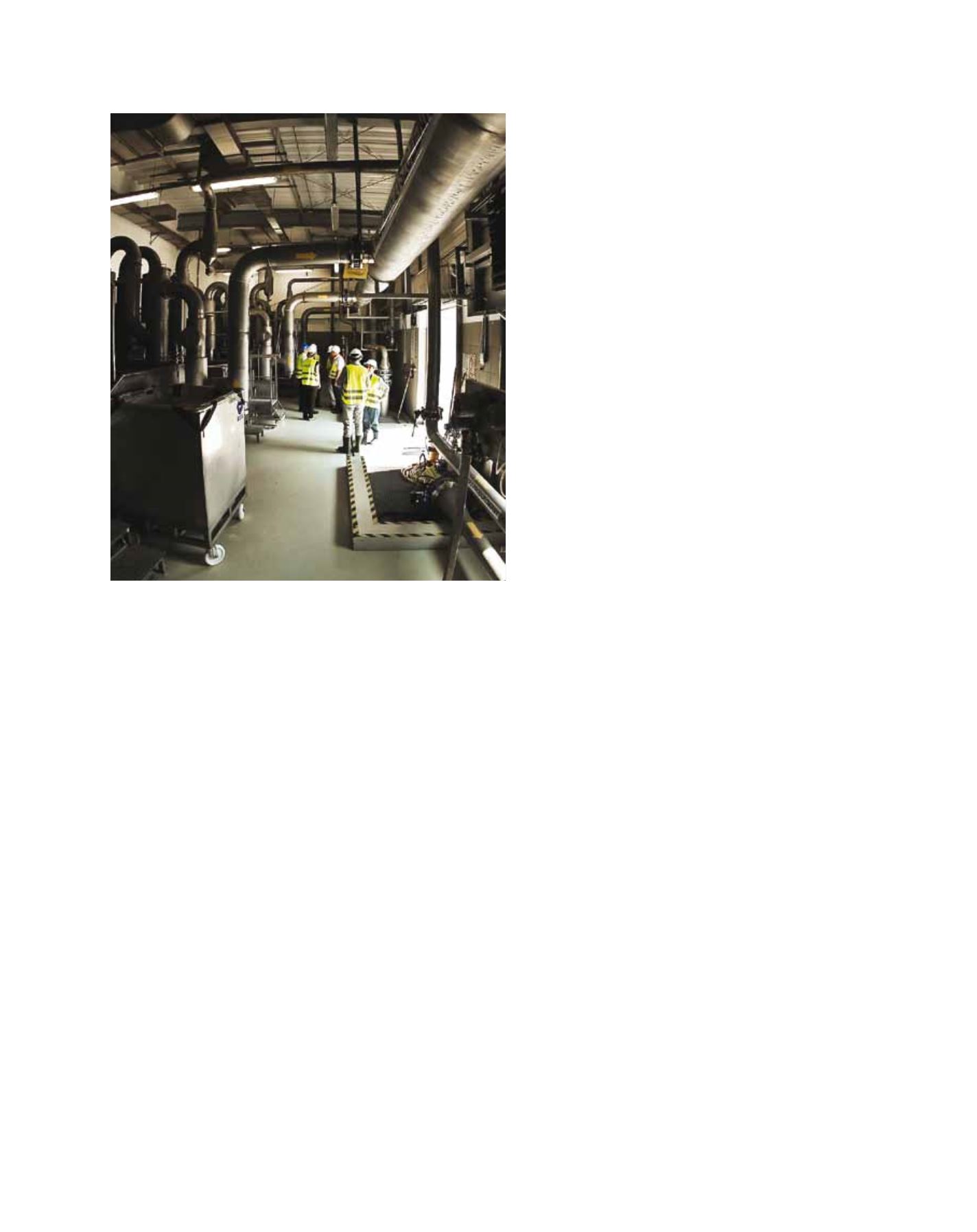
SMEs are encouraged to create strategies for environmentally friendly actions
Image: Ministry of Environment, Poland