



 172 / 208

[
] 172
S
ustainability
P
olicies
, P
rogrammes
and
their
E
conomic
I
mpact
The New Economic Model 2010 includes sustainability as one of
its three pillars for Malaysia to achieve developed country status by
the year 2020.
These policies were considered in spatial terms through the
National Physical Plan in 2005 by establishing a general direction
for physical development and conservation of the entire region of
Peninsular Malaysia. This Plan coordinates and converts the nation’s
sectoral policies into physical dimensions, providing a framework
for planning at regional, state and local levels. Prepared for a period
up to 2020 and due to be reviewed every five years, it clearly deals
with sustainability through policies that are directed towards
conserving natural resources and the environment. It also proposes
an Environmental Sensitive Areas (ESA) instrument, suggesting a
system of ranking to guide the management of ESAs. The Plan also
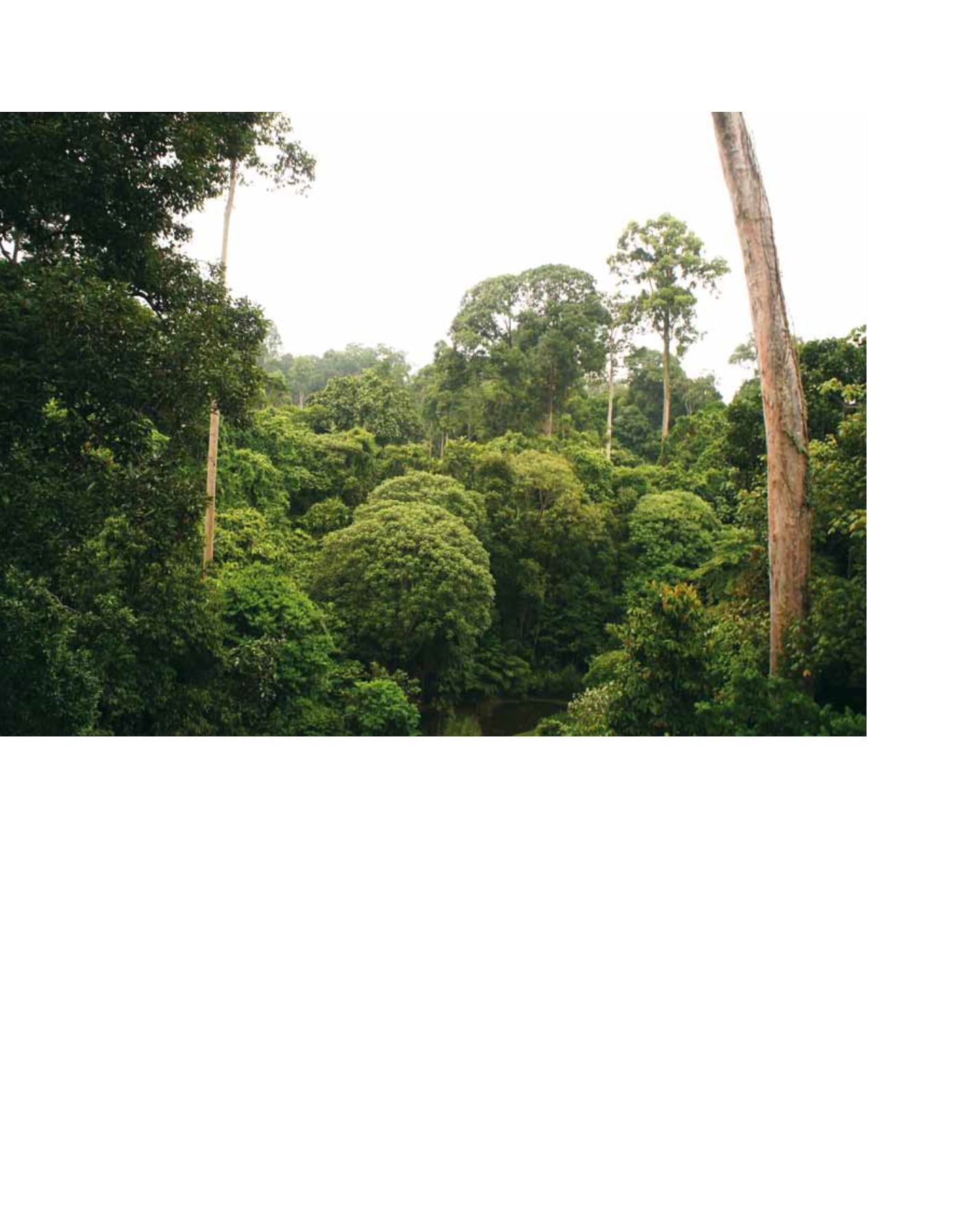
highlights the need to establish a Central Forest Spine to form the
backbone of the ESA network and promotes the protection of biodi-
versity-rich core areas, interconnected by a system of large forest
complexes where ecologically sound land use is practised.
Fiscal and financial incentives have also been made available to
the private sector to encourage incorporation of pro-environment
initiatives. In March 2004, responsibility for the envi-
ronment was vested in a newly established Ministry
of Natural Resources and Environment. By combin-
ing fourteen environment-related portfolios under a
single authority, this effort was part of a comprehen-
sive plan to tackle the fragmentation that characterized
Malaysia’s environment and sustainable development
policy domain. In addition, statistics on the envi-
ronment to enable planning and decision-making
have been compiled and made available through the
Compendium of Environmental Statistics Malaysia by
the Department of Statistics. Together, all these policy
instruments provide the central integrative process
that gives Malaysia a sense of direction and ensures a
concerted effort to achieve strategic goals and objectives
of sustainable development.
Harnessing the green economy
As an upper-middle-income country, Malaysia aims
not only to graduate into the high-income category in
A Central Forest Spine promotes the protection of biodiversity-rich core areas
Image: Yeong Chee Meng Kelvin, Economic Planning Unit, Malaysia