


 121 / 156

[
] 121
emergencies. For example, after the Tsunami around 300 personnel
from government organizations and 300 from NGOs served in the
area, delivering 30 tons of nutrition during the early days of the cata-
strophe and USD41 million donated by Turkish people.
In the wake of Hurricane Katrina USD1.5 million was donated
to the American Red Cross directly and indirectly via Turkish
associations located in the US.
The Eastern earthquake is TEMAD’s latest and biggest aid opera-
tion. Public donations reached more than USD200 million, and since
the beginning of the operation, 25 flights, 12 ships, 66 trucks and
54,224 tons of aid have reached the area. The activities included 604
personnel with 51 SAR, 146 medical, 346 from the Turkish Red
Crescent, and 61 from other professional services. Today, 102 Turkish
citizens and 89 Pakistani contractors are still serving in the area.
TEMAD is now working with the UN-OCHA and other aid
organizations to organize international efforts.
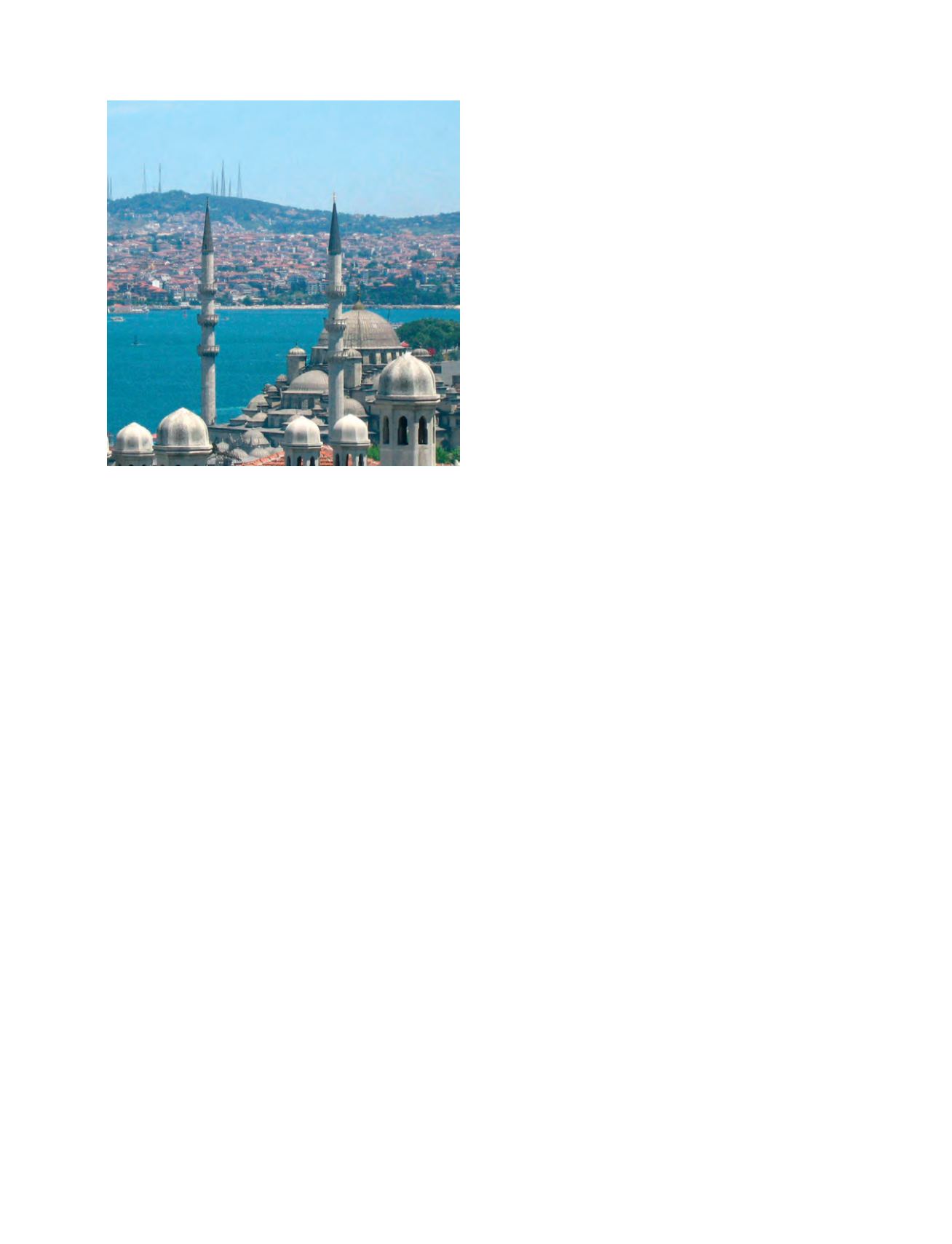
Shaking a megacity: Istanbul
Istanbul has experienced several devastating earthquakes, and
experts believe there is around a 65 per cent probability of a major
earthquake during the next 30 years.
The inevitability of a large earthquake in Istanbul keeps everybody
on constant alert. The seismic risk is best illustrated by quantifying
the effects of an earthquake on the physical and social environment.
Two significant findings emphasize the risk in Istanbul:
• In global terms, Turkey has produced a significant volume of
stock within a limited period. As a result, urban areas are
predominantly low-standard, low-quality, unauthorized envi-
ronments, representing large pools of risk
• The rate of urbanization is levelling and it is probable the
surplus will persist.
4
Unfortunately, in recent decades rapid and uncontrolled urban-
ization, poor land use planning and construction, inadequate
infrastructure and services, and environmental degradation have
prevented sustainable progress towards an earthquake-resilient
Istanbul.
Despite this, a lot of effort has been put into Istanbul, from the
highest political level to the citizen in the street. The first and
most important step was the Earthquake Master Plan for Istanbul,
initiated by the Istanbul Metropolitan Municipality and produced
by a consortium of four leading Turkish universities. The diffi-
culties were not limited to the city being the most populous in the
country. Financial and industrial sites doubled the number of
problematic areas in the event of a major earthquake.
5
The Istanbul Earthquake Master Plan is based on three funda-
mental actions:
•
Contingency plan
– The principal document outlining
methods for managing risks (avoidance, mitigation or sharing)
•
Local action plan
– Containing sub-project activities or
implementation packages
•
Research and activity programmes
– Enabling the sustenance
or completion of the first two actions.
Popular and political support for the Master Plan will be facil-
itated through close cooperation with NGOs, the media and the
economic sector. The Istanbul Earthquake Master Plan is truly an
ambitious risk management plan with few global precedents.
At this point, the UN/ISDR Hyogo Framework Dialogue Final
Summary, comprising a set of simple steps, gains utmost impor-
tance as a guiding document in Istanbul’s case:
1. Ensure that disaster risk reduction is a national and local
priority with a strong institutional basis for implementation
2. Identify, assess and monitor disaster risks and enhance early
warning
3. Use knowledge, innovation and education to build a culture
of safety and resilience at all levels
4. Reduce the underlying risk factors
5. Strengthen disaster preparedness for effective response at
all levels.
The Earthquake Master Plan for Istanbul comprises work in these
tightly linked areas:
• Assessment of the current situation
• Seismic assessment and rehabilitation of existing buildings
• Urban planning
• Legal issues
• Financial issues
• Educational issues
• Social issues
• Risk and disaster management.
Istanbul is currently working toward a post-disaster emergency
response and rescue plan, based on real risks defined by its
geographical information systems (GIS), and addressing methods
of response to the nearest future risk.
The city is also retrofitting the public service buildings project
(pre-disaster activities). In addition, there is a growing, citizen-
led post-disaster Neighbour Disaster Support Project.
6
The most
critical period to save lives after a disaster is the first 72 hours, and
most people are rescued by relatives and neighbours rushing for
help within the first 24 hours, usually with little or no equipment
and training, before the professional responders arrive.
The project’s objectives are to improve the potential for neigh-
bourhood-based rescue during the critical period by providing
training, equipment, and an efficient and sustainable organiza-
tional structure; improving cooperation and coordination with
professional responders; raising disaster awareness in the
community, and informing civilians about disaster risks and
precautions.
Istanbul remains at risk from major earthquakes