



 127 / 156

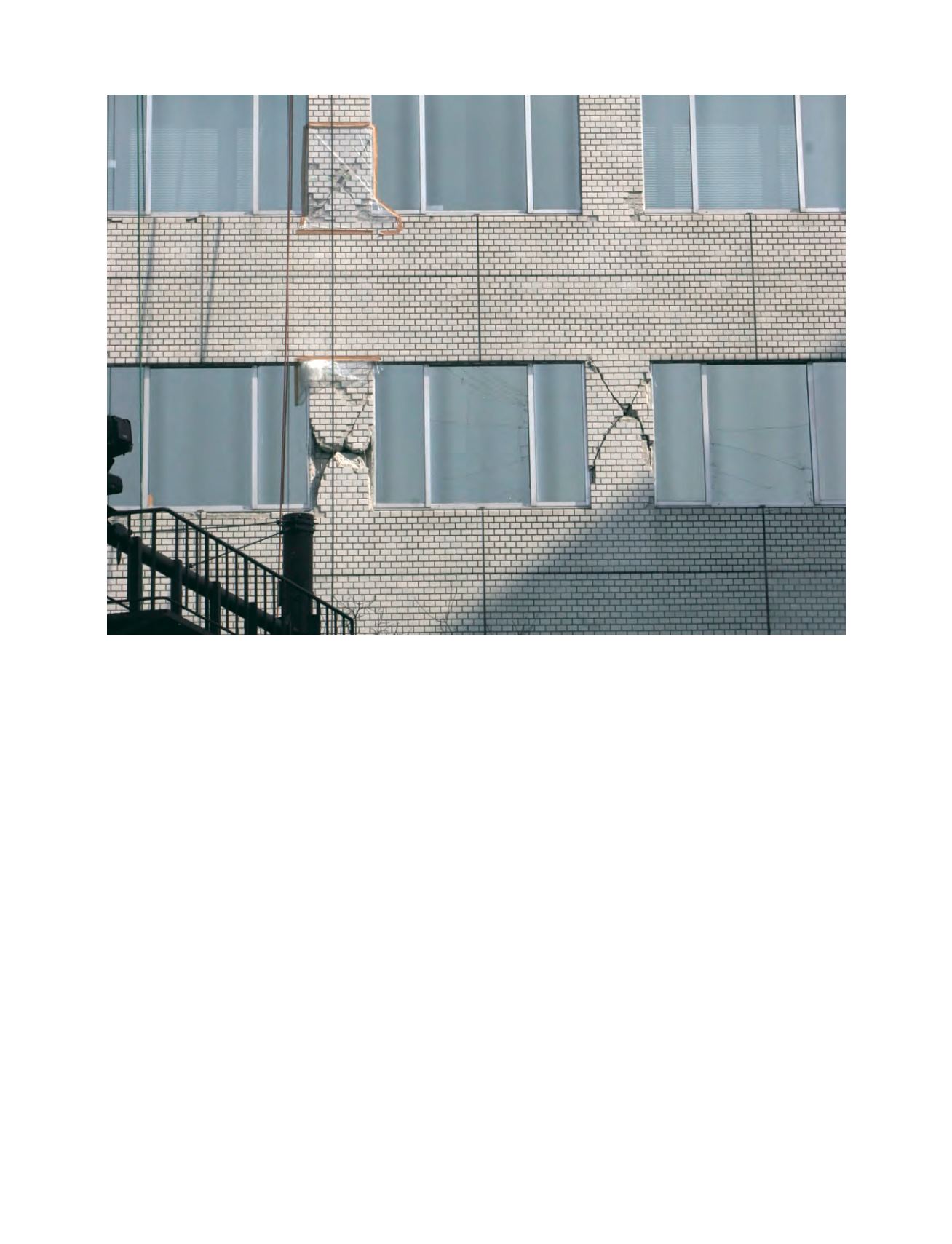
The average idealized Nepalese urban building has two storeys,
with a prayer room and terrace on the third floor. Generally, the
plinth area is not more than 100 square metres per floor.
Therefore, the study focused on those buildings that have no
more than three stories and less than 100 square metres.
The adequacy of the earthquake resistant designs for the rein-
forced cement concrete system was checked using the software.
The load-bearing structures such as brick in cement, brick in
stone and even those using mud mortar, were designed and
checked against the guidelines and directions of the International
Association of Earthquake Engineering and the Nepal National
Building Code.
The main target of this study was to build an earthquake-
resistant element into current construction practices. The main
focus of the project is structural rather than architectural. The
problem, either in reinforced concrete systems or in load-bearing
systems, is in the detailing. Detailing at the beam-column joints,
lapping length and location of the bars, size of columns and
size and spacing of the stirrups, are the main problematic parts
in concrete frame buildings. In load-bearing structures, vertical
bars at corners, horizontal bands and stitches in different levels,
and the connection of wall to wall are the main issues to be
addressed.
The outcomes and lesson learned from this research was
discussed on an ongoing basis among the structural engineers,
construction engineers and engineers of local and central govern-
ment, and within the National Society for Earthquake Technology
(NSET). This study and its results will also be discussed as case
studies among the practising engineers and architects attending
regular training programmes of NSET and its partner organiza-
tions. So far, the discussions and interactions have enabled the
conclusion that the study as well as the set of designs will be
beneficial to all who are directly involved in the construction
industry, to house owners and even to policy-level personnel.
Publication of such documents is essential, but obviously
requires funds.
During the survey work, some house owners did not want to
cooperate either because they misidentified the survey as a check
by the municipality to see whether the house was built accord-
ing to the plan in the building permit, or as a check for earthquake
resistance. In the latter case, the house owner’s fear was that the
tenants would desert it once they know that the building would
not withstand an earthquake. Security concerns were another
reason for non-cooperation. Data collection is not so easy outside
the valley as it is from within due to travel difficulties, technical
difficulties like photocopying, and the amount of time it takes.
The survey and analysis revealed a very wide diversity among the
buildings on structural and other non-structural components
such as sanitary accessories, flooring etc. This required a greater
extent of idealization regarding the ‘typical’ house than what was
considered in the survey design. So, the preparation of a bill of
quantities and specifications is another difficult issue. It is neces-
sary to develop about 100 standard designs for buildings in order
to address all the building typologies of Nepal.
[
] 127
Guidelines have been developed to incorporate seismic safety into all classes of building