


 122 / 156

Post-disaster activities include a disaster response station for
each district project, with 250 ready-to-use containers loaded
with emergency equipment, located in several secure and easy to
reach points of Istanbul. In case of an emergency the equipment
inside will be used by professionals or trained citizens.
Further priorities include projects for micro-zoning, early
warning systems implementation, land use maps and planning
activities, training and preparedness, SAR equipment, the earth-
quake park project, and the Istanbul Seismic Risk Mitigation and
Emergency Planning project (ISMEP).
ISMEP
The ISMEP project is one of several ongoing projects aimed at
mitigating Istanbul’s risk of earthquake, all of which are tightly
linked under the control of central government and TEMAD. The
whole country is working on a better response in a systematic
approach framed by the United Nations and other international
organizations with the support of Turkish people and NGOs.
Within the next 10-20 years, the project aims to transform Istanbul
into a city more resilient to major earthquakes. Its overall goal is to
save lives and reduce the social, economic and financial impacts of
a major earthquake in the region. Specifically, the aim is to improve
Istanbul’s preparedness for a potential earthquake by enhancing its
institutional and technical capacity for disaster management and
emergency response, strengthening critical public facilities and
supporting measures for better enforcement of building codes and
land use plans. The Istanbul Special Provincial Administration will
be the responsible agency on behalf of the Republic of Turkey.
Andrew Vorkink, Country Director for Turkey, has noted that, in
a world where the 1999 Marmara earthquake, the 2004 tsunami,
Hurricane Katrina and the South Asian earthquake cost so much
in terms of lives and livelihoods, emergency preparedness and
hazard risk mitigation are essential government roles: “The good
news is that in Istanbul province, both the municipality and the
governorship, with the support of the central Government, have
demonstrated a high level of commitment and ownership in earth-
quake mitigation efforts, and have initiated several valuable seismic
risk assessment and planning activities,” he said.
“Through the ISMEP project more will be achieved. Key public
facilities will be retrofitted to resist a major earthquake; skills and
technical capacities of the relevant emergency response units will
be strengthened; and enforcement of building codes and land use
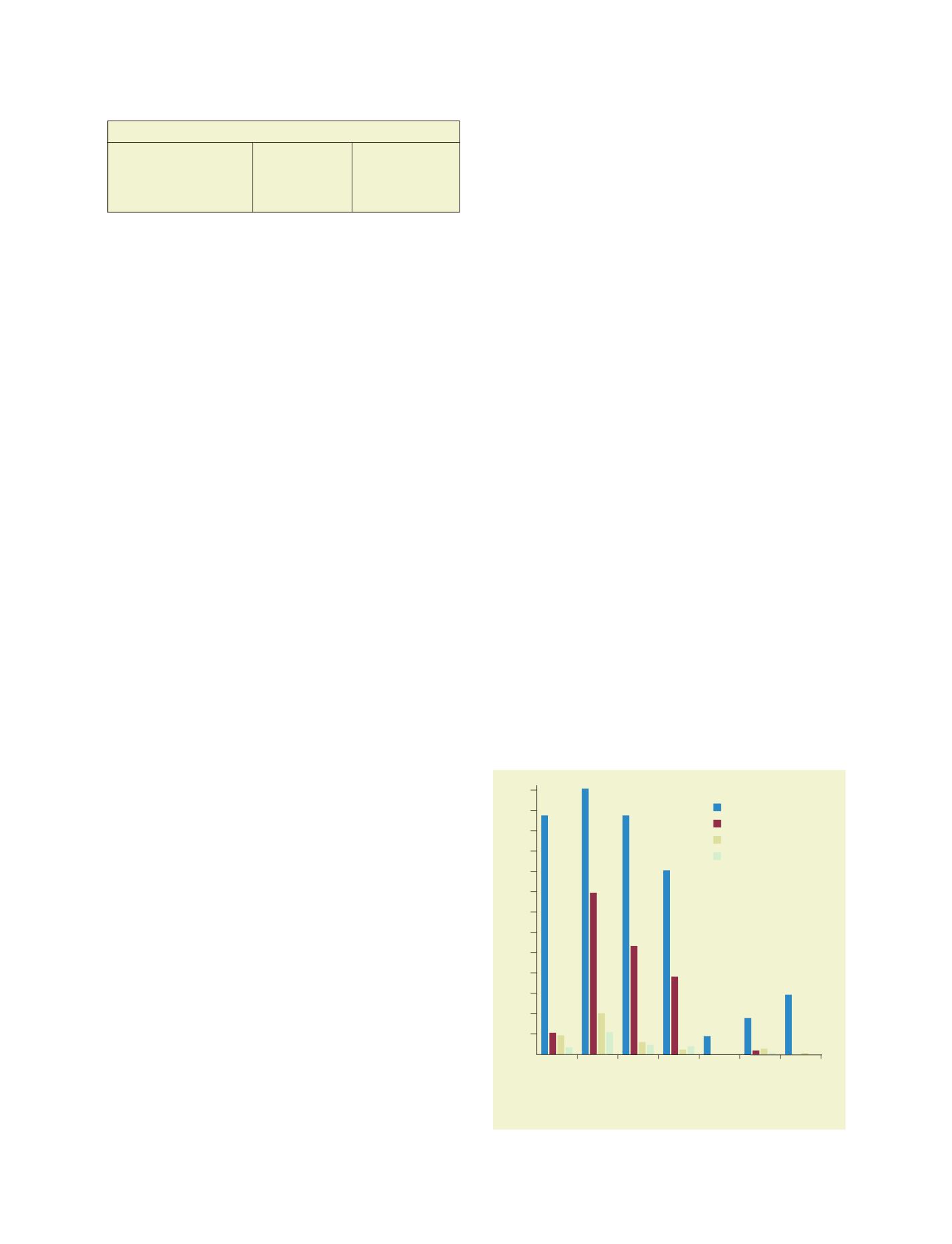
plans will be improved. The project will retrofit around 40 hospi-
tals and 600 schools, and several clinics, dormitories, and
administrative buildings. It will also demolish and rebuild any
building too weak to be retrofitted.”
7
The ISMEP project comprises three main components:
Component A: Enhancing emergency preparedness
. The objective of
this component is to enhance the effectiveness and capacity of
Istanbul’s provincial and municipal public safety organizations to
prepare for, respond to and recover from significant emergencies,
[
] 122
Earthquake probability in Istanbul in the near future
Earthquake with a magnitude of more than seven
2000-2010
32%
+/- 12
2010-2022
50%
+/- 13
2022-2030
62%
+/- 15
Source: T. Persons (USA), A. Barka (Turkey), S. Toda (Japan)
Total number
50
0
100
150
200
250
300
350
400
450
500
1000
2000
3000
No. Blocks
Retrofitting
required
Retrofitting
Ready
Ongoing project
Finished
Need Rebuild
Schools
Hospitals
Public Service Buildings
Dormitories
especially those arising from earthquakes. The component will
support improvement of emergency communications systems;
establishment of an emergency management information system;
strengthening the institutional capacity of the Istanbul
Governorship Disaster Management Centre (AYM); upgrading of
emergency response capacity, and public awareness and training.
Component B: Seismic risk mitigation for public facilities
. To reduce
the risk of future earthquake damage to critical facilities and life-
lines in order to save lives in the event of an earthquake. Key
activities include the retrofitting or reconstruction of priority public
facilities such as hospitals, clinics, schools, administrative build-
ings and infrastructure; risk assessment of lifelines and vital
infrastructure; and risk assessment of cultural heritage buildings.
Component C: Enforcement of building codes
. This component
will support innovative approaches to better enforcing building
codes and compliance with land use plans. Key areas of support
are public awareness campaigns; further development of a regu-
latory framework for enforcement of building codes and land use
plans; volunteer accreditation/training of engineers; streamlining
of building permits issuance procedures, and promoting trans-
parency and accountability in selected district municipalities.
Istanbul’s 15 million inhabitants will benefit from mitigated risk
of an earthquake and the preparation of the city and its population
for a potential disaster. The city’s decreased vulnerability will benefit
the country in economic, financial and social terms, since major
losses to the metropolis would dramatically affect Turkey as a whole.
8
Natural or man-made disasters have similar results when it
comes to effects on our daily lives. When a disaster hits an impor-
tant facility, a chain reaction starts and other metropolitan systems
collapse. But if a multi-dimensional and multi-sectored approach
is taken to preparation activities, the result is a chain of response
that eventually becomes a sustainable development.
Turkey has learned expensive lessons from the 1999 earth-
quakes. Disasters are not confined by national or regional borders,
and countries cannot cope alone. The world is increasingly inter-
dependent, and a spirit of partnership is needed to save human
lives and protect property.
Istanbul retrofitting
Source: Istanbul Governership Emergency Crises Management Center