


 54 / 85

[
] 54
(
inter alia
, information on type of surveillance (active or passive)
and locations of sampling locations)
• Facilitation of timely and effective risk management. This
implies clear warning triggers and targeted reporting.
Interest groups, such as hunters and birdwatchers, can play a vital
role in surveillance programmes and the monitoring and reporting
of outbreaks. Biosecurity needs to be enhanced so to reduce, as much
as possible, the risks associated with contact between poultry and
wild birds (or humans). It is clear, for example, that the strict biose-
curity measures put in place throughout the European Union in
2006, in response to outbreaks in wild birds and poultry, were very
effective in minimizing disease spread between poultry farms. When
the presence or threat of avian influenza appears to warrant it, human
activities causing disturbance to waterbirds and their habitats should
be reduced, as there is a risk of the displaced birds taking the infec-
tion elsewhere; the birds moving to areas where they may become
infected by other sources; and/or inadvertent human or vehicular
transport of the virus to other areas. For similar reasons, destruction
of wetlands and culling of waterbirds should also be avoided.
What conservation scientists are already doing
Significant efforts have already been made to try to understand the role
of wild birds as vectors of HPAI H5N1, as well as the actual and poten-
tial impact of the virus on wild populations of conservation concern.
Many countries have initiated or reinforced surveillance
programmes aimed at determining the prevalence of the
virus in wild bird populations. Existing data on move-
ments of wild birds are being analysed, notably for those
species considered more likely to survive the infection
and to be able to carry the virus over significant
distances. These efforts have already led to some impor-
tant results, but remain insufficient to produce the
detailed assessment of the role of wild birds in the spread
of the virus needed for risk assessment. Preliminary
analysis has also identified about 40 globally threatened
wild bird species, the populations of which could be
severely affected by HPAI H5N1.
15
Separate European
research has identified 26 species potentially at higher
risk of either catching or spreading HPAI H5N1.
16
These
data are now available to help land managers in Europe
respond to future emergencies.
What science needs to explore further about the role
of wild birds
There is a need for targeted international ringing
(banding), colour-marking and satellite telemetry
programmes for waterbird species likely to be at higher
risk of carrying HPAI H5N1, as well as improved inter-
national analysis of existing relevant data. This must
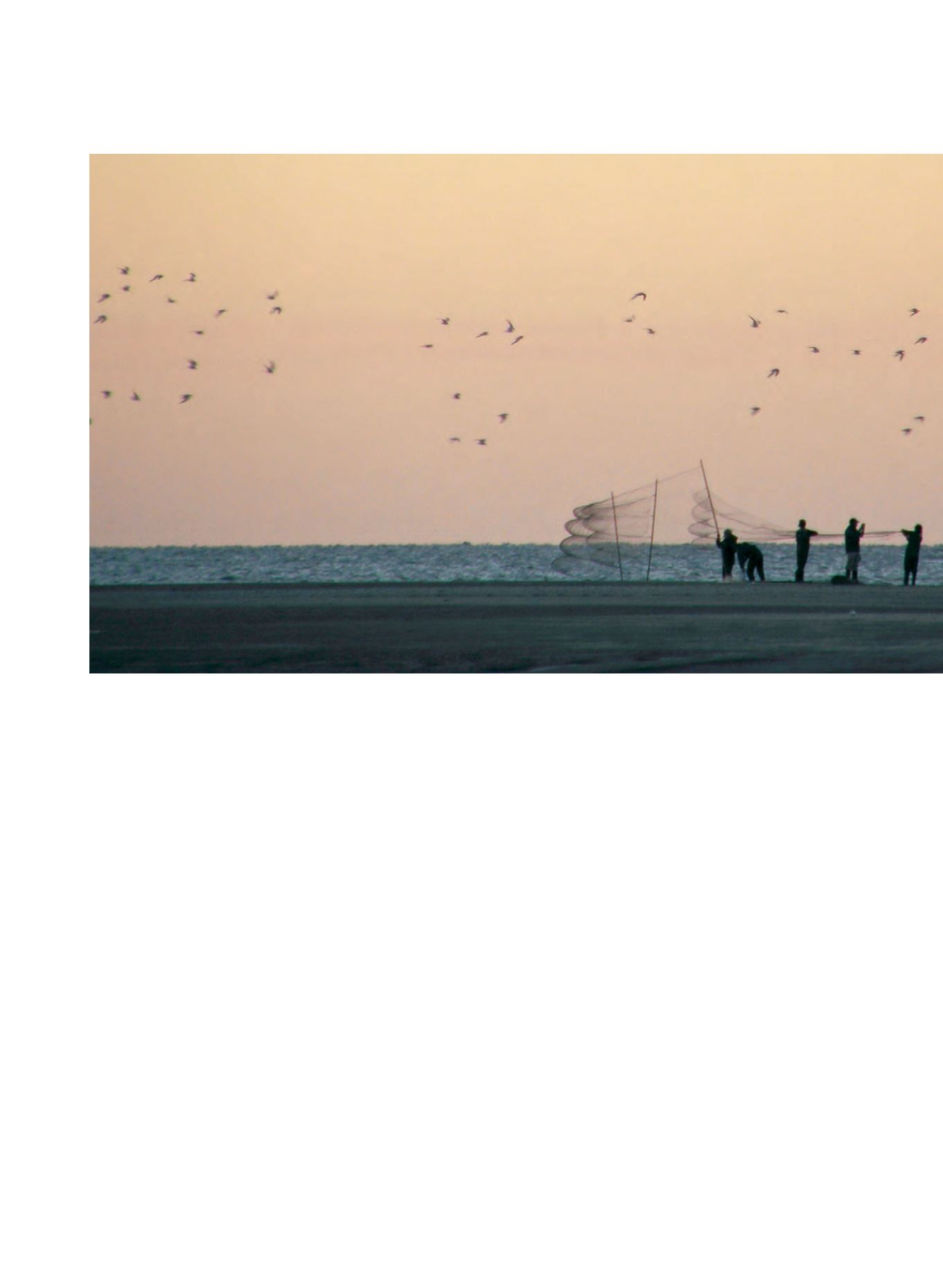
GAINS instructors and students set mist nets during an avian influenza surveillance training course at Punta Rasa, Argentina. Extensive surveillance of live wild
birds has found little evidence of infection in birds on migration or of their ability to carry the virus over long distances