


 60 / 85

[
] 60
The importance of being prepared:
the Austrian way against communicable diseases
Prof. Hubert Hrabcik, MD, Director General of Public Health and CMO, Federal Ministry of Health, Austria
V
iral infection diagnosis and prevention has a long history,
and the pandemic influenza threat, in particular, is chang-
ing the face of this discipline. The stark reality is that,
through three influenza pandemics, between 50 million and 60
million people have lost their lives. In addition, these tragedies
have had profound consequences for social structures.
There is a tremendous difference between the scientific-based possi-
bilities of diagnosis and treatment. In the past, only symptomatic
treatment was possible; but now, it is possible to follow sudden diag-
nosis with efficient methods of treatment. The most important
innovation – the advent of effective antimicrobial agents – combined
with principles and use of immunization, have ushered in a new era.
Let’s not forget the exciting possibilities offered by today’s infor-
mation and communication technologies. Now, information and
early warning really are faster than in previous years, when the spread
of a disease was noticed by new cases first.
In Austria, as far back as the days of the former monar-
chy, it was well known that strong assessment and
observation of communicable diseases are necessary for
the social and economic stability of a country. A special
epidemic law has existed since 1913, which both regu-
lates the responsibilities of the various organizational
levels, and authorizes public health officers to order
public health associated measures.
Now, there is also a political sensibility of these needs.
Since the European Commission (EC) and World Health
Organization (WHO) announced the need of prepared-
ness in the field of pandemic influenza, there has been a
political commitment to work towards this.
In the first working period, Austria’s health service
officials had to decide on the quantitative and qualita-
tive dimensions in which to establish the preparedness
plan.
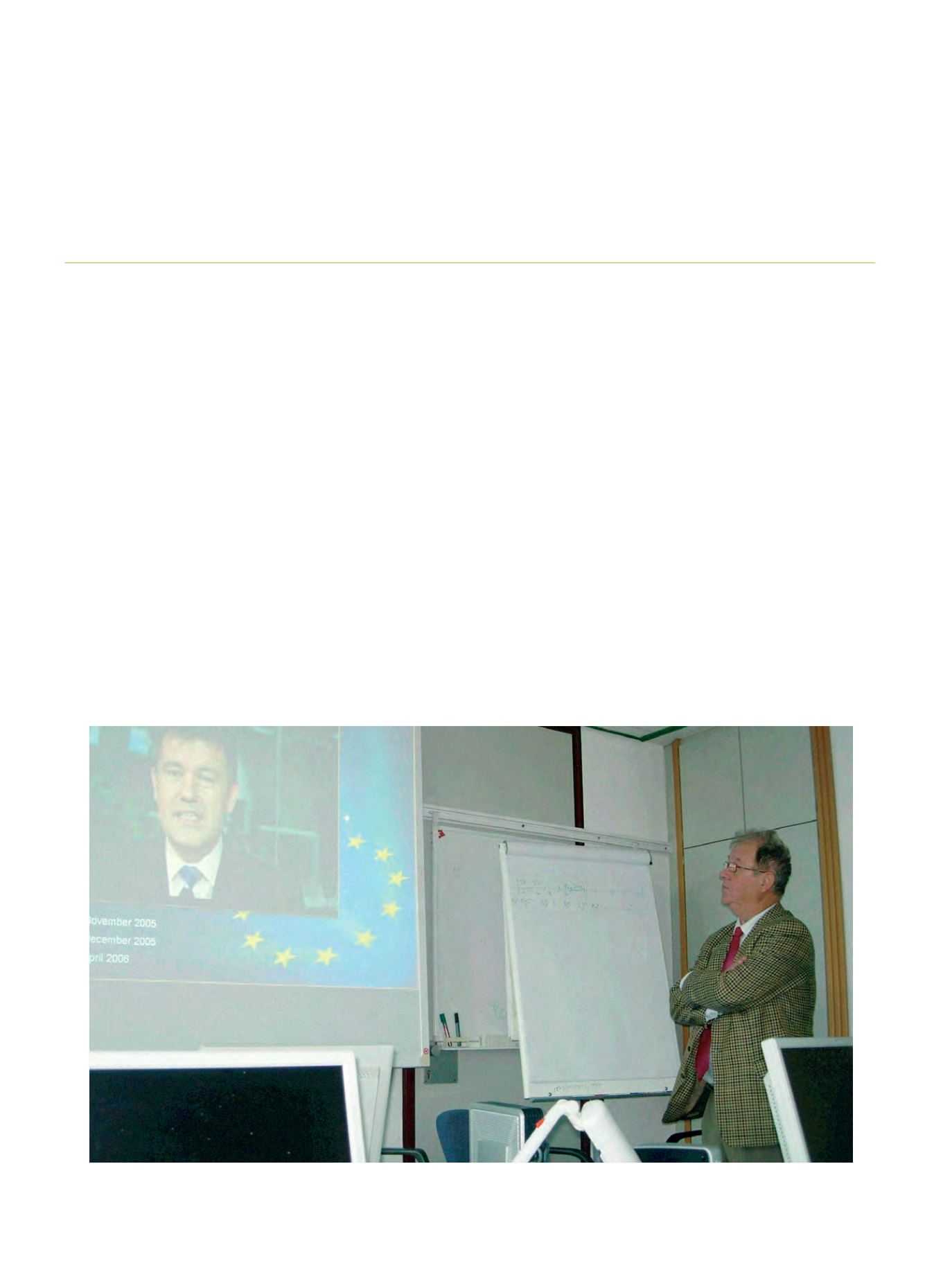
Effective communication is an essential tool in pandemic preparedness
Image: Min. Health Austria