


 64 / 85

[
] 64
Europe and the Croatian pharmaceutical company
Institute of Immunology, a high-tech filling machine for
immunological preparations (flu vaccine) has been
purchased. This bridges the bottleneck in vaccination
production by significantly shortening the time to
prepare vaccinations. The syringe-filling machine has a
maximum capacity of 8,000 syringes per hour, which
amounts to 190,000 fillings in one day so that vaccines
for a million persons can be prepared in five days. Also,
studies have been launched for production of vaccines
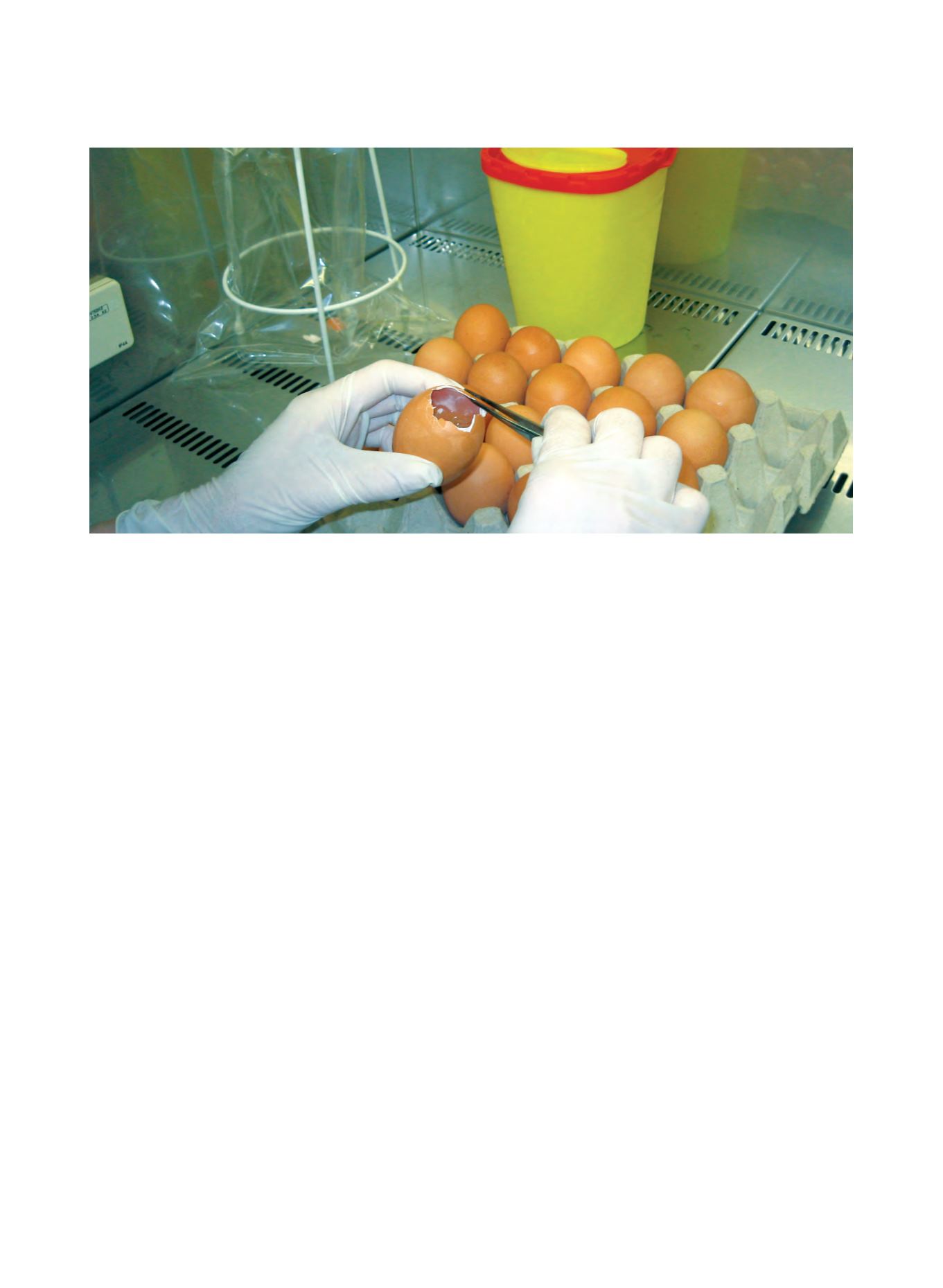
on cell culture. The inactivated flu vaccine is tradition-
ally prepared with embryonated chicken eggs, which
means the producer can face a number of difficulties
such as an insufficient number of eggs and eggs of inad-
equate quality in the summer season. In the case of a
pandemic when several hundred extra doses are needed,
this is a major issue.
MRC-5 and Vero (WHO) are cell lines that WHO has
approved for production of vaccines for human use. The
Institute of Immunology is currently working on opti-
mizing Vero cell growth in a bioreactor, the procedure of
producing the vaccine itself and the selection of the virus
of a high titre. Preliminary studies on Vero cells as a
substrate for influenza vaccine production in Croatia have
shown that the flu virus strains recommended for vaccine
in the last three seasons are replicated best in cell culture
and the achieved titre is comparable with those obtained
when inoculating embryonated eggs. In 2009 the plan is
to resolve remaining issues with analytical methods and
process flow, to optimize parameters, to finish small-scale
production and to make progress with documentation
(standard operating procedures and so on).
Secondly, a great deal of effort has been put into the
active education of health workers who deal with vacci-
conduct public health services with the goal of lessening medical and
economic losses is vaccination.
Survey data shows that the vaccination dose per capita in Croatia
is 14.6 per cent and for target groups it is over 50 per cent. Based on
WHO’s recommendation, the goal is to cover 75 per cent of target
groups by 2010. For the majority of the population for which vacci-
nation is recommended, 650,000 free-of-charge vaccine doses are
ensured by the Ministry of Health and Social Welfare and the
Croatian Health Insurance Institute. Smaller numbers of vaccines by
other producers are also available on the open market, which
amounts to approximately 50,000 doses.
Vaccination is particularly recommended to persons at an increased
risk of complication, those in close contact with risk groups, and health
workers. Aside from persons above the age of 65 years, those of all
ages (older than six months) suffering from diabetes, asthma, malig-
nant diseases, chronic diseases, pulmonary and renal diseases, anaemia
and a weakened immune system also fall under the risk group category.
Making an immunization strategy decision and recommending the
size of a vaccination campaign is one of NCIP’s first responsibilities
in the case of a pandemic. Until the emergence of a new influenza
virus subtype with a pandemic potential, no reliable prediction can
be made regarding what other population categories could consti-
tute risk groups for influenza pandemic complications and death.
Health workers are essential personnel in the case of pandemic.
Therefore, depending on the size of vaccine supply, health workers
should come next to the priority group in receiving the vaccine.
Services vital to the functioning of the state should also be covered
by the vaccination, but it would be optimal for the majority of the
population to be vaccinated.
In the sense of heightening vaccination coverage, a proactive
approach with multidisciplinary activities has been taken. The first
step in heightening vaccine coverage has been to fulfil the goal of
having faster availability of vaccines during times of seasonal and
also pandemic influenza. In cooperation with vaccine producers from
Harvesting of influenza viruses from embryonated chicken eggs
Image: Vladimir Drazenovic