


 69 / 85

[
] 69
HIV/Aids Vaccine Research –
how many more false dawns?
Dr Muhammad Ali Dhansay, Vice-President, Research, South African Medical Research Council
H
IV remains a global health problem of unprecedented
dimensions. Unknown 25 years ago, HIV has already
caused an estimated 25 million deaths worldwide and
has generated profound demographic changes in the most
heavily affected countries. Sub-Saharan Africa remains the
region most heavily affected by HIV, accounting for 67 per cent
of all people living with HIV and for 75 per cent of Aids deaths
in 2007.
1
Globally, there were an estimated 33 million people living with HIV
in 2007. The annual number of new HIV infections declined from
three million in 2001 to 2.7 million in 2007. Overall, two million
people died due to Aids in 2007, compared with an estimated 1.7
million in 2001. Southern Africa continues to bear a dispropor-
tionate share of the global burden of HIV: 35 per cent of HIV
infections and 38 per cent of Aids deaths in 2007 occurred in that
sub-region.
Women account for half of all people living with HIV worldwide,
and nearly 60 per cent of HIV infections in sub-Saharan Africa. Young
people aged 15-24 account for an estimated 45 per cent of new HIV
infections worldwide. An estimated 370,000 children younger than
15 years became infected with HIV in 2007. Globally, the number of
children younger than 15 years living with HIV increased from 1.6
million in 2001 to two million in 2007. Almost 90 per cent live in
sub-Saharan Africa.
Sub-Saharan Africa’s epidemics vary significantly from
country to country in both scale and scope. Adult national
HIV prevalence is below two per cent in several countries
of west and central Africa, as well as in the horn of Africa,
but in 2007 it exceeded 15 per cent in seven southern
African countries (Botswana, Lesotho, Namibia, South
Africa, Swaziland, Zambia and Zimbabwe), and was above
five per cent in seven other countries, mostly in central
and east Africa (Cameroon, the Central African Republic,
Gabon, Malawi, Mozambique, Uganda and the United
Republic of Tanzania).
The estimated 5.7 million South Africans living with
HIV in 2007 make this the largest HIV epidemic in the
world. Meanwhile, the 26 per cent HIV prevalence found
in adults in Swaziland in 2006 is the highest prevalence
ever documented in a national population-based survey
anywhere in the world.
2
Despite increasing access to highly active antiretrovi-
ral therapy and community-based prevention initiatives,
over the past decade at least 40,000 Americans have
become HIV-infected each year. The Aids epidemic in
the US is increasingly affecting African Americans, who
comprise more than half of the new infections while
constituting less than 15 per cent of the US population.
The response
Since the start of the global response to the HIV
epidemic, prevention has been overshadowed by treat-
ment. “We cannot treat our way out of this pandemic.
For every two patients placed on antiretroviral drugs
during 2007, five new HIV infections occurred. A
renewed and revitalized movement for HIV prevention
is now required,” said an article in the Lancet. The reality
is that the pandemic will not be defeated without effec-
tive, multiple prevention strategies – biomedical,
behavioural, and structural interventions. The empha-
sis on prevention is an attempt to address the 2.5 million
new HIV infections every year, together with the long-
term consequences for children and communities. A safe
and effective HIV vaccine would be an enormously valu-
able tool in the campaign to stop the spread of HIV.
3
HIV vaccines
The development of an efficacious HIV vaccine is one
of the world’s greatest public health challenges. The
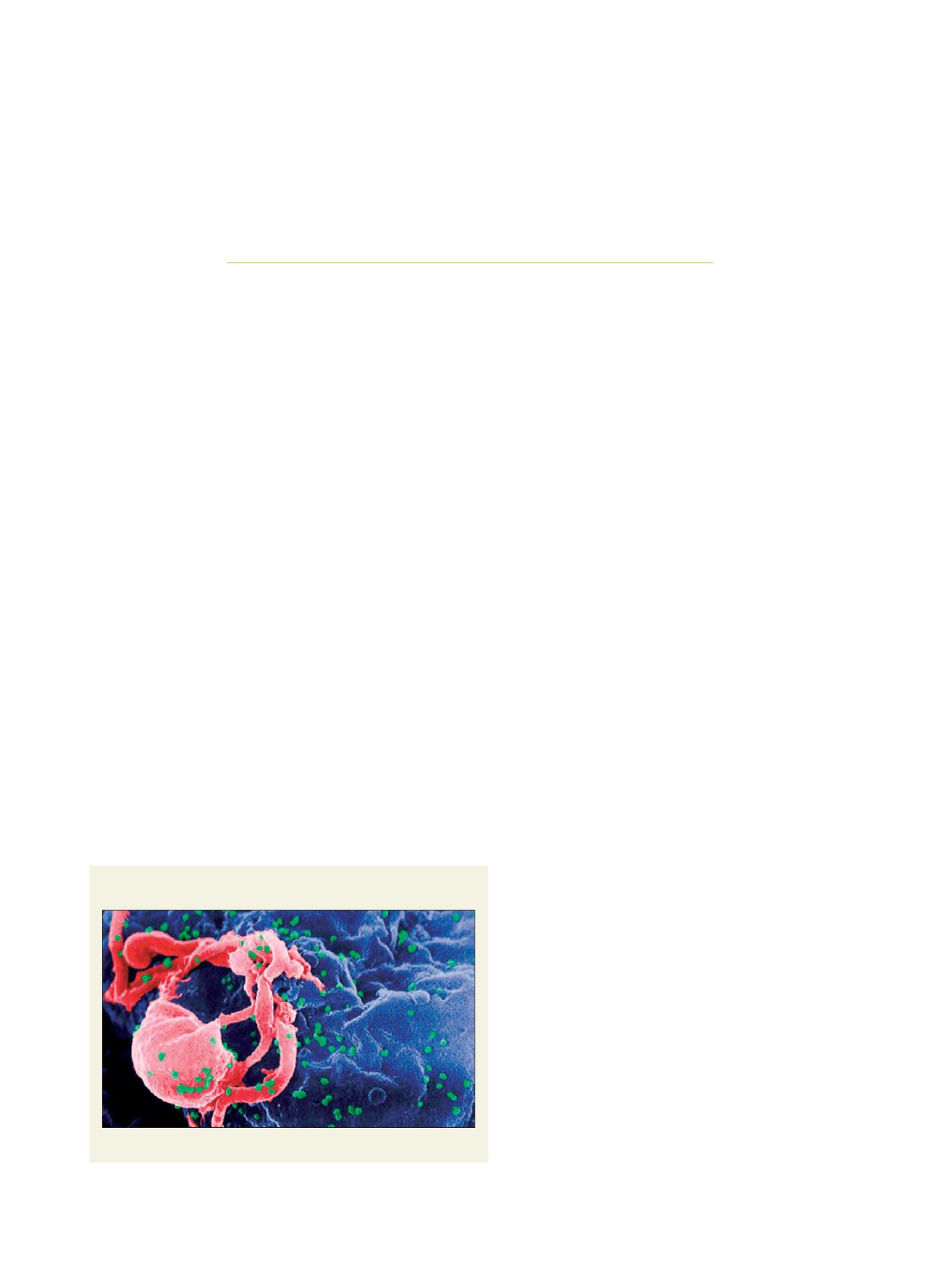
Scanning electron micrograph of HIV-1 budding
from a cultured lymphocyte
HIV has caused an estimated 25 million deaths worldwide
Source: Cynthia Goldsmith, Centers for Disease Control and Prevention