


 73 / 85

[
] 73
with the problem at local level. But the major national
concerted effort took place in 2004 when the
Government asked the NBHW to develop a national
plan, which was delivered in early 2005. This planning
process and the spread of H5N1 over the world showed
that much more needed to be done before Sweden would
have an acceptable capacity to deal with a pandemic.
With a more detailed mission from the Government and
some extra funds the NBWH could start a more coordi-
nated effort to improve pandemic preparedness.
The planning has moved ahead in four major areas.
The first has been to ensure the availability of medical
measures that could be used to alleviate the effects of a
pandemic – mainly vaccine, antiviral drugs and antibi-
otics. In spite of the counties having the responsibility
to deliver healthcare, it was deemed necessary for the
national state to take a responsibility in these areas to
ensure an optimal preparedness. Early in the process it
was unclear what would be the best strategy to ensure
vaccine supply and a rather big effort was made to inves-
tigate if a national or Nordic production facility should
be developed. However, when the big international
manufacturers quickly improved global production, an
advance purchase agreement was signed instead.
National stockpiles of antivirals and antibiotics were
purchased in an effort to ensure a variety of drugs would
be available whenever possible to deal with future
changes in resistance among viruses and bacteria.
Recently the logistics of bringing these products to the
people who need them during a pandemic has been
society. The effect of this might be worse than in previous pandemics
since many functions these days are manned by far fewer people than
in the past. The consequence is that many, if not most parts of society
need to plan for a pandemic, and especially how to deal with a loss of
manpower.
Another difference with the past in Sweden is that the number of
hospital beds and staff is less now than in the past, in spite of a larger
population. Hospitals need to plan carefully for an increased demand
for healthcare, especially since they might also lose manpower.
A third important aspect is that communication will be perhaps the
most important task of the national actors. In today’s world both the
general public and many other agencies will have huge requirements
for information about the pandemic and about how to act in their
own individual situation. Failing to communicate relevant informa-
tion in a timely and trustworthy way could harm the relations between
the public and several supporting functions of society, and worse,
could hinder the management of the outbreak. Once a crisis such as
this is underway, there would be little time for preparation and coor-
dination. Therefore, national agencies need to plan well in advance
for strategies and action to meet the demands for communication.
Finally, a pandemic will be an international concern and collabo-
ration between countries and with international agencies will be an
important task. This will present an opportunity to share good prac-
tices about how to deal with the pandemic and thereby increase the
possibilities for effective action. However, it will also mean that
adequate resources must be allocated for this collaboration.
Planning activities so far and in the future
Planning for a pandemic in Sweden had taken place over the years,
and plans did already exist in many of the counties on how to deal
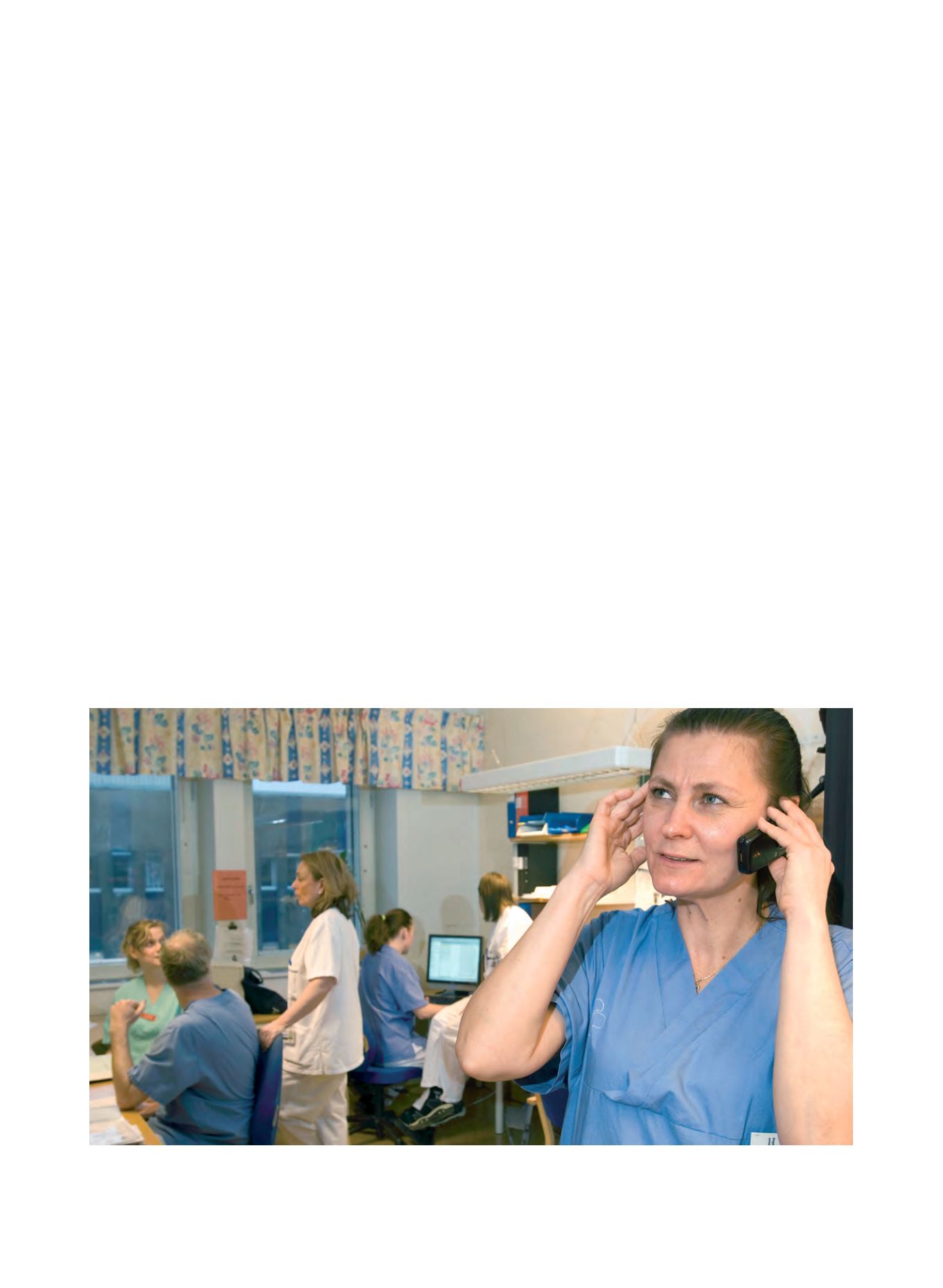
To support health staff in an already stressful pandemic situation, training materials are being developed, with the aim of helping in handling the situation at work
and communicating on an inter-personal level
Image: Staffan Larsson