


 65 / 85

[
] 65
nation and administration of antiviral medications. Related to this,
lectures based on EU decisions – EU-27 on the central role of health
workers in increasing flu vaccination coverage – have been deliv-
ered to 4,000 people, comprising around 30 per cent of all physicians
in Croatia. Teleconferences on this subject have also been held in
those areas which are more remote, including islands.
A third action has been to launch a public health web portal,
www.gripa.hr,with the goal of increasing access to information on
seasonal influenza, vaccination and preparations for possible
pandemics. The portal was set up by the Croatian National Institute
of Public Health and the WHO National Centre for Influenza. On it
one can find credible information on influenza, its treatment and
vaccinations. This improves communication between health experts
and the general public with the goal of improving health and preven-
tion. The launch of the portal was accompanied by promotional
activities in public health institutions with the participation of
leading health workers, the media and the name of the domain itself.
The site has been approved by the Minister of Health of the Republic
of Croatia.
There are several sections on the web page including: all about flu;
vaccinations; FAQ; e-cards; ask the expert; news; useful links; and a
weekly real-time report from the National WHO Influenza Centre.
On the main page there are statements by the Director of the Croatian
National Institute of Public Health and other top medical authorities
who proactively support the policy of flu vaccination. Such activity
has imposed itself as a necessity because of the significant number
of questions asked by those affected by seasonal influenza (approx-
imately 100,000 people) and because of the considerable number of
vaccinations being carried out in Croatia (650,000). For those who
want to find out more, the website also provides access to a translated
version of a book about influenza, which over ten chapters gives a
comprehensive view on the virus. The 300-page book is free to down-
load in its entirety, and it is also possible to access links in its
reference section where the author has referred to original texts. This
totals around 2,000 pages worth of information dedi-
cated to influenza.
The web portal is the best possible way of making
information available to those who want access to it 24
hours a day, 365 days a year. Its interactive capabilities
also enable users to ask question directly. The justifica-
tion for such a public health activity is confirmed by an
outstanding number of visits to the site – over 100,000
users per month were recorded in the first two months
– and exceptionally positive comments from medical
authorities and electronic and print media.
Until there is efficient availability of WHO’s recom-
mended vaccine, to further prevent the occurrence of
an influenza pandemic Croatia has stockpiled anti-virals
to cover ten per cent of its population. This amounts to
200,000 doses of Oseltamivir and 100,000 of Zanamivir,
which will be renewed when they pass their expiry date.
Even though the efforts to establish an efficient system
for cases of influenza pandemics are coordinated by the
WHO National Influenza Centre, the Croatian National
Institute of Public Health, the Ministry of Health and Social
Welfare and the Veterinary Services and are based on
WHO recommendations, there is still room for improve-
ment. After all, a possible future influenza pandemic will
hardly leave room for improvisation. Having this in mind,
we have to be aware that only timely and accurate infor-
mation available to everyone will make the general public
and the media aware that any relaxation in preparation of
pre-pandemic activities can lead to disaster.
It has been over 40 years since the last influenza
pandemic and history records up until now show that a
number of pandemics have occurred in each century.
So, we can say with great certainty that with the passing
of each year we are getting closer to a new pandemic.
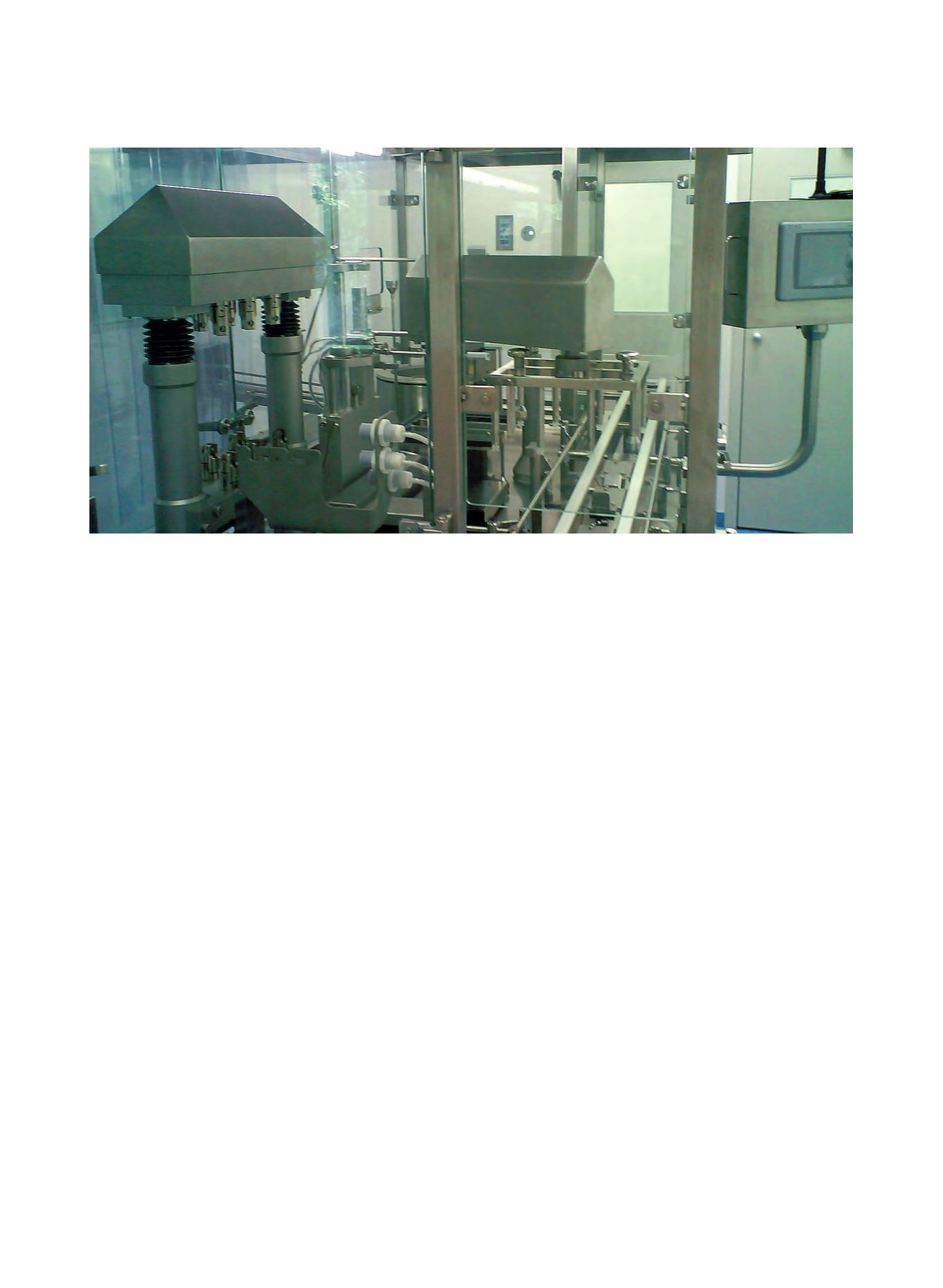
The syringe-filling machine has a maximum capacity of 8,000 syringes per hour
Image: Vladimir Drazenovic