


 67 / 85

[
] 67
Health authorities and epidemiological
surveillance
Nowadays, an efficient network of public health units
ensures that the epidemiological surveillance system is
maintained through a network of healthcare providers
based in hospitals, general practice clinics and long-
term care units, whether public, private or public
funded.
In the practice of public health in Portugal, it seems
relevant to emphasize the following aspects:
• Health authorities are selected among medical
doctors specialized in public health, after an
internship
• The keystones are the local units, connected by a
reliable communication network to hospitals and
other health services, and to the health authorities at
regional and national levels
• Among health authorities a chain of command is
well defined, from the national level (Director-
General of Health) to the regional and to local levels
• Local health authorities are located in primary
health care units, leading multidisciplinary teams in
public health services. Whenever needed,
intersectorial cooperation with others is developed
and participation in local Civil Protection councils is
mandatory
• At municipality level, there is a long and well-estab-
lished tradition of cooperation aiming to promote
health and prevent diseases, particularly in the
control of communicable diseases
diseases. In 1926, a public health reform was carried out, and a legal
document was published with the first list of diseases under manda-
tory notification. The legislation was updated in 1949, when the list
of diseases was extended and the system improved.
In 1996 the Sistema de Alerta e Resposta Apropriada (SARA), a
system of alertness, was implemented, maximizing communication
technologies in order to improve public health practices of based on
relevant knowledge. In 1998, an in-depth revision of the list of
diseases under notification was performed, following which hepati-
tis C and HIV/Aids infection were included.
The National Vaccination Programme (NVP) was initiated in 1965
with a vaccination campaign against polio, which led to the virtual
disappearance of the disease. The NVP is universal and free. It
currently includes vaccines against 12 diseases: diphtheria, tetanus,
whooping cough, polio, tuberculosis, measles, mumps, rubella,
hepatitis B and infections by Hemophilus influenzae type B,
Meningococcal type C and Human Papiloma Virus.
Saúde 24, a multichannel contact centre, is a new service provided
by the Portuguese NHS, implemented in 2007. Through nurses
trained in the system, Saúde 24 provides information both on clin-
ical and non-clinical situations. The scope of such information
includes mainly specific situations related to acute care and drug-
related problems, public health topics and general information on
the availability of health care units. Mainly, Saúde 24 intends to help
people approaching the health care system, facilitating the choice of
the most appropriate unit to provide care for the presumed condition
of health. It may also redirect contacts to other call centres, namely
to the Emergency Centre and to the Intoxication one. So far, this call
centre has received more than 860,000 phone calls with an efficacy
rate of 95 per cent.
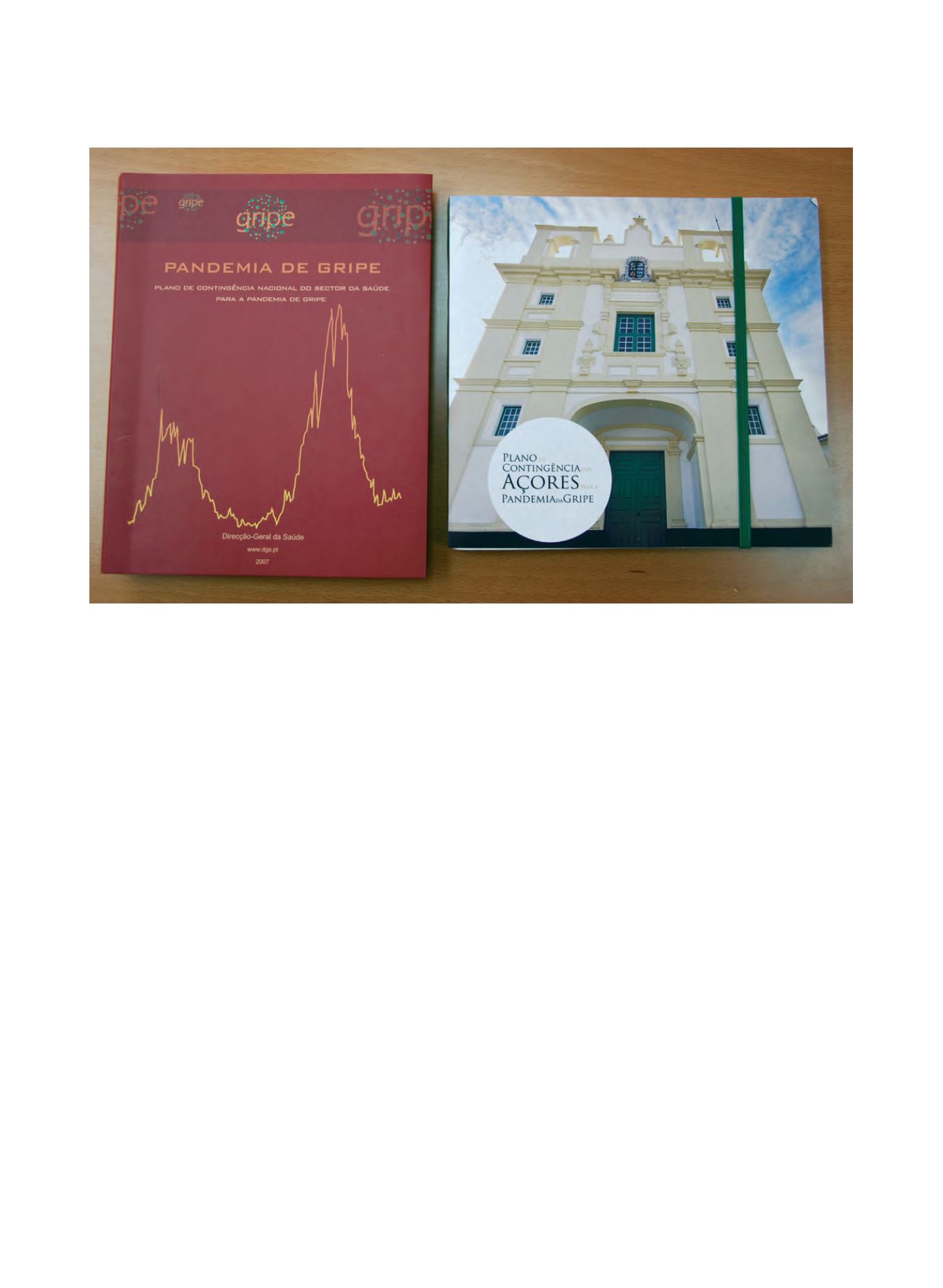
Portugal has already published its own contingency plans for pandemic influenza
Image: Directorate-General of Health