


 33 / 196

[
] 31
Grand Challenge 2: Understand the natural processes that
produce hazards
Short-term actions:
• Use an interdisciplinary approach to expand and enhance the
knowledge base of short-term, long-term, and cumulative risk
factors and processes associated with hazard-related events to
identify potential health and ecological adverse outcomes
• Increase the workforce competence for human health care
workers and ecosystem resource managers to address health and
ecological threats by improving training
• Assess the impacts of climate change and other global changes
(e.g. increased input of nutrients in the environment, land-use
changes, increased use of antibiotics in animal and food
supplies) on human and ecosystem health.
Mid-term actions:
• Understand the baseline and status of ecosystem health and
human public health in order to track and monitor the impact
of disease-causing agents and other health hazards
• Research the evolution of health threats by using remote sensing
capabilities and tools, laboratory detection techniques and
instrumentation, methods for ground-based assessments, and
improved modelling capabilities.
Long-term efforts:
• Understand the cumulative effects of stressors and hazards in
human populations and ecosystems to better target causative
agents and processes
• Integrate biological, physical, chemical and
epidemiological models to provide accurate and
timely forecasts of human and ecosystem health-
related events and their impacts
• Improve the use of surveillance networks, remote
and in situ environmental monitoring systems,
genomics and cellular fingerprinting to better
understand human and ecosystem health hazards
• Develop models and scenarios to identify the
impact of human intervention on human and
ecosystem health and to evaluate programmatic,
scientific, environmental, psychosocial, and
economic consequences of specific decisions.
Grand Challenge 3: Develop hazard mitigation
strategies and technologies
Short-term actions:
• Improve guidelines for use by state and local
government officials to prepare for and respond to
human and ecological health threats
• Develop and pre-deploy stockpiles, tools and
supplies that can be used at the onset of human and
ecological health events requiring resources for
response
• Develop improved, coordinated and geographically-
focused human and ecosystem health mitigation
plans to enhance region-specific and local emer-
gency preparedness and response
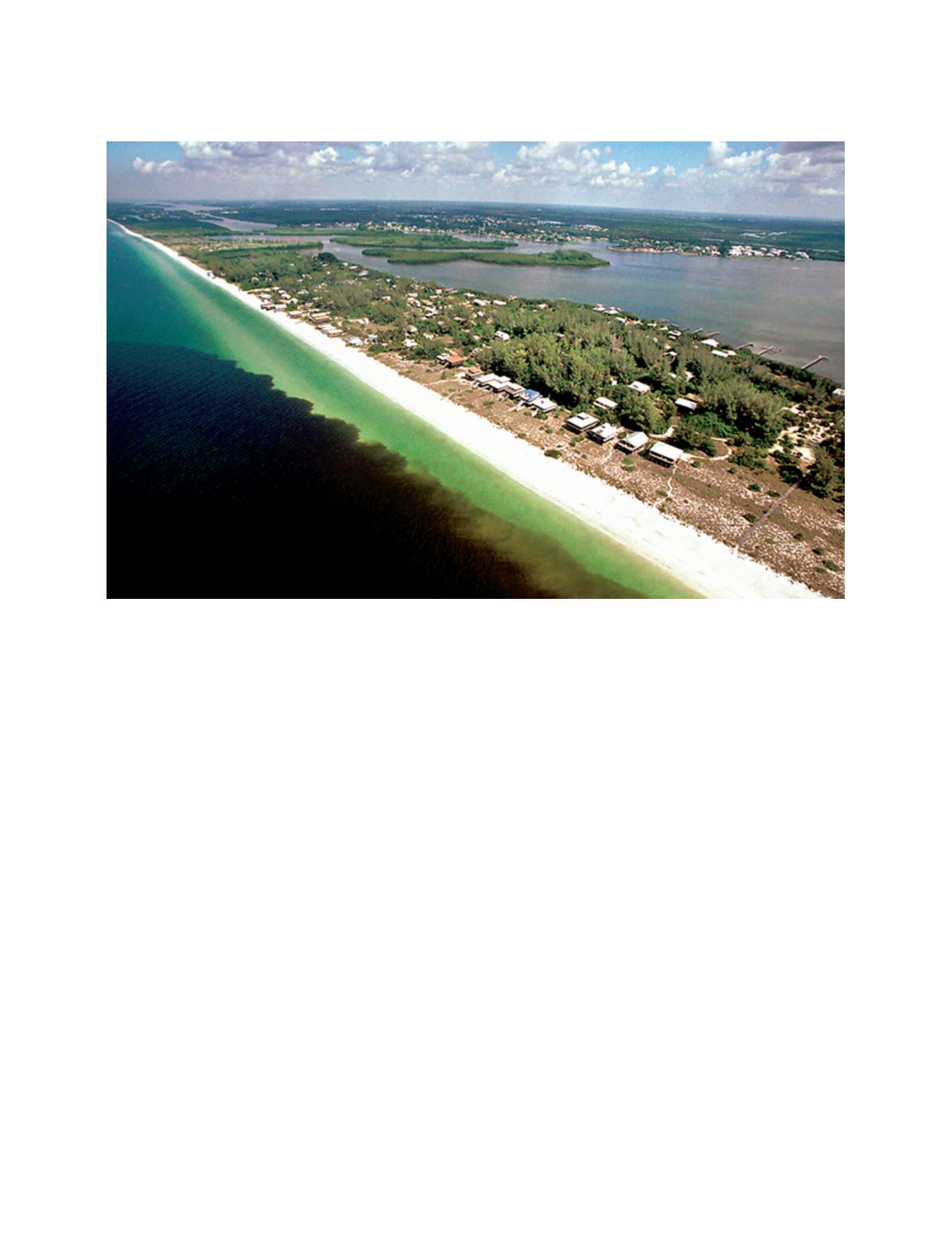
The infamous Florida ‘red tide’ occurs almost annually along portions of the state’s Gulf Coast, causing beach and shellfish closures and negatively impacting
Florida’s tourism industry. Just one harmful algal bloom event can impose millions of dollars in losses upon local coastal communities
Image: courtesy of P. Schmidt, Charlotte (FL) Sun