


 32 / 196

[
] 30
sive short and long-term impacts on the health and well
being of affected communities. Deaths from these events
have almost reached 1,500, both in states directly
impacted by the hurricanes and in those housing
displaced persons.
5
Chronic and long-term effects have
yet to be estimated.
In the environment, the progressive destruction of
coral reefs, marshes and wetlands along the coasts is
exacerbating negative impacts from hurricanes and trop-
ical storms by reducing protection of coastal zones. As
a result, extensive flooding and accompanying wide-
spread pollution of soils and waters dramatically
increase the magnitude of the original disaster events.
The SDR Human and Ecosystem Health Working
Group (HEHWG) produced an implementation plan
that summarizes the high priority science and technol-
ogy actions to assist the nation in preventing and
recovering from disasters. HEHWG identified research,
modelling, forecasting and tool development to better
support human and ecosystem health management in
times of crisis. Short-term actions (1-2 years), mid-term
actions (2-5 years) and long-term efforts (5+ years) were
considered for each of the six Grand Challenges.
Grand Challenge 1: Provide hazard and disaster
information where and when it is needed
Short-term actions:
• Research to understand the fundamental processes
in human and ecosystem health that predispose
people to adverse health outcomes or that result in
ecosystem structure and function deterioration
• Improve human and ecosystem health monitoring
systems and protocols to identify, describe, collect,
analyse and interpret emerging infectious agents and
other health hazards (e.g. organisms, toxic substances)
• Develop and improve timeliness and accuracy of
human and ecosystem health forecasts
• Assess the impacts of natural resource use on
ecosystem health and the capacity of ecosystems to
respond to hazards.
Mid-term actions:
• Continue the development of new technologies to
detect agents that threaten human and ecosystem
health
• Develop searchable ecological and public health
databases for early detection of emerging threats
• Use more comprehensive models to develop clear,
actionable risk and vulnerability assessments based
on diseases and environmental data from monitoring
systems and global observations networks.
Long-term efforts:
• Develop and improve remote, in situ, permanent
and mobile environmental and human health
monitoring systems to collect and analyse data in
real time
• Facilitate and increase coordination among terres-
trial, aquatic and atmospheric monitoring systems.
invasive species, community changes, loss of biodiversity). These
hazards can produce disasters or can accompany and amplify the
effects of other disasters.
Impacts
Recent concerns about an avian influenza pandemic and its poten-
tially massive deleterious consequences to human and ecosystem
health have mobilized the attention of the US and other governments
around the world. This is one of the many hazards that the US and
the world are facing.
Annual outbreaks of the West Nile virus since its 1999 emergence
in the US have caused significant neuro-invasive diseases in humans,
infections in at least 58 mosquito species, and unprecedented mortal-
ity in birds. The cost of the epidemic in Louisiana from June 2002
to February 2003 was estimated to be USD20.1 million.
1
Similarly, in the environment, the geographic distribution,
frequency and severity in the development of harmful algal blooms
(HABs) appear to have increased over the past decades. This is possi-
bly related to the increase in ocean temperature and in the quantity
of nutrients reaching water bodies. Blooms can affect both human
and ecosystem health, ranging from respiratory distress due to
aerosolization of the toxins produced by the HABS to death due to
ingestion of the toxins.
2
HABs also have large economic impacts. In
the past, the cost of HABs to the US economy was estimated to be
about USD50 million per year. Recently, the frequency and severity
of major HABs outbreaks have increased, and costs can exceed
USD50 million for one event alone.
3
In the US, alien invasive species including plants, animals and
microorganisms result in USD120 million in damage annually.
4
Invasive species affect agricultural and ecosystem productivity and
the health of forests, rangelands and croplands as well as other land
and aquatic ecosystems, and often result in serious economic losses.
Additionally, human and ecosystem health disasters can occur
subsequent to other disasters such as earthquakes or volcanic erup-
tions. For example, major hurricanes such as Katrina and Rita, which
devastated the Gulf Coast in August-September 2005, led to exten-
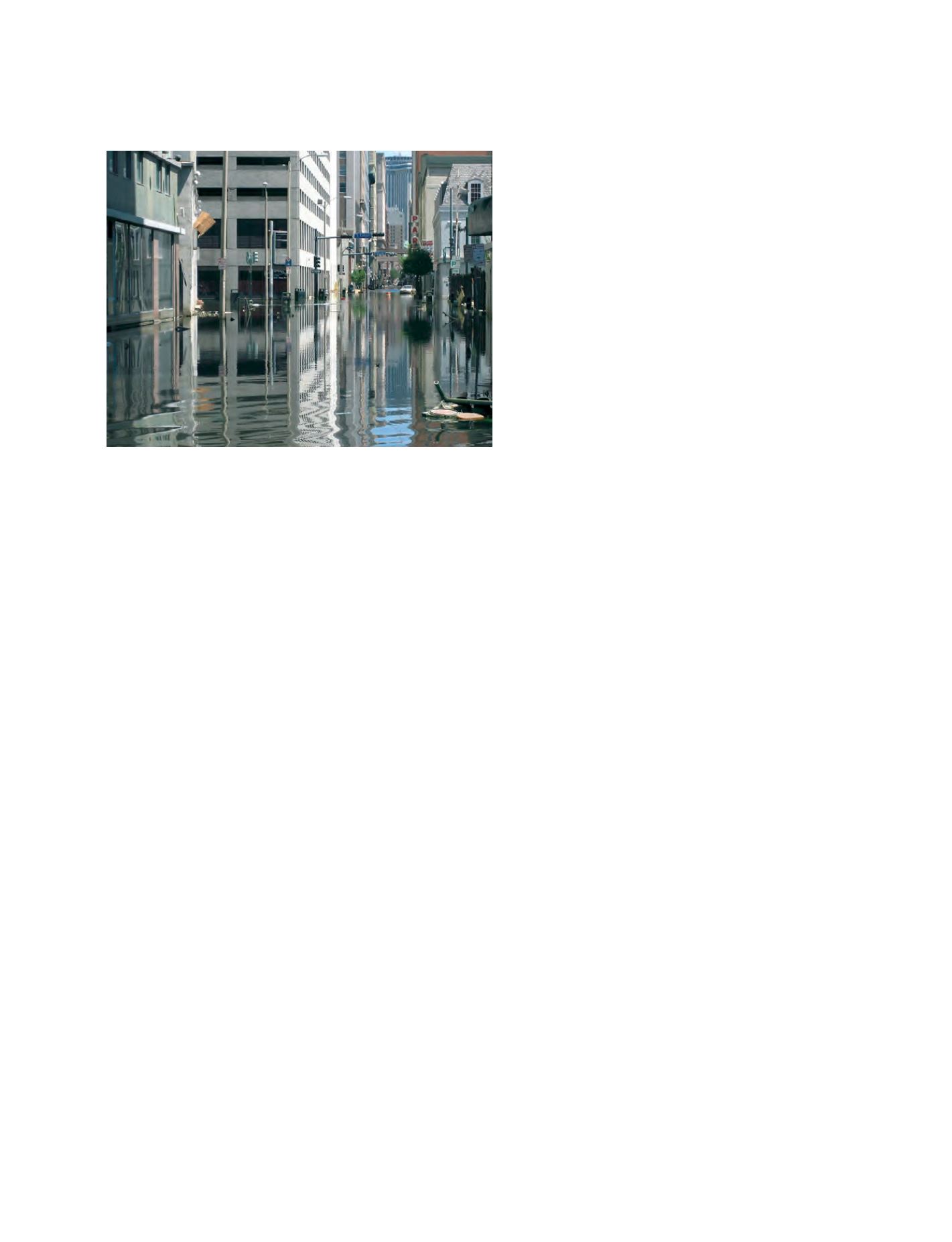
A flooded street in New Orleans, Louisiana after Hurricane Katrina reflects the depth
of the problem facing residents and rescue workers. Filthy, contaminated floodwaters
posed a public health threat
Image: CDC Connects, Photo by Grant Baldwin