


 29 / 196


[
] 27
Rising to the disaster-resilience challenge
David Applegate, National Science and Technology Council Subcommittee on Disaster Reduction, USA
T
he month of May 2008 was the deadliest for natural disas-
ters since the devastating Sumatra earthquake and
tsunami struck the Indian Ocean region in 2004. The
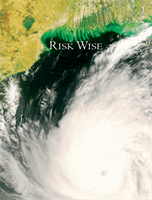
tremendous loss of life resulting from the typhoon that swept
across Burma’s Irrawaddy Delta in early May and the earthquake
that struck Sichuan province in China a week later were each
solemn reminders of the continued vulnerability of communi-
ties exposed to the forces of nature. Collectively, such disasters
represent a global challenge for all nations to strengthen the
resilience of their communities in the face of extreme meteoro-
logical, hydrological, and geological events that are facts of life
on an active planet like ours. How those events affect us reflects
not only the power of nature, but also the decisions we make in
how we build our societies.
Rising to the disaster-resilience challenge will take the collective
action of government at all levels, non-profit organizations, the
private sector, and above all individuals trying to do what is best for
themselves, their families and their communities.
Science and technology can play a critical role in
supporting the quest to achieve disaster resilience.
To better define this role, the US National Science and
Technology Council’s Subcommittee on Disaster
Reduction (SDR), which includes representatives from
22 departments and agencies across the Federal govern-
ment, has identified six ‘grand challenges’ for disaster
reduction that, if addressed, could greatly reduce soci-
etal vulnerability:
• Provide hazard and disaster information where and
when it is needed
• Understand the natural processes that produce
hazards
• Develop hazard mitigation strategies and technologies
• Recognize and reduce vulnerability of interdepen-
dent critical infrastructure
• Assess disaster resilience using standard methods
• Promote risk-wise behaviour.
The SDR developed this set of challenges to define a ten-
year strategy that illuminates critical areas for future US
government investment in science and technology
designed to reduce the impact of natural and technologi-
cal hazards.
1
The Subcommittee recently produced a series
of hazard-specific implementation plans, identifying the
priority science and technology investments needed to
make progress toward meeting these challenges.
The first of these challenges is to provide hazard and
disaster information where and when it is needed.
Implementing this challenge requires robust monitoring
systems with the capability to reach those in harm’s way
and provide emergency responders with the information
they need when they need it. Such systems are only as
good as their weakest link, which in many cases is the
link to the people at risk. Improving communications to
the most vulnerable populations, so that they can take
actions to protect themselves, requires education.
The second challenge is to understand the natural
processes that produce hazards. Support for targeted
research can harness advances in computing power and
draw upon the data being generated by global observa-
tional systems to improve predictive modelling. Basic
research on the natural processes that produce hazards
will allow scientists and engineers to better understand
how and when they become hazardous. For coastal
hazards, an assessment of the impacts of climate change
on coastal inundation is essential.
US National Science and Technology Council implementation plans
A set of 14 implementation plans were recently produced by the US National
Science and Technology Council (NSTC) identifying priority investments in science
and technology to address the Grand Challenges for Disaster Reduction laid out in
the 2005 NSTC report of that name, also shown. The original report and
implementation plans are available at www.sdr.gov
Source: US National Science and Technology Council