


 41 / 196

[
] 39
among the important factors that will allow people to survive future
earthquake and tsunami attacks.
Another important aspect of society is to bring current experience
to future generations. Since the tsunami was a rare event, people
may forget the disaster easily. We need to keep reminding the popu-
lation about the tsunami disaster. One way is to build tsunami
memorial poles with the height of tsunami run-up throughout the
affected areas. We built 85 poles in the city of Banda Aceh. They
were built along the evacuation routes, so that the people can run
toward the lower poles. The tsunami memorial poles are also educa-
tion tools which are expected to last and convey the memory of
the disaster to future generations.
The Asian Disaster Reduction Center (ADRC) team, an agency for
building capacities in Asian countries through education and train-
ing, made teaching materials for disaster prevention in Indonesian and
other languages, from an interactive consultation with schoolteach-
ers.
These field exercises, with experts interacting with local commu-
nities, are very useful for building local capacity. However, the
number of experts is far smaller than the number of people to be
trained and/or educated. The roles of practitioners such as non-
governmental organizations/non-profit organizations, schoolteachers
and community leaders are thus very important to extend and
disseminate acquired research results and knowledge to the public.
Synergetic works between experts and practitioners are thereby
created and result in effective work being carried out.
Effective use of a tsunami warning system and mitigation of tsunami
hazard
– The basic question raised was: ‘Can we save people with
a tsunami warning system?’ One of the reasons for such a large
number of casualties is the lack of tsunami experience/awareness
in the community and no tsunami warning in the affected area.
We investigated the tsunami information/warning and people’s
response to the 2004 and other recent tsunamis. There are three
stages for carrying out safety evacuation after an earth-
quake: the first is to collect tsunami warning
information and data on natural phenomena such as
strong and abnormal ground shaking; the second is to
make an evacuation decision based on risk perception,
and the third is to select a proper route and place for
safety evacuation. Unless the three stages are
completed adequately, people cannot survive. We
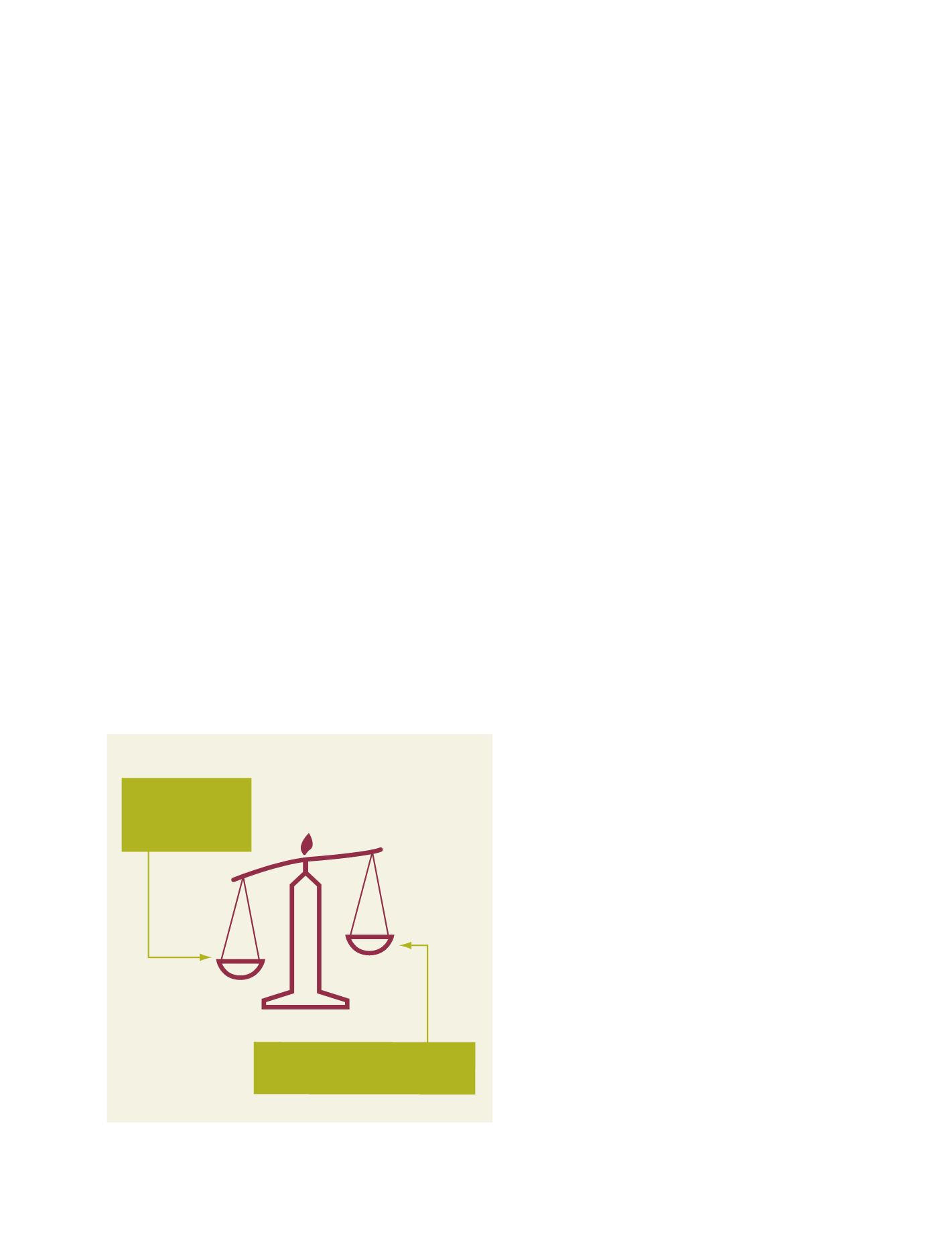
found that the balance between a tsunami warning and
the risk bias of individuals is important. If the risk
contents on the warning overcome the individual risk
bias, they would make the decision to evacuate.
Moreover, in daily life, functions with risk commu-
nication and education are important to reduce risk
bias. Awareness education must include at a minimum:
• The creation of evacuation procedures to evacuate
residents from tsunami hazard zones
• The implementation of an education programme
for schools to prepare students
• The conduct of periodic practice drills to maintain
preparedness levels
• The involvement of community organizations to
educate all sectors of the population at risk.
In order for effective use of the tsunami warning system,
appropriate threshold and segmentation of warning
areas should be set. For this purpose, historical tsunami
data and literature was investigated and compiled as a
database by the Japan Meteorological Agency (JMA).
JMA worked together with the Pacific Tsunami Warning
Center and provided such information to related coun-
tries around the Indian Ocean.
A new tsunami monitoring device which uses GPS
buoys for detecting tsunamis offshore has been devel-
oped in Japan. The system uses real-time monitoring
of the sea-surface height and transmits the observed
data to users through microwave and Internet channels.
Thus the coastal population can be warned of a tsunami
up to ten minutes before its arrival.
Restoration from giant earthquakes and tsunami disas-
ters, and city planning
– Engineering research was done
into many practical construction methods that could
possibly save lives. A water channel experiment
showed that the acting force on a bridge correlates with
tsunami speed. Another experiment showed that appa-
ratus such as wave-dissipating blocks are not very
useful if the block height is less than half that of the
buildings to be protected. Plants such as mangrove
show significant tsunami retarding effects; a 60 per
cent reduction of force and 80 per cent of its velocity,
if tsunami height is less than 1.5 times the height of
the mangrove. It should be considered that there are
limitations in the effectiveness of rigid construction or
mangrove, when the city or town along the beach is
designed to be tsunami resilient.
We also examined how well people in the affected area
could rebuild from the disaster by using a construction
ratio, which is the percentage of restored houses in a
community. We proposed a building restoration curve as
Monitoring/observation
+ prediction
Early warning system
Regional/National/Local
What message?
What information?
When?
Who?
Tsunami warning
Receiving + recognizing
= Decision of evacuation
Increasing awareness and risk perception
through communication, education, workshop,
making hazard maps, drill
Risk Bias
in individual
- Own knowledge
- Own experience
The balance between warning and risk bias
Source: Fumihiko Imamura