



 16 / 218

[
] 16
L
OCATED AT A
geographical crossroads between the
subtropical and medium latitudes, and between the
Atlantic and the Mediterranean, Spain has a varied and
complex climate. In many ways this is beneficial for the
country, but there are also many negative aspects ranging from
periodic droughts to other adverse phenomena such as torren-
tial rainfall, heat waves, strong winds, snowfalls or serious
storms at sea. Moreover, Spain’s location to the south of Europe
makes it very vulnerable in the present global scenario of
climate change. All of this results in a framework in which
meteorological, climatic and hydrological research and fore-
casting are of great importance.
Spanish meteorologists, through the National Meteorological
Institute (INM), the national weather service of Spain, have
always aimed to offer Spanish society the best possible infor-
mation with the resources available. In addition to the traditional
tasks of supporting aviation, shipping and farming, they took
on hydrological and then industrial activities as well as services
for the tourism sector and the mass media. Although warnings
of adverse weather conditions have always been a priority, it was
only from 1982, as a result of a combination of meteorological
events, technological developments and political timing, that
scientific, technological and operational capabilities for moni-
toring and forecasting were really promoted.
The INM has worked together with the Civil Protection author-
ities on increasingly advanced operational plans, leading up to
the current Meteoalerta plan which is based on the new criteria
for warnings as laid down by the European Meteorological
Services. With its different forecasting products for the very short,
short and medium terms, the Institute is able to cover all the
geographical scales including more than 8,000 municipal districts
in Spain, with increasing quality and accessibility. This is demon-
strated by the spectacular increase in visits to its website, which
offers thorough and up-to-date information.
As is to be expected, the INM also acts as the ‘notary’ of the
Spanish climate. Its archives, containing data from all the
From National Meteorological
Institute to Spanish Meteorological Agency:
towards the future
Francisco Cadarso, Director General, Spanish National Meteorology Institute
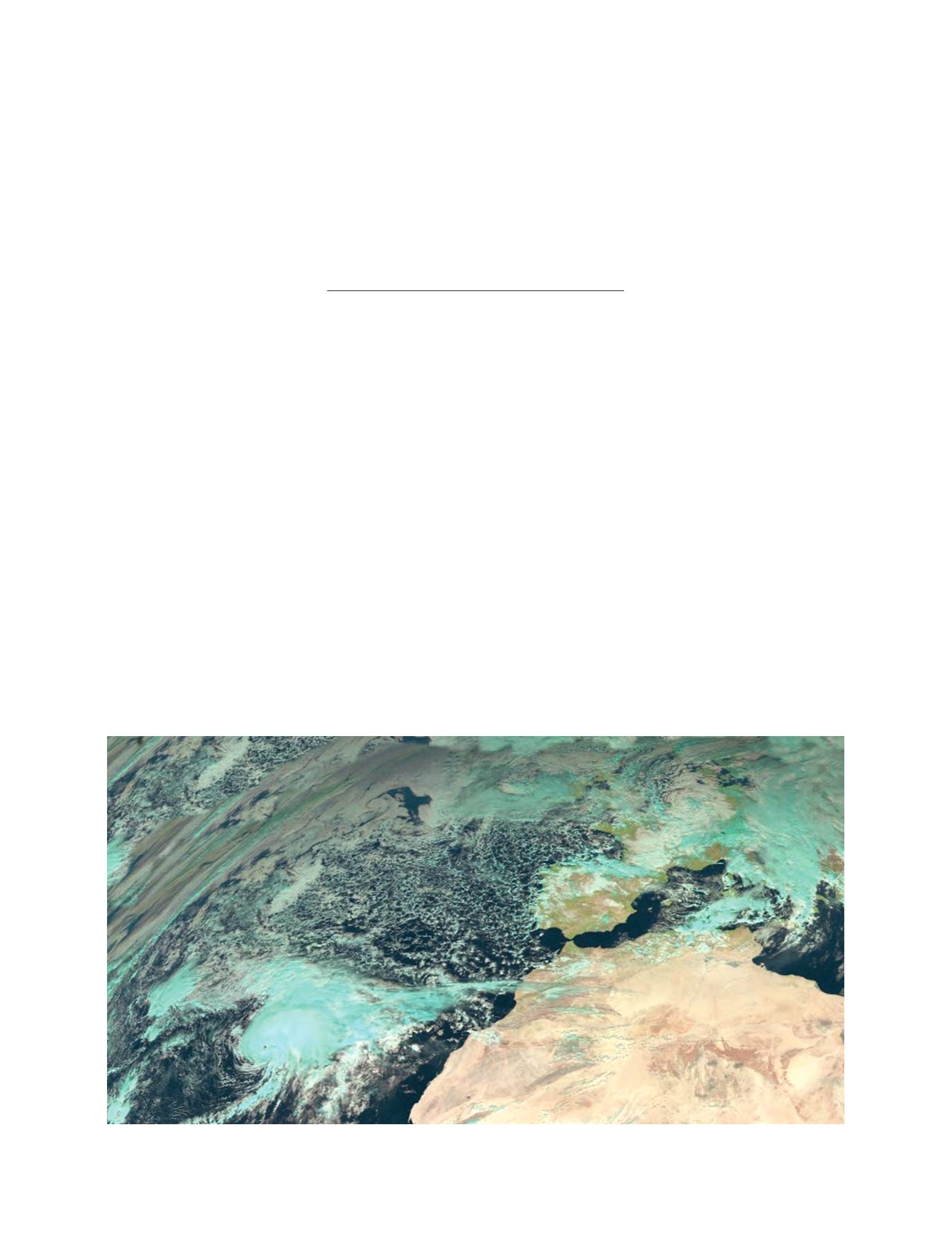
Tropical storm Delta in the vicinity of the Canary Islands
Image: The European Organization of Meteorological Satellites (EUMETSAT)