


 18 / 218

[
] 18
T
HE POTENTIAL FOR
natural environmental hazards to
undermine the internationally agreed Millennium
Development Goals (MDGs) is significant. This is recog-
nized in Section IV of the Millennium Declaration, which states
the objective “to intensify our collective efforts to reduce the
number and effects of natural and man-made disasters.”
1
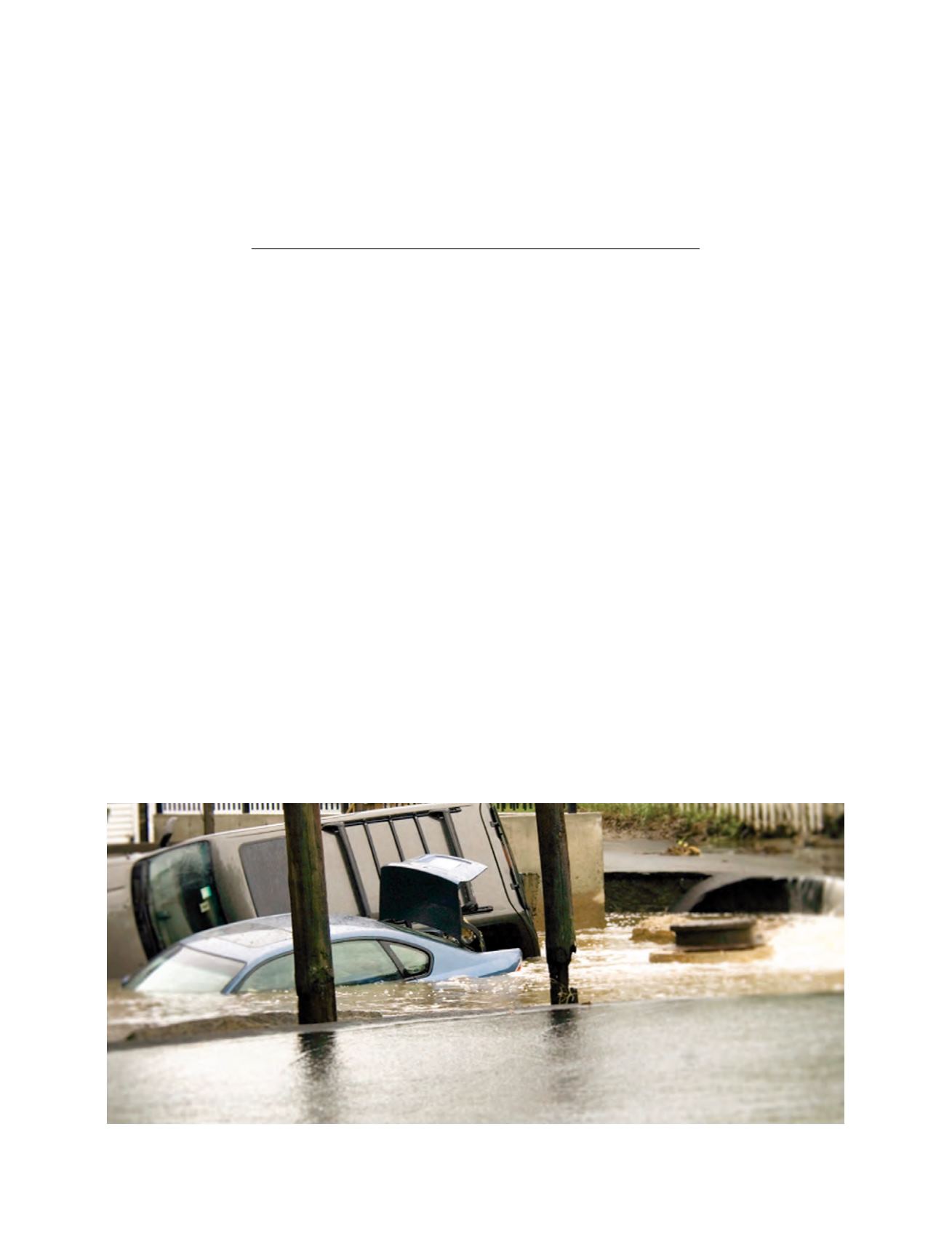
Between 1980 and 2000, more than 1.2 million people lost
their lives due to floods, droughts and storms
2
with a total
financial cost exceeding USD900 billion.
3
In recent years, thanks largely to advances in forecasting and
assessments, people are better prepared and the number of
people killed by extreme events is decreasing. However, the
disruption to livelihoods and human well-being is increasing
because population growth is forcing more and more people
to live in coastal zones, flood plains, arid areas and other places
which are more vulnerable to natural hazards. In addition,
climate-sensitive diseases claim more than one million lives
each year, mostly children under five years of age in develop-
ing countries and, without properly considering and
responding to the impact of climate change on human devel-
opment, more people will be at risk. Economic losses are also
growing, especially in high human development countries.
Elsewhere, while the losses may be less in absolute terms, the
financial impact on countries with low gross domestic product
is sufficient to halt or slow human development.
The financial consequences of natural hazards on human well-
being are difficult to estimate from current data; however, it is
clear that they are large and, unless we understand and reduce
the vulnerability of people to natural hazards, human develop-
ment itself is at risk. Climate change and weather extremes put
at risk investments in infrastructure, agriculture, human health,
water resources, disaster management and the environment. For
example, the transportation infrastructure in Africa is crucial to
bringing the continent out of poverty. However, every year large
parts of this network are affected by flooding. The Mozambique
floods of 2000 damaged roads and railways with costs exceed-
ing USD32 million and USD7 million respectively.
4
While these financial losses are undeniably significant, it is
important to recognize environmental hazards as complex,
multifaceted problems. For example, ecosystem changes,
arising from alterations in rainfall patterns and temperature,
are changing the behaviour of crop pests and human exposure
to climate-sensitive diseases, as well as changing the length of
the growing season and irrigation requirements. Meteorological
and hydrological hazards clearly influence, and potentially
hinder all aspects of human life, and thus the human devel-
opment process itself. Every problem that results from such
hazards has far-reaching and critical effects.
For every person killed in a flood or storm, it is estimated
that an additional 3,000 lives and livelihoods are disrupted
Weather, climate, water and air quality,
and the risk to development
Dr David P. Rogers, Switzerland
For every person killed in a flood or storm, it is estimated that an additional 3,000 lives and livelihoods are disrupted