



 20 / 218

[
] 20
T
HE TRANSPORT SECTOR
accounts for approximately 25
per cent of global carbon dioxide (CO
2
) emissions. It is
the sector with the highest growth in emissions, and the
second largest contributor overall, after the electricity and heat-
supply sector. The additional effects of transport include
accidents, noise, congestion, land-use and air pollution; with
related damage to health, and to urban and rural environments.
Efforts to mitigate the level of emissions from transport are
in evidence. Fuel is cleaner than ever and the manufacture and
performance of vehicles is more environmentally friendly and
produces fewer, and reduced quantities of pollutants and
harmful emissions. However, these efforts are vastly
outweighed by the enormous increase in demand for both
passenger and freight services, along with the drastic growth
in road transport and aviation.
If developing countries adopt western travel patterns, the
number of cars and commercial vehicles, currently 800 million,
will rise to 1.6 billion by 2030. Based on present population
growth estimates, this is approximately one vehicle for every
five people on the planet. According to the European Transport
Forum 2003, this growth will be predominantly observable in
countries such as Brazil, China, India, Korea, Mexico, Russia
and Thailand where people are enjoying increased prosperity
and seeking greater mobility.
Climate changes have been estimated to represent 30% of
the total external costs caused by transport in Europe
(IWW/INFRAS 2004). This corresponds to 195 billion Euro
of which 57% is generated by road transport, 41% caused by
air transport and 1% by railways.
In spring 2006 the European Environment Agency (EEA)
launched its 2005 term report, challenging politicians to
resolve the conflict between transport and environmental poli-
cies. The EEA report identified a gap between the ambitious
aim of achieving sustainable development in the European
The consequences of climate
change to rail infrastructure
Margrethe Sagevik, International Union of Railways
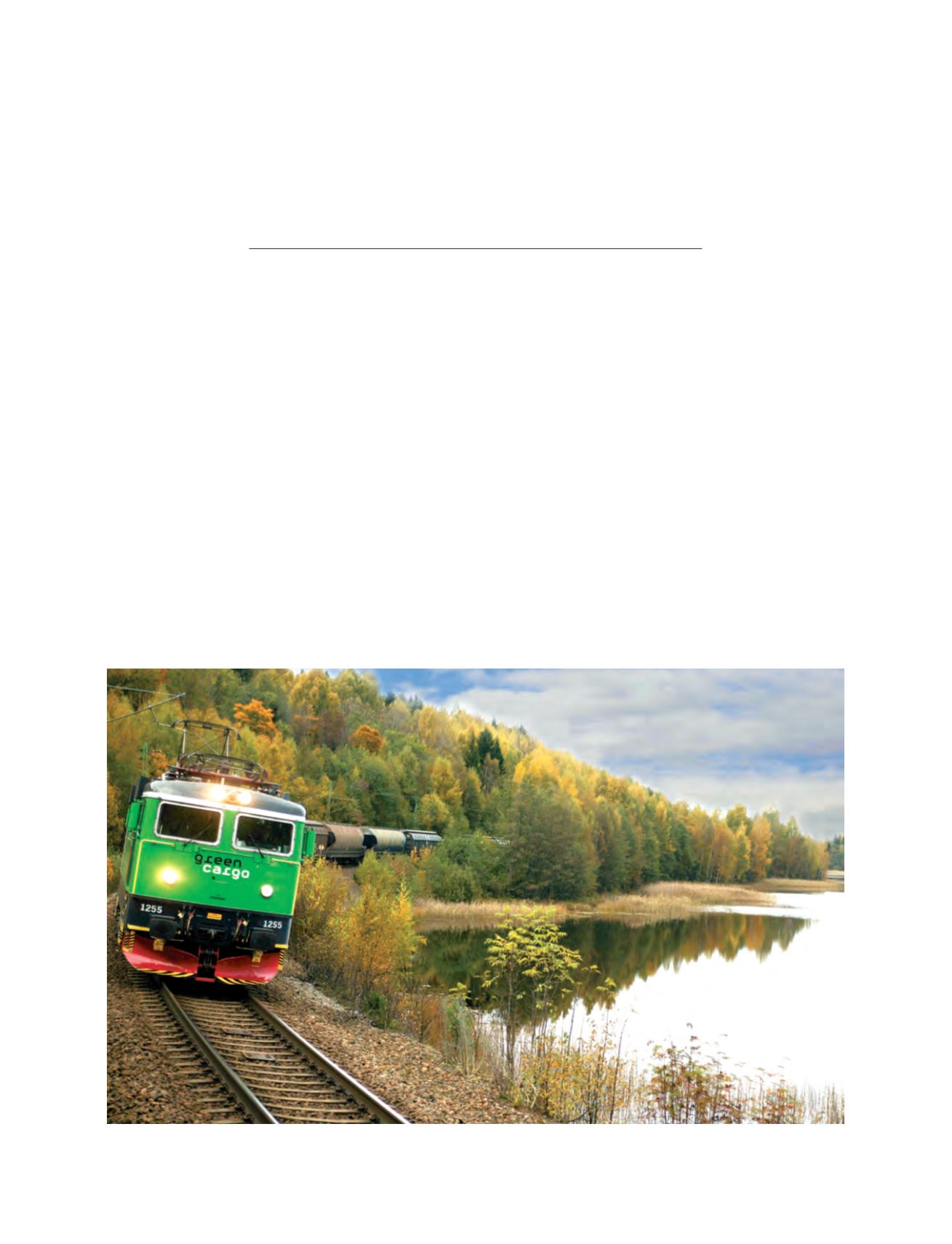
Freight train in Swedish landscape
Photo: Jan Skoglund