



 43 / 218

[
] 43
I
N
C
ANADA
, weather-related disasters and extreme events
continue to place increasing burdens on citizens and the
economy. Flooding disasters alone are about four times as
frequent today as they were 50 years ago. The ice storm of 1998
was the single most expensive natural disaster in Canadian
history, resulting in over 30 deaths and USD5.5 billion in
damages. In addition, wildland-urban interface fires have, over
the last several summers, presented unique management chal-
lenges related both to property loss and the design of
evacuation and response plans.
Canada is signatory to the Hyogo Framework for Action,
which calls upon all nations to reduce the frequency of disas-
ters within a decade. As over 80 per cent of all Canadian
disasters have been weather related in the past, weather and
climate adaptation strategies will almost certainly reduce disas-
ter risk in the future. Adaptation strategies can take many forms
– the more successful are those that seek a balanced approach
emphasizing both long and short-term lines of defence.
As a consequence, within Canadian disaster management
circles, it is commonly accepted that the Meteorological Service
does, and will continue to play an increasingly important disas-
ter risk reduction role. However, Canada’s geographic extent
and decentralized approach to emergency management
presents a unique challenge. Canadians from coast to coast are
regularly exposed to a variety of environmental conditions,
making a nationally consistent approach difficult to achieve.
Reducing disaster risk in Canada: new
legislation and policies that enable citizens
to adapt to weather and climate extremes
Magda Little, Environment Canada, David Grimes, A/Assistant Deputy Minister,
Meteorological Service of Canada, Environment Canada and Alvin Lau A/Coordinator,
Business Policy Directorate, Meteorological Service of Canada, Environment Canada
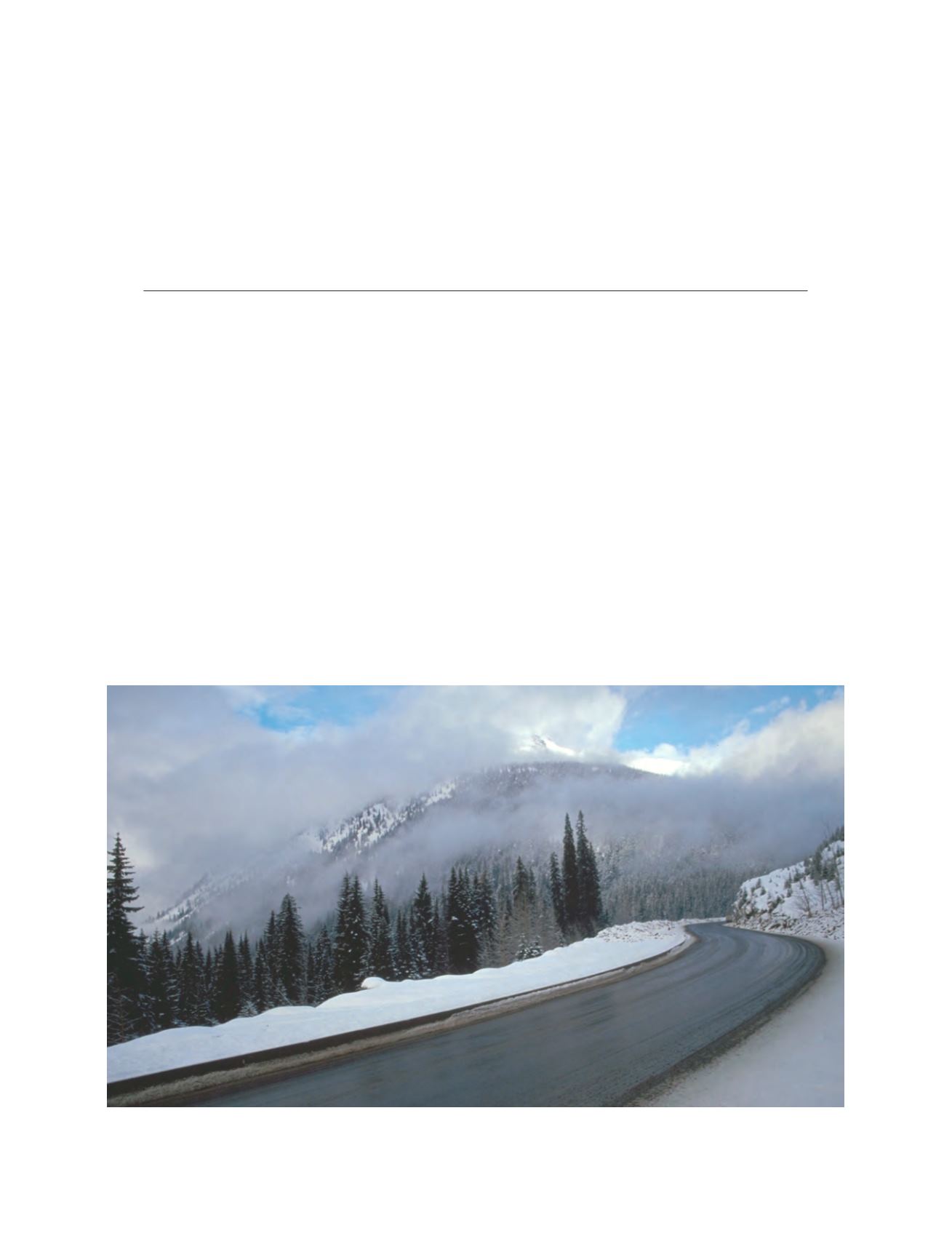
Working with provinces and insurance companies, the Meteorological Service of Canada has developed RWIS
to ensure safe driving conditions for Canadian highways
Photo: Corel Corporation 1994