


 18 / 210

[
] 16
A
dvancing
S
ocial
I
ntegration
and
I
ntergenerational
S
olidarity
Another challenge is that the industrialized regions (devel-
oped countries) of the world notably face a large proportion
of the older populations.
4
This is a result of lower birth rates
and the age at which mothers give birth nowadays, which is
relatively older than in the past. The positive transformation
in today’s society that comes with safer work environments,
higher quality diets and better health care contributes to a
large elderly population as well. In normal circumstances this
positive change should be celebrated, but instead it is often
dominated by worries about how the countries will engross
and sustain larger elderly populations.
The expansion of families is driving governments to reassess
their future plans and the promises they made during the time
when life expectancy was shorter. They now have to come
up with beneficial plans that cater for society as it is today.
They have to create a comforting environment for the elderly
generation who, due to debates about pensions, health care
and social security, live in fear of the unknown. The pressure
from these debates also affects the families, as they will have
to look for ways to take care of their elders and their children
at the same time. Given the status of the world economy at
the moment this could be distressing.
Developing countries, on the other hand, generally have
large younger populations, although this is beginning to
change. Regions such as Latin America are following the trend
of developed countries, witnessing a reduction in family size.
5
It is estimated that the number of people per household in
Latin America will fall by 18 per cent by the year 2020.
Youth migration remains one of the causes and challenges
of intergenerational relationships and solidarity. Young people
are in need of change, independence and jobs. This has caused
many families to lose their children to world, leaving behind
older adults and smaller children.
It is undeniable that technology has also impacted families
and the way they relate and communicate. While some youth
find it easier to stay in touch with family members while they
fulfil work, school and other responsibilities, other young
people do not share the same sentiments. They would rather
spend more of their time watching television, playing elec-
tronic games and communicating with others through social
media, and this has increased the isolation of family members
and diminished relationships around the home base.
The above-mentioned demographic changes and challenges
have an effect on families and are bound to put pressure on the
solidarity among family members, as new roles materialize to
meet emerging challenges. However, it is important that despite
all these changes that are capable of adversely affecting inter-
generational solidarity within families and society at large, the
majority of people in all cultures maintain close relationships
with members of their family throughout their lives.
The World Assembly Of Youth
The World Assembly of Youth (WAY) is an international-scale
organization that contributes actively towards resolving youth-
related matters and coordinating national youth councils. In
addition to these areas of focus, WAY has been known for its
concern towards the welfare of the younger generation. Due
to its close involvement with youth, the organization has been
conducting research on different youth issues from around the
world. Youth and intergenerational relationships is one of the
selected issues that WAY picked to do research on.
The research focuses on the facts and figures of youth and
intergenerational relations; the role of WAY in addressing the
issue; and what stakeholders need to do to promote solidarity
in youth and other generations.
6
In addition to the research,
WAY holds international events every year that tend to bring
together youth with older generations, to address key youth-
related issues. The focus of these events is on providing a
forum where youth can take centre stage in the design and
development of policies and strategies that address issues that
affect them, with help and guidance from the older genera-
tion. The event yields a declaration that strategically positions
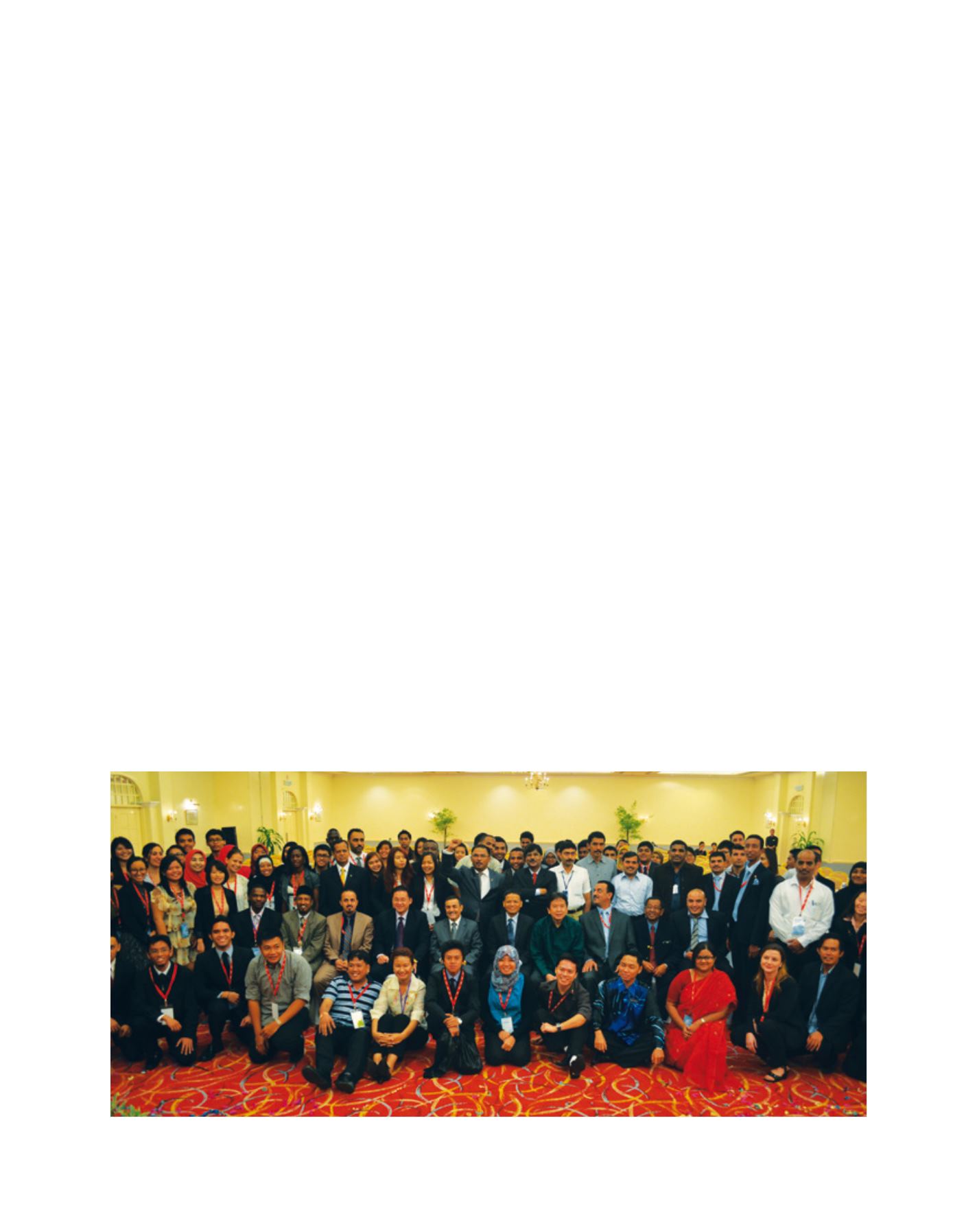
Delegates at the 12th Melaka International Youth Dialogue in 2012, which focused on the theme ‘Health: it’s my right’
Image: WAY