


 22 / 210

[
] 20
A
dvancing
S
ocial
I
ntegration
and
I
ntergenerational
S
olidarity
Image: Juan Pablo Fernández
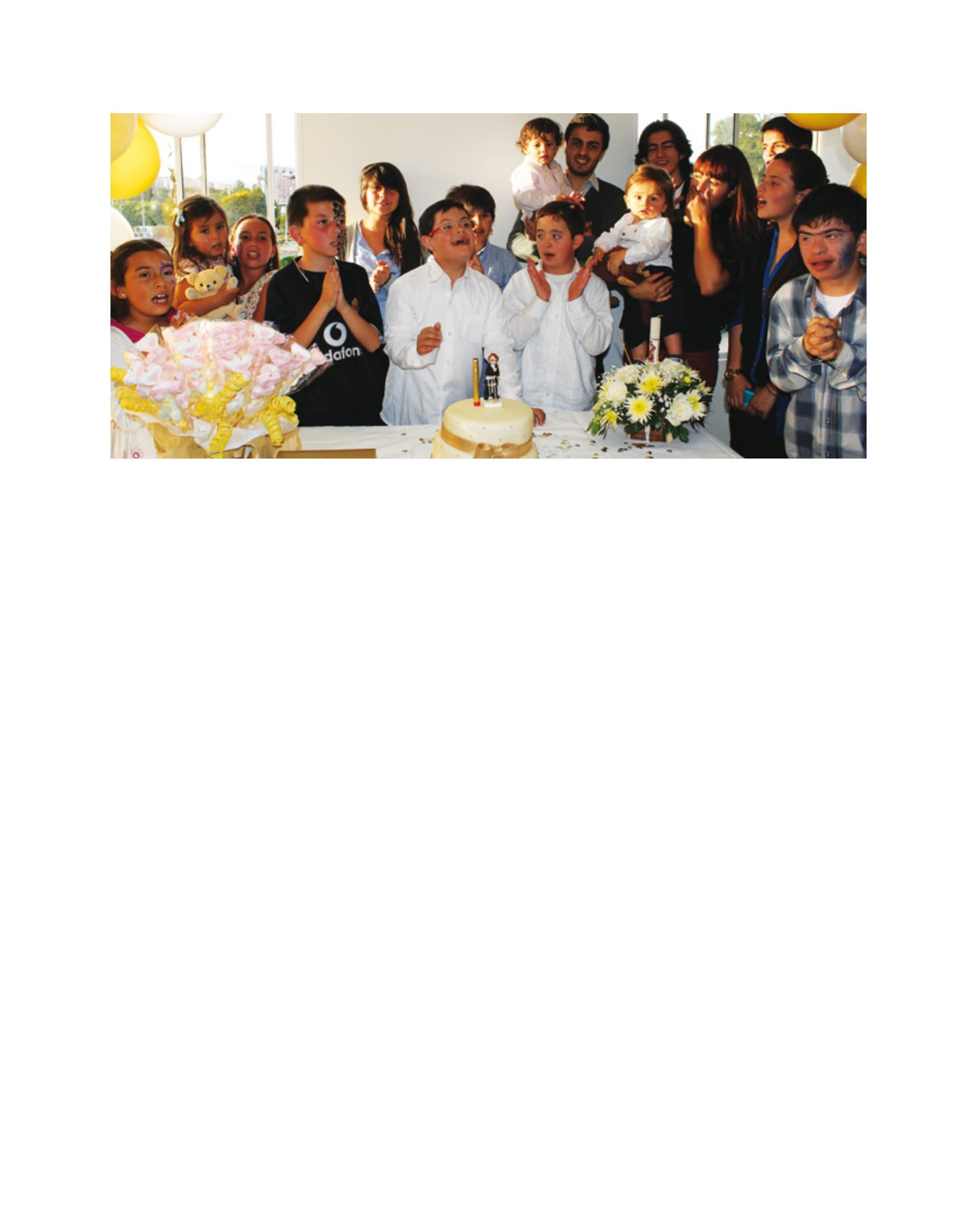
Gabriel Gardeazábal celebrating his first communion with his friends and family: in an inclusive community everyone is valued, supported and feels they belong
resources to help teachers who face challenges in their classrooms
– also improve the education for all learners.
A parent from Lebanon said: “My child attended a regular
school but wasn’t given the right material. He was playing all the
time. Moving him to a [private school that believes in inclusion]
has changed my life. I know now that I have wasted three years
of my child’s life. The teachers at my son’s school now are very
understanding, progressive and take the time to plan Individual
Education Plans according to his needs. Teachers are cooperative
with other teachers, parents and children.”
When disabled and non-disabled students learn together
they learn how to live together. Those who don’t have disabili-
ties are better prepared to be caring and supportive adults in
the future – as parents, as teachers, as bus drivers, as shop-
keepers, as co-workers or as neighbours.
Besides inclusive education, there are other programmes
that promote inclusion and the sense of belonging to their
community for people with an intellectual disability and
their families. Norwegian Association for Persons with
Developmental Disabilities (NFU), an organization for fami-
lies of persons with an intellectual disability, supports groups
of parents in Africa to learn about the rights and potential of
their sons and daughters. Best Buddies encourages friendships
between people who have an intellectual disability and non-
disabled peers in 50 countries. Special Olympics runs sports,
health and education programmes in 170 countries to raise
awareness about the abilities of persons with intellectual disa-
bilities and to provide services and support to families.
Over 60 years ago families came together to form Inclusion
International because they needed an organization to represent
their perspectives; to advocate for inclusion in the community;
to share ideas about how to support families; and to raise aware-
ness of the need for family-friendly policies. Today, Inclusion
International and its members around the world work to build
supports and policies to promote inclusion. With over 200
national members in over 115 countries, Inclusion International
raises the profile of families with the United Nations and its
agencies and helps its members to work with government to
develop progressive policies for inclusion.
Progressive policies for inclusion require three essential
elements: support to the individual tomeet disability-related needs
(such as therapies, assistive devices); support to the family, which
recognizes them as the constant presence in the life of the individ-
ual who has an intellectual disability; and support to communities
to eliminate barriers faced by people with intellectual disabilities.
Essential to all these policies is the element of choice. People
who have an intellectual disability and their families have usually
been given no options when they have been offered support. For
example, it is often easier to have the government pay for 24-hour,
365-day services in a large residential institution than to receive
support a few hours a week so that parents can catch up on sleep
or attend to other family matters. One of the key principles of the
CRPD is self-determination. Individuals who have an intellectual
disability need support so that they canmake choices in their lives,
and their families need support to help them exercise their rights.
Families of people who have an intellectual disability advo-
cate for their family members for support and services. But even
more, they advocate for inclusive communities, where everyone
is valued, supported and feels they belong. As Fadia Farah, Vice
President of Inclusion International put it: “The ‘Arab Spring’ has
been in the news, but today I want to talk to you about another
‘Spring’ that is taking place in the region I live. I want to talk
about Lebanon, Iraq, Bahrain and Algeria, where a different
change is sweeping over the region. Families and people who
have an intellectual disability are using their voices to push for
the recognition of their rights, inclusion in their communities
and acknowledgement of the supports they need. Families have
shown me that progress is happening and is all about parents’
will and their work. And when people with intellectual disabili-
ties are included, others get included too.”
Families of people with intellectual disabilities are demon-
strating that when communities are inclusive, everyone benefits.