


 26 / 210

[
] 24
Empowering families to achieve
lifelong education for all
Abbie Raikes, Programme Specialist, Section for Basic Education, UNESCO
A
dvancing
S
ocial
I
ntegration
and
I
ntergenerational
S
olidarity
T
he core mandate of the United Nations Educational,
Scientific and Cultural Organization (UNESCO) is
to bring education to all the world’s people, based
on the principle that education is a universal human
right and is central to building peaceful societies. For the
coming years, UNESCO’s education goal is focused on
lifelong learning: the right for all people to have access
to education throughout their lives, from early childhood
through adulthood.
While school systems and governments are the primary route
through which people receive schooling, families also play
a critical role in education. Focusing on families as central
partners in education is important for both children and
their parents, especially those who have been excluded from
schools systems or who are at risk of being excluded due to
family economic circumstances, cultural background, gender
or the presence of special needs. Education systems that
build upon and empower families as teachers and learners
will help to propel the world forward in pursuit of lifelong
learning for all.
For all children, engaging families early in each child’s life
is central to achieving global education goals. Families form
the basis for children’s learning and development, beginning
at birth and continuing throughout life. A child’s first teach-
ers are parents – parents provide the interaction, emotional
support and exposure to language that forms the basis for
lifelong health, well-being and literacy. Despite parents’
deep love and commitment to their children, families in
many countries struggle to see that their children’s right to
an education is fulfilled. Family poverty poses a grave chal-
lenge to education. Children who come from families that
do not have adequate resources face considerable challenges
to school success, beginning in infancy with poor health,
nutrition and a lack of access to stimulating learning envi-
ronments. As children grow older, the many barriers that
families face in educating their children include a lack of
access to affordable schools; schools of low quality; and
schools that do not foster inclusion – meaning that children
from families of different ethnic or cultural backgrounds are
not accommodated in educational systems. Many children
do not have access to instruction in their mother tongue, a
very challenging situation for children that further isolates
families from their children’s education. Working families
may face additional challenges, such as finding adequate
after-school care and ensuring that parents have the time off
and support needed to attend school functions and engage in
the school community, all of which are integral to a child’s
success at school.
It is also important to note that in many families, some
members have been able to obtain an education while
others have not. Promoting families as teachers and learners
requires that access to education is available for all, includ-
ing youth and adults who may not have had the opportunity
to attend school when they were children, or did not gain
the skills and competencies desired. All told, families are
at the heart of education – by empowering and support-
ing families, global education goals of ensuring access and
completion for all can be obtained.
While UNESCO’s primary mandate is in relation to educa-
tional systems, the organization also recognizes the important
role of families as partners in achieving global education goals,
especially through approaches designed to support family
literacy and community learning. Reading is perhaps the
most basic skill required for lifelong learning, and therefore
promoting literacy is a central goal for UNESCO. Yet despite
increases in primary school enrolment and completion,
millions of children and adults still do not know how to read
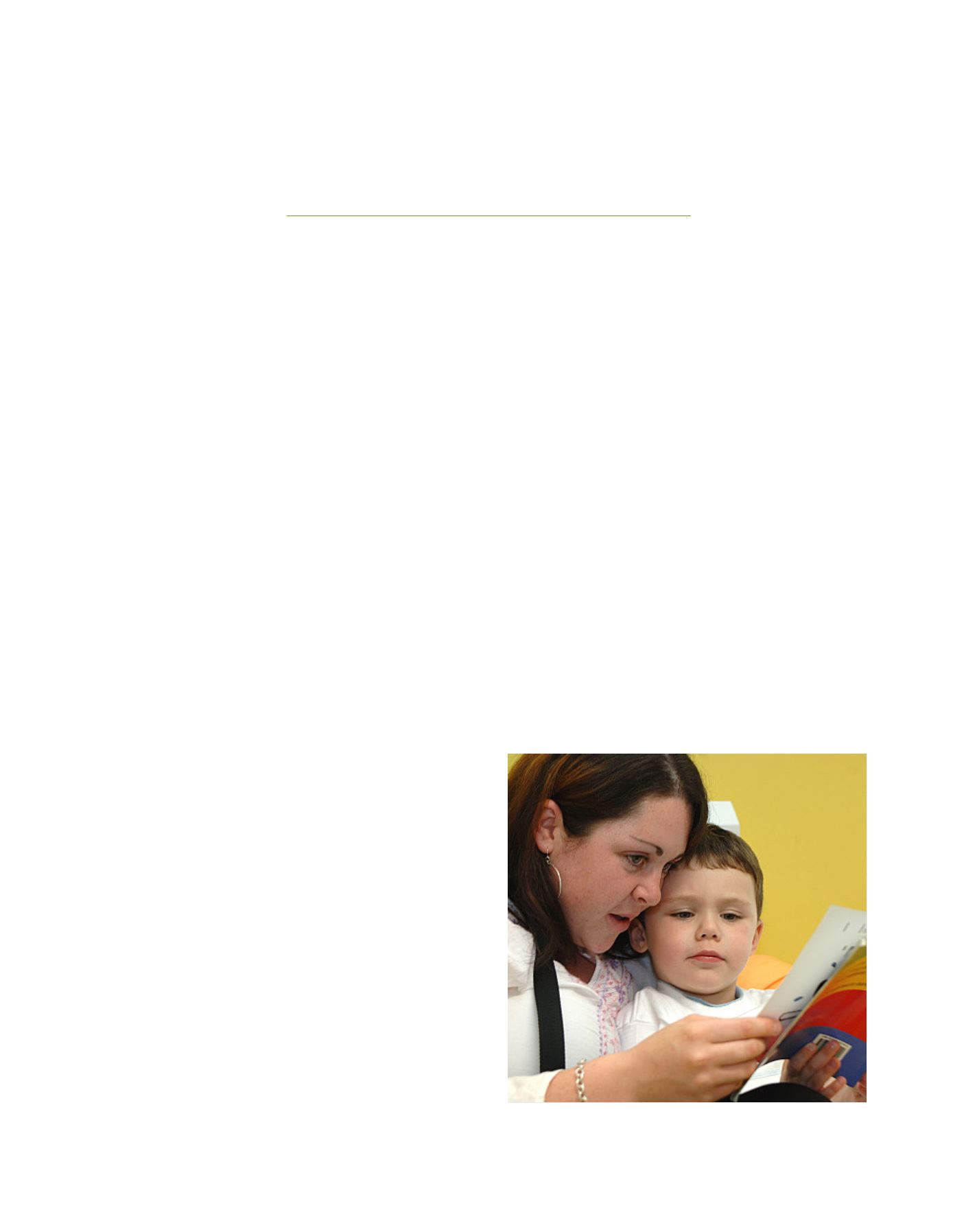
Focusing on families as central partners in education is important for both
children and their parents
Image: UNESCO