


 28 / 210

[
] 26
A
dvancing
S
ocial
I
ntegration
and
I
ntergenerational
S
olidarity
Community learning centres
Community learning centres (CLCs)
2
are a form of community-based
education institutions that provide learning services and activities
delivered in a non-formal context to out-of-school children and other
community members with limited or no literacy skills. The main
beneficiaries of these centres are people with fewer opportunities for
education, such as preschool children, out-of-school children, women,
youth and the elderly.
CLCs are usually managed by local people with the support of the
Government, non-governmental organizations and private sector
organizations. Their main objective is to empower locals to develop
their own communities by providing education opportunities to the least
favoured members including adults, youth and children of all ages.
CLCs provide various learning opportunities including literacy, post-
literacy, income generation, life skills programmes and basic education.
The learning programmes vary according to local needs and contexts in
the country. In cases such as the Community-based Parenting Education
programme, CLCs offer general parenting education to parents and families.
Currently, 24 countries have established CLCs or similar non-formal
education centres, with an estimated 170,000 centres in the
Asia-Pacific region.
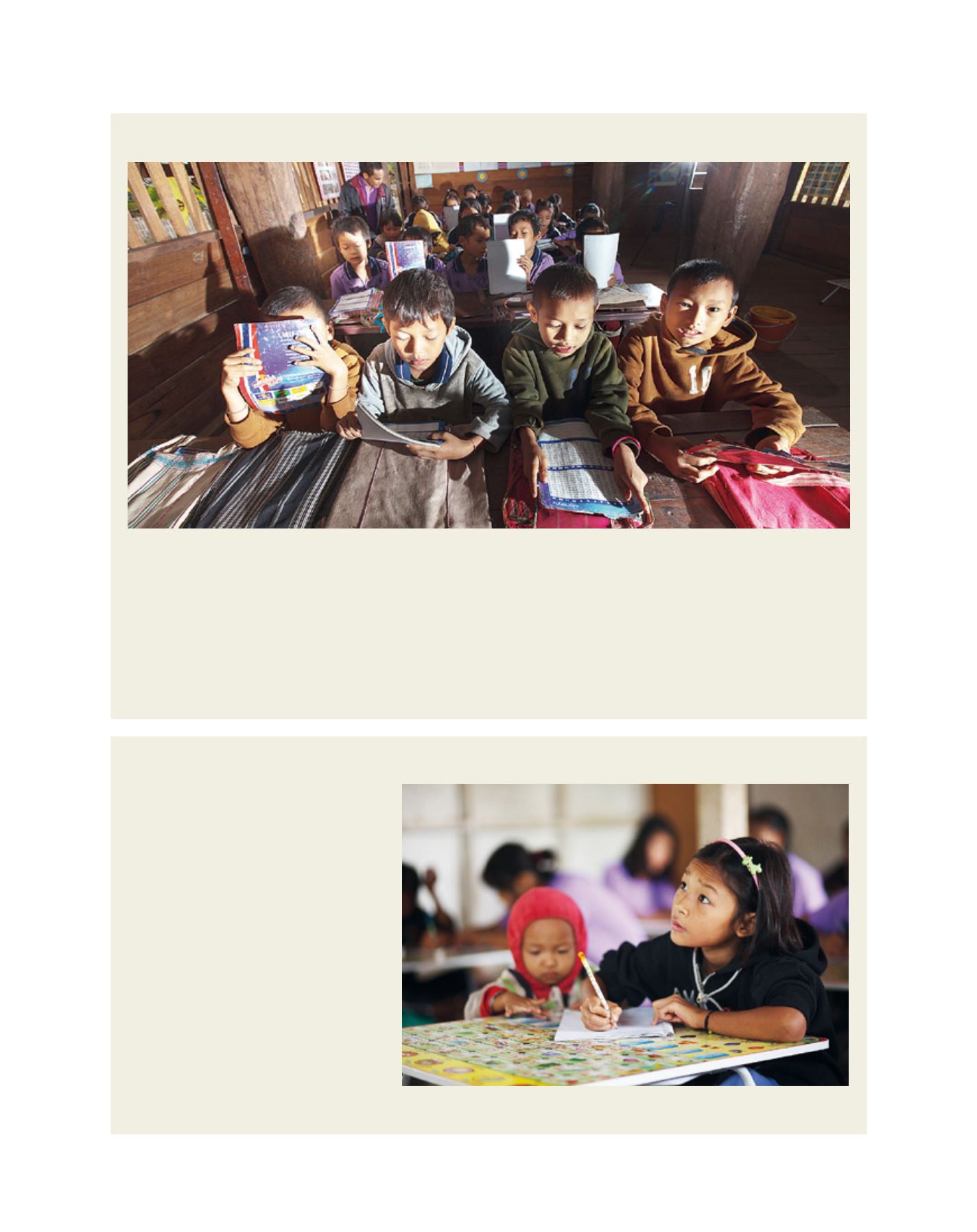
CLCs provide learning services and activities in a non-formal context
Image: UNESCO
Community-based parenting education
In addition to literacy, in some cases such as the
Community-based Parenting Education Programme
3
launched in 2010 by UNESCO Bangkok, CLCs offer
parenting education to parents and families in
general. This education is aimed at expanding and
improving the quality of non-formal early childhood
care and education (ECCE).
Early childhood is the critical stage of human
development. Significant brain development happens
during the first years of life, and interactions with the
family and with a wider environment literally shape the
child’s development. Parents and families are the first
educators of their children, and given knowledge and
skills, families and communities can be even more
effective ECCE practitioners.
The Community-based Parenting Education
Programme is aimed at raising awareness about
the added value of parenting education. It was
initially introduced in seven countries: Bangladesh,
Myanmar, Pakistan, Samoa, Mongolia, Kazakhstan
and Viet Nam, but it has also been adapted to India
and Indonesia. The materials for this programme (a
guidebook and a handbook) were developed to
be adaptable in the social and cultural context of
Asia-Pacific countries.
The Community-based Parenting Education Programme aims to help families become more
effective ECCE providers
Image: UNESCO