


 27 / 210

De Cero a Siempre
‘De Cero a Siempre’ (From Zero to Forever) is the National Strategy
for Integral Attention in Early Childhood created by the Government
of President Juan Manuel Santos in Colombia.
4
The programme is
based on a belief that investment in early childhood is the most
cost effective long-term contribution to a country, and that a good
start in life will lead to a better future. It emphasizes the obligation
of family, society and the state in ensuring children’s protection,
health, nutrition and early education from birth to five years old.
The programme aims to combine the efforts of the private
and public sectors, civil society and international cooperation
to address early childhood care on a national level. In doing so,
it seeks to transform the way early childhood care services are
provided to enable comprehensive care and effective rights for
children between birth and five years old. It devises a wide variety
of activities around an education strategy for both the family
and the child. Activities include training and support for families
during the children early years, prenatal classes on child health for
families, and community awareness activities.
The Bouba and Zaza series
To address the need for culturally-appropriate texts for parents and
children to read together, the Bouba and Zaza series was published in
2012 as a UNESCO-Dakar project with the collaboration of the African
Development Education Association and the publishing house, Editions
Michel Lafon. The publication of the series was part of a framework
established in Dakar 2000 to include the private sector in education
development. The series was created as part of the ‘Childhood Culture’
collection to develop essential life and socialization skills that reach
out of the family context; it also encourages interaction between
school, family and community. The project was intended to address
areas and topics that parents may find difficult to address such as
HIV, the environment and conflicts. The Bouba and Zaza series was
published in English, French, Portuguese and Kiswahili editions and
targeted at children aged between three and eight years.
[
] 25
A
dvancing
S
ocial
I
ntegration
and
I
ntergenerational
S
olidarity
well in their native languages. In order for families to thrive
as children’s first teachers, support for literacy – including
access to culturally-relevant books in the mother tongue,
literacy instruction for parents who may not have had the
opportunity to develop strong literacy skills, and parent educa-
tion on the importance of literacy and reading – is needed.
Intergenerational approaches to learning, where parents and
children learn together, can be a viable path towards building
the family as a setting for teaching and learning.
Family literacy refers to education programmes that involve
all members of the family, and can include parent education in
supporting children’s education, adult literacy and adult educa-
tion. Community learning focuses on creating opportunities
for education that are community-based and responsive to the
needs of families, by offering non-formal education for chil-
dren and adults who are not part of the formal school system.
There are several effective ways to empower families as a force
that is integral to achieving global education goals. These
pages include just a few examples – the UNESCO Institute for
Lifelong Learning maintains a database with profiles of many
other effective programmes that address family literacy.
The role of families in achieving education goals cannot be
understated. Effective programmes to help build families as
supporters of education can engage and empower families as
teachers and learners, through an emphasis on their mother
tongue and creating culturally appropriate and accessible
avenues for instruction. UNESCO applauds the International
Year of the Family as recognizing the importance of families
in achieving education for all.
Family literacy programmes
Family literacy programmes
1
focus on promoting literacy by placing
an emphasis on all members of the family, not just children who
are enrolled in school. Family literacy programmes have been
implemented in many countries. The term ‘family literacy’ usually
refers to a set of diverse learning and literacy activities that involve
interaction between parents and their children. Family literacy
programmes can be adapted to meet the needs of families in
various settings and communities, and have been implemented
through home visits, community centres or other means. The
activities of family literacy programmes serve not only as training
for parents to learn how to participate in the education of their
children, but also as a way to improve their economic autonomy
through literacy training, so parents become learners themselves.
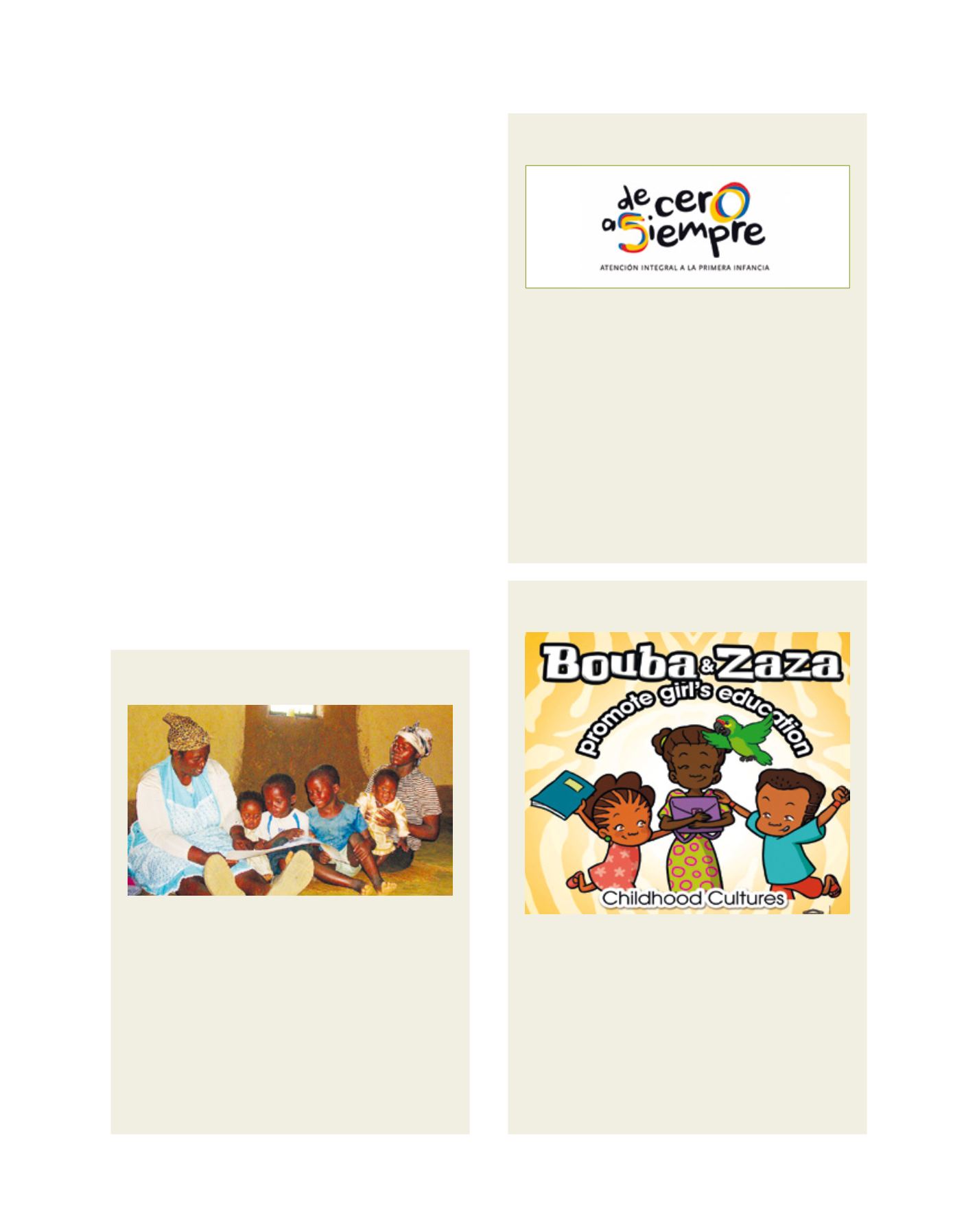
Family literacy involves interaction between parents and their
children, in a set of diverse learning and literacy activities
Image: UNESCO