


 129 / 208

[
] 129
S
ustainability
P
olicies
, P
rogrammes
and
their
E
conomic
I
mpact
together with the EU Emissions Trading Scheme and a
range of legislative instruments on biodiversity, waste
management, water and air quality. This has encouraged
the growth of EU eco-industries, which now correspond
to over 2.5 per cent of EU gross domestic product and
provide jobs for more than 3.4 million people. A key
policy development has been the adoption of the Europe
2020 Strategy in 2010. This aims to transform the EU
into a knowledge-based, resource-efficient and low-
carbon economy and provide a sustainable response to
the challenges facing the EU up to 2050.
...for everybody
The catalytic effect that proper incentives and frame-
work conditions have on private investment is clear
– and this is key to delivering on the promise of
sustainable development. But at the same time we
continue to acknowledge that official development
assistance has a role to play. With €53 billion of devel-
opment aid in 2011, the EU, with its 27 Member States,
remains the world’s biggest donor, providing more than
half of global official aid. EU official development aid
reached 0.42 per cent of EU gross national income,
which exceeds the efforts of other major donors. EU
aid has pulled millions of people out of poverty and
saved countless lives over the past 10 years.
For example, take the efforts to provide sustainable
energy for all. The European Commission alone has
spent more than €2 billion over the past five years on
energy projects and around €1 billion on improving
the state of the energy sector in developing countries.
undeniable. The world should be looking at how to create prosper-
ity, not misery, for all.
In order to guide the direction and pace of transition to an inclu-
sive green economy, we need to build on the five pillars of life: water,
sustainable energy, oceans, land and ecosystems, and resource effi-
ciency, with a particular focus on waste. More specifically, we need
to address the following areas:
• Water efficiency – access to clean water for all is essential
• Sustainable energy – we need to increase energy security and
accessibility, and promote renewable energy and energy effi-
ciency
• Oceans – we need to ensure the preservation and sustainable
use of our oceans’ resources
• Land and ecosystems – we must halt the degradation of land
(soil) and ecosystems, and strengthen existing initiatives on
sustainable agriculture
• Resource efficiency – we need to move to a more resource-
efficient and zero-waste economy, as sustainable management
of materials and waste is expected to generate substantial
economic, environmental and social benefits.
An inclusive green economy based on global direction and global
and national action on the pillars of life will be essential for growth
and poverty eradication, offering opportunities for all countries
around the world and in all stages of development.
The green economy can work...
In recent years the EU has implemented sustainable development
through a broad range of its policies. In particular, it has taken the
lead in the fight against climate change and the promotion of a
low-carbon economy. The EU has adopted binding climate targets
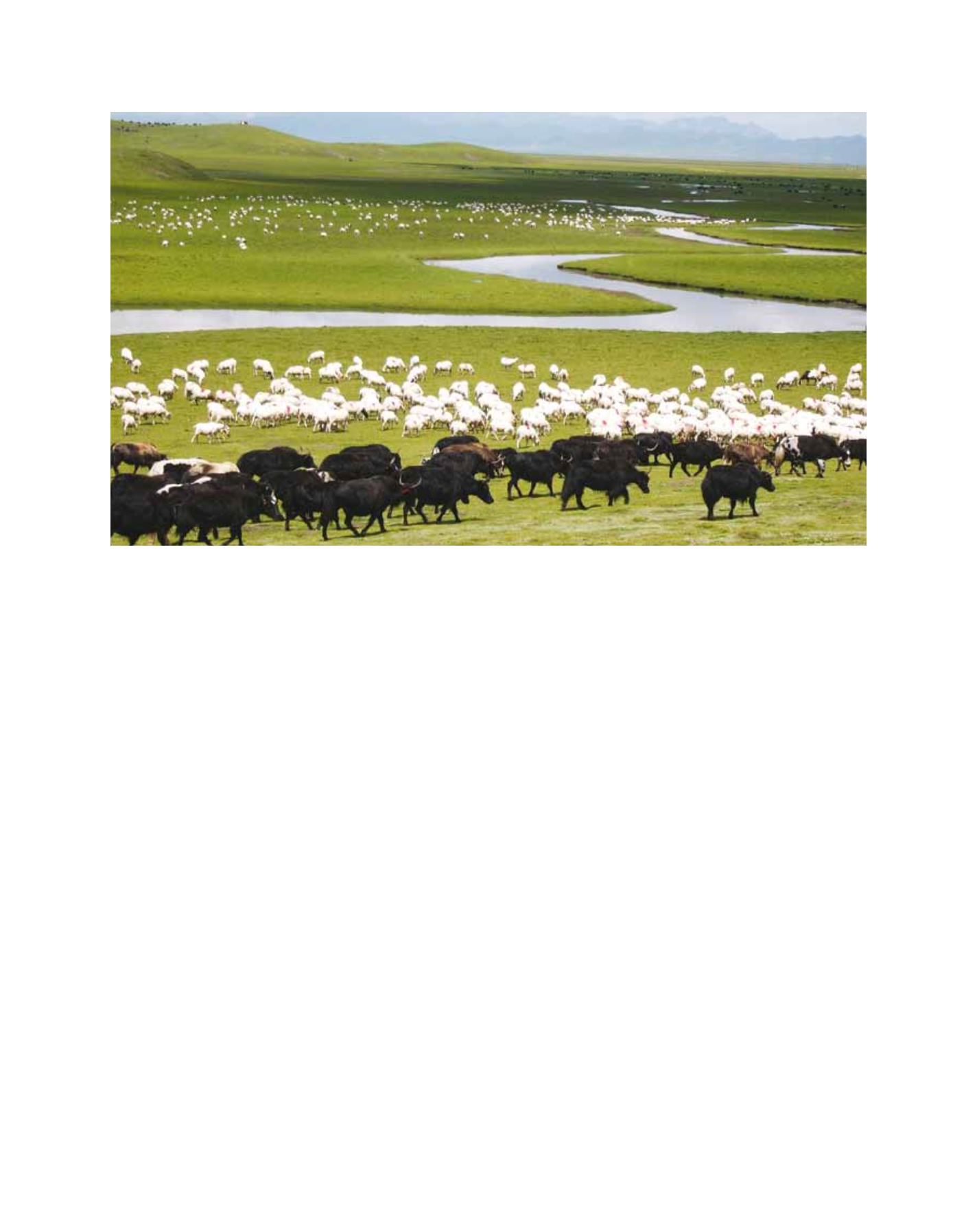
Sustainable protection of mountainous and peat area ecosystems
Image: EU-China Biodiversity Programme (ECBP)