



 159 / 208

[
] 159
The generation contract – Norway’s strategy
for sustainable development
Kjetil Lund, State Secretary, Ministry of Finance, Norway
T
he 1987 World Commission on Environment and
Development (the Brundtland Commission) defined
sustainable development as ‘development that meets the
needs of the present without compromising the ability of future
generations to meet their own needs’.
The concept of sustainable development is not a new invention. For
example, a decent farmer will always try to hand over his farm to
the next generation in at least as good a condition as it was when
he inherited it. This ensures that livelihoods are maintained and
the next generation can take over valuable resources and live good
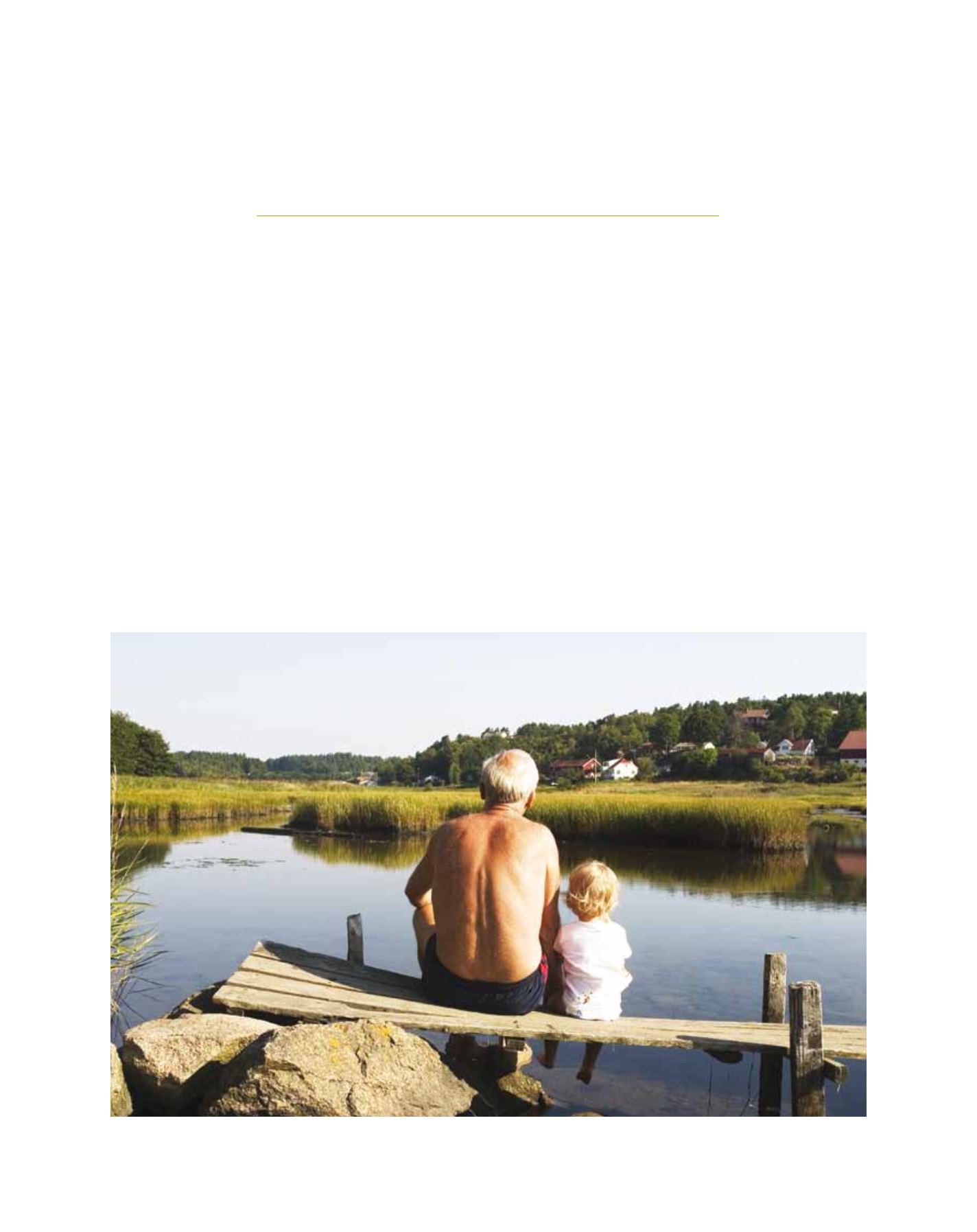
lives. In Norway, we have called this mutual dependence between
generations the ‘generation contract.’
The total value represented by the workforce, natural assets,
production capital and finance capital should be maintained or pref-
erably increased over time. Sustainable development is,
therefore, also a guiding principle for sound long-term
economic policies.
A strategy for sustainable development was first
presented to the Norwegian Parliament, the Storting,
in 2003. The Ministry of Finance is responsible for
the strategy and for coordinating and reporting on the
Government’s work in the area in the annual budget
proposal submitted to the Parliament. The updated
strategy for sustainable development from 2011 is based
on the following key principles:
• Equitable distribution
• International solidarity
• The precautionary principle
• The polluter-pays principle.
S
ustainability
P
olicies
, P
rogrammes
and
their
E
conomic
I
mpact
The generation contract is a matter of handing over a sustainable planet and community to future generations
Image: Øyvind Markussen/Scanpix