



 161 / 208

[
] 161
S
ustainability
P
olicies
, P
rogrammes
and
their
E
conomic
I
mpact
responsible investment that require consideration of good corporate
governance and environmental and social issues to be integrated
into the management of the fund.
The Pension Fund Global, together with the remaining oil and gas
reserves on the Norwegian continental shelf, account for just under
10 per cent of our national wealth. Labour is by far our most impor-
tant resource and accounts for around 85 per cent of our national
wealth. It is therefore vital to ensure the best possible return on our
workforce. This again underscores the importance of maintaining a
well-qualified work force and a high employment rate. An important
task is therefore to secure full employment and development of the
workforce.
We have a long tradition of social dialogue in Norway. This
dialogue, called tripartism, is a formalized collaboration between
workers, employers and the Government. It ensures a legislative
framework in line with international standards – independent part-
ners that negotiate rights, standards, wages and reforms, and engage
in political dialogue. It was borne out of, and still is particularly
important during, times of crisis and reform.
The principle of keeping within environmental limits is important
for putting the generation contract into practice. From the perspective
of sustainability, environmental degradation in the form of air, water
and land pollution is particularly serious as the conse-
quences may be irreversible. A precautionary approach
has to be taken.
Norway is still learning its lessons with regard
to management mechanisms for sustainable use
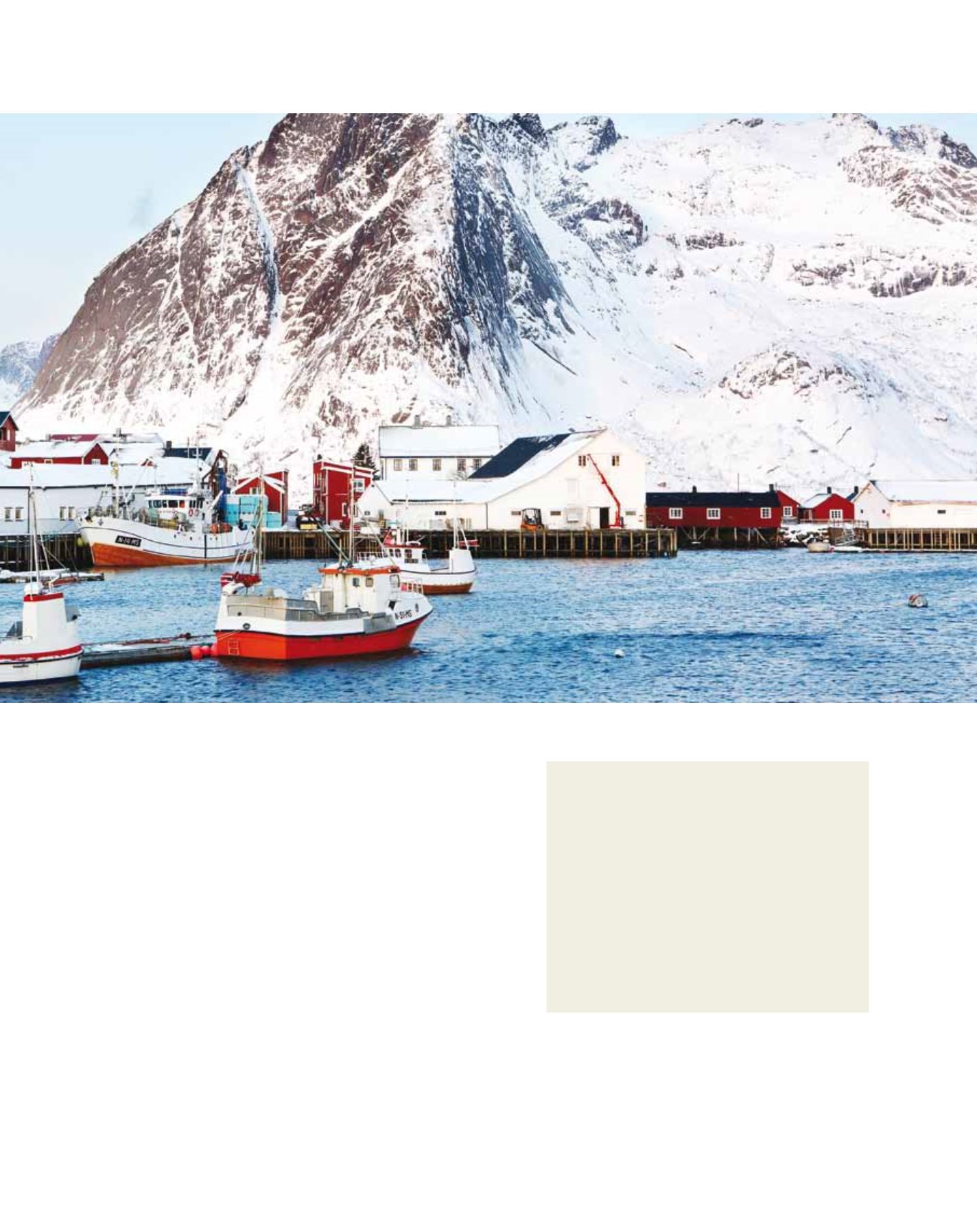
Over the past 30 years the Norwegian fishing industry has developed from unregulated fishing to a sustainable and regulated industry subject to quotas and licensing systems
Teaching future generations
The Natural Satchel is a project for Norwegian pupils in
primary and secondary schools, aimed at implementing
education on sustainable development into mainstream
education. The main goals are to develop curiosity and
knowledge about nature, awareness of sustainable
development and increased commitment to the
environment. For example, one primary school wanted to
look into the causes of the reduction in Norwegian lobster
stocks. Here, pupils take part in a larger research project,
registering the lobster population development in the
reserve Risoer. Through this project, the school wants to
give pupils a curiosity and knowledge about relationships in
nature and the interaction between human harvesting and
lobster stocks.