



 16 / 168

[
] 16
government spending on DRR is probably very low. It is impossible to
be absolutely definitive on this because DRR spending is not monitored.
In the 2009-2011 HFA monitoring reports, 49 out of 79 coun-
tries indicated that they have a specific allocation for DRR in the
national budget. However, of those 49, 16 included no mention
of any specific DRR spending or related budgetary arrangements
in their supporting narrative. A further nine indicated that
DRR was financed out of specialized funds for other issues and
campaigns (such as health, literacy, environmental protection
and social development) or sectoral budgets, but mentioned
no specific allocation for DRR in the budget. Others indicated
specific structural and non-structural disaster risk management
initiatives but only 14 countries made reference to some form of
budgetary arrangement for DRR. Overall, 25 countries explicitly
indicated that they have inadequate funding for DRR, several
of them admitting that they have no financial resources at all
for this purpose.
Investment in DRR – Peru
Between 1970 and 2009, a total of 105 droughts, floods, mudslides,
frosts, earthquakes and volcanic eruptions caused 74,000 deaths
and affected 18 million people in Peru. Additionally,
in the periods 1982-1983 and 1997-1998, the El
Niño phenomenon caused estimated losses of US
$6.8 billion. In 2010, floods and mudslides caused by
rains left 92 dead and 235,000 people affected, 27,000
houses destroyed or damaged, and 11,700 hectares of
crops ruined.
Governance of DRR in Peru is decentralized, with
responsibilities and resources delegated to lower
administrative levels. Emphasis is placed on consider-
ing risk reduction measures for public infrastructure
projects. This means allocating budgets for DRR,
increasing capacity of local government to deal with
emergency situations, developing human resources
with specialized skills and providing disaster contin-
gency loans.
The Ministry of the Economy and Finance (MEF) has
made the reduction of vulnerability of public invest-
ment projects a priority, based on the understanding of
the cost-benefit of such action. The MEF has developed
methodology and technical tools that public institu-
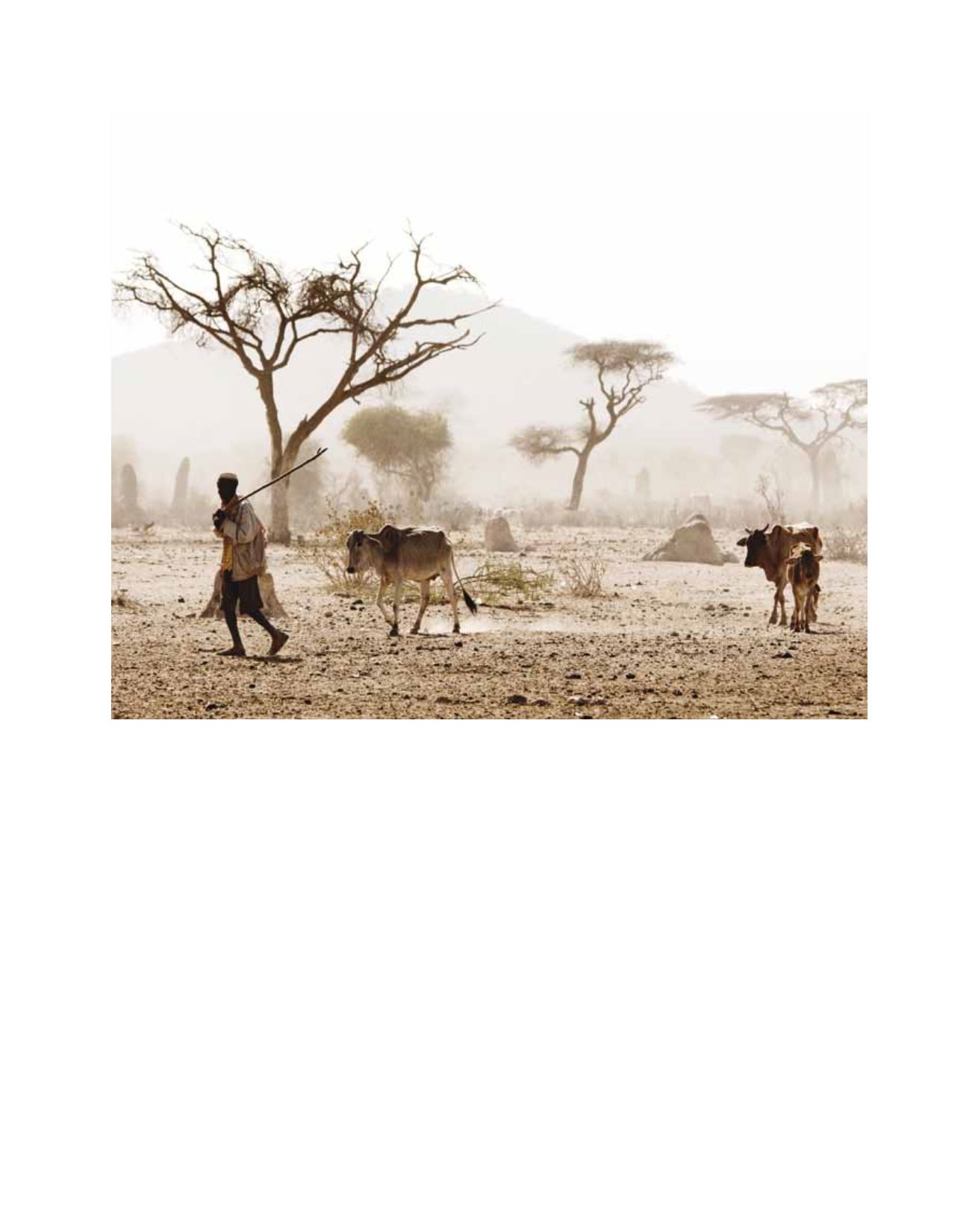
Ethiopian drought
Image: Jakob Dall / Danish Red Cross