


 17 / 168

[
] 17
tions and local governments are now using to mainstream DRR into
the National Public Investment System project development and
approval cycle.
The planned Framework Law for Integrated Disaster Risk
Management will put Peru at the cutting edge of legislation
on this issue. The National Financial Management Strategy for
Disaster Risks comprises emergency reserve funds, contingency
credit lines and risk transfer instruments, including public infra-
structure insurance.
According to a recent paper by United Nations Capital
Development Fund, although there is evidence of increased inter-
national cooperation on DRR, the (relative) scarcity of national
resources allocated to DRR remains a common concern.
Some of these difficulties are alluded to in Natural Hazards
and UnNatural Disasters, a joint United Nations and World
Bank report on DRR
2
The report notes that disaster prevention is
possible and cost-effective and that resources for prevention are
often embedded in other budget items, such as the cost of infra-
structure design. The report concludes that despite this potential
fiscal saving, expenditures on prevention are generally lower than
those on response, which ‘rise in the aftermath of disaster and
remain high for several subsequent years’.
3
However
the report does not directly address the difficulty of
financing DRR in its four policy recommendations,
which are to:
• Make available information on disaster risk and
thereby enable DRR to be reflected in land, property
and insurance pricing
• Permit land and housing markets to work freely and
reduce rental subsidies, thereby improving incen-
tives for investment in DRR
• Ensure adequate infrastructure is provided and
maintained by governments
• Encourage effective oversight.
4
Opportunities and incentives for DRR
Public investment that is based on sound needs and
risk analysis promotes growth. If public investment
becomes a vehicle for DRR, not only is the quality and
sustainability of public spending enhanced, but disas-
ter-related losses and costs are also reduced and social
and economic development stimulated.
Information on disaster risk should inform property pricing
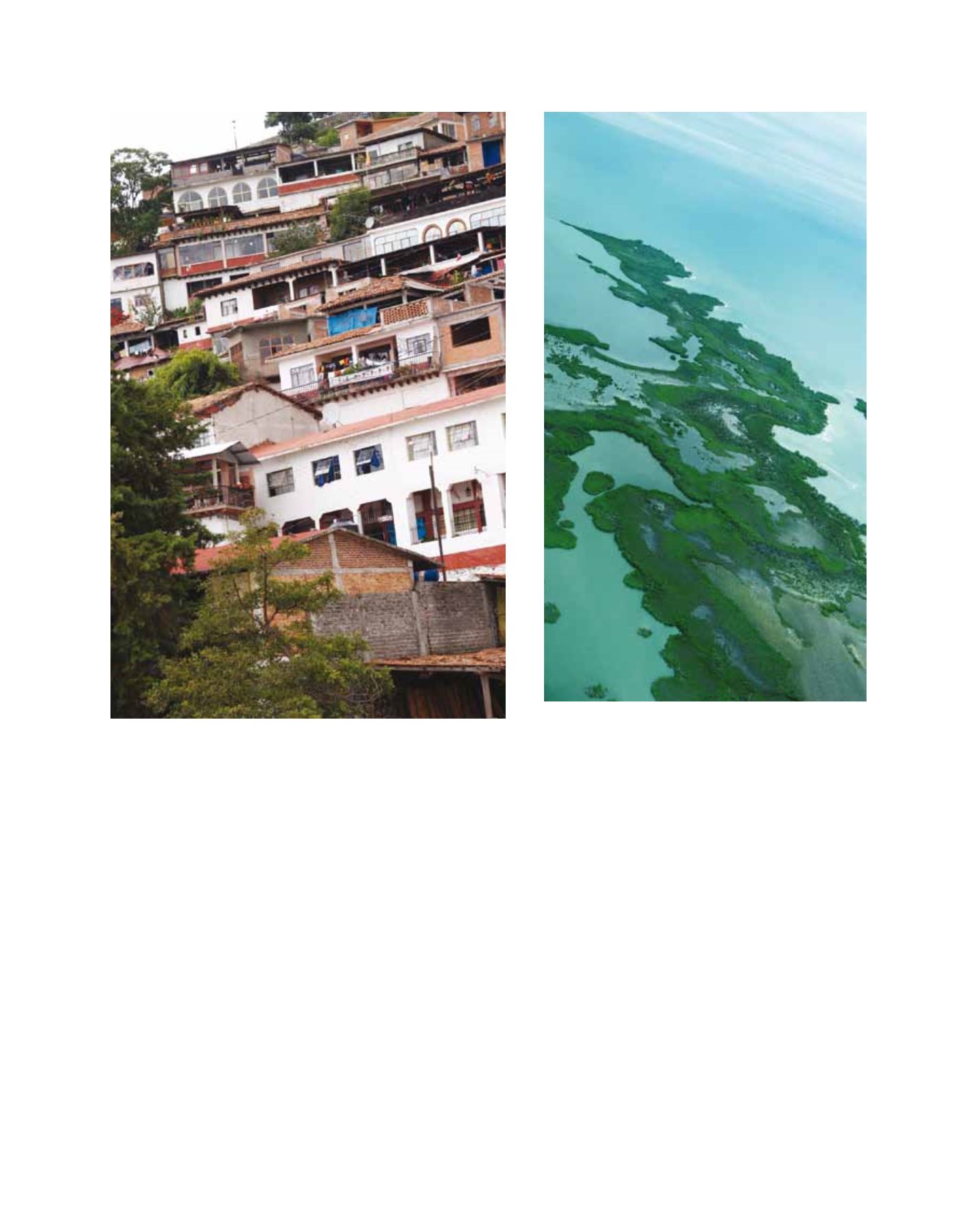
Mangroves in Belize protect the shoreline, saving
US$111
-
167 million / year
Image: Elizabeth Mansilla
Image: Emily Cooper / World Resources Institute