


 23 / 168

[
] 23
Coordination capability of the United Nations
The United Nations System can be used to coordinate
the response to Governments’ needs for climate services
and to bring together climate service users, providers
and experts who maintain climate information systems,
observation systems and research and development
capabilities. Mobilizing this coordination capability of
the United Nations will require establishing a United
Nations agency-based secretariat that will be an impor-
tant supporting element of the Framework.
Communications and advocacy
Two communications objectives can be distinguished.
First, to ensure that potential users and funders are
alerted to its existence and role, the Framework will
need a communications strategy to create global aware-
ness of its scope and capabilities. A clear priority of the
strategy will be to work with Governments to highlight
the benefits that flow from investing in the Framework.
Second, at a more technical level, the Framework
will need a well planned strategy for informing user
groups about its various services, noting that in differ-
ent cultures and for different services, the optimum
methods of communication will vary. An aim of this
communication will be to build the capacity of user
groups to derive the maximum benefit from the climate
services available.
Existing Government commitments
At the present time, many Governments are already
committing substantial resources to maintaining and
developing climate service functions on a national
scale. One role of the Framework is to add value
to these activities through assisting in their global
coordination. For a small additional contribution to
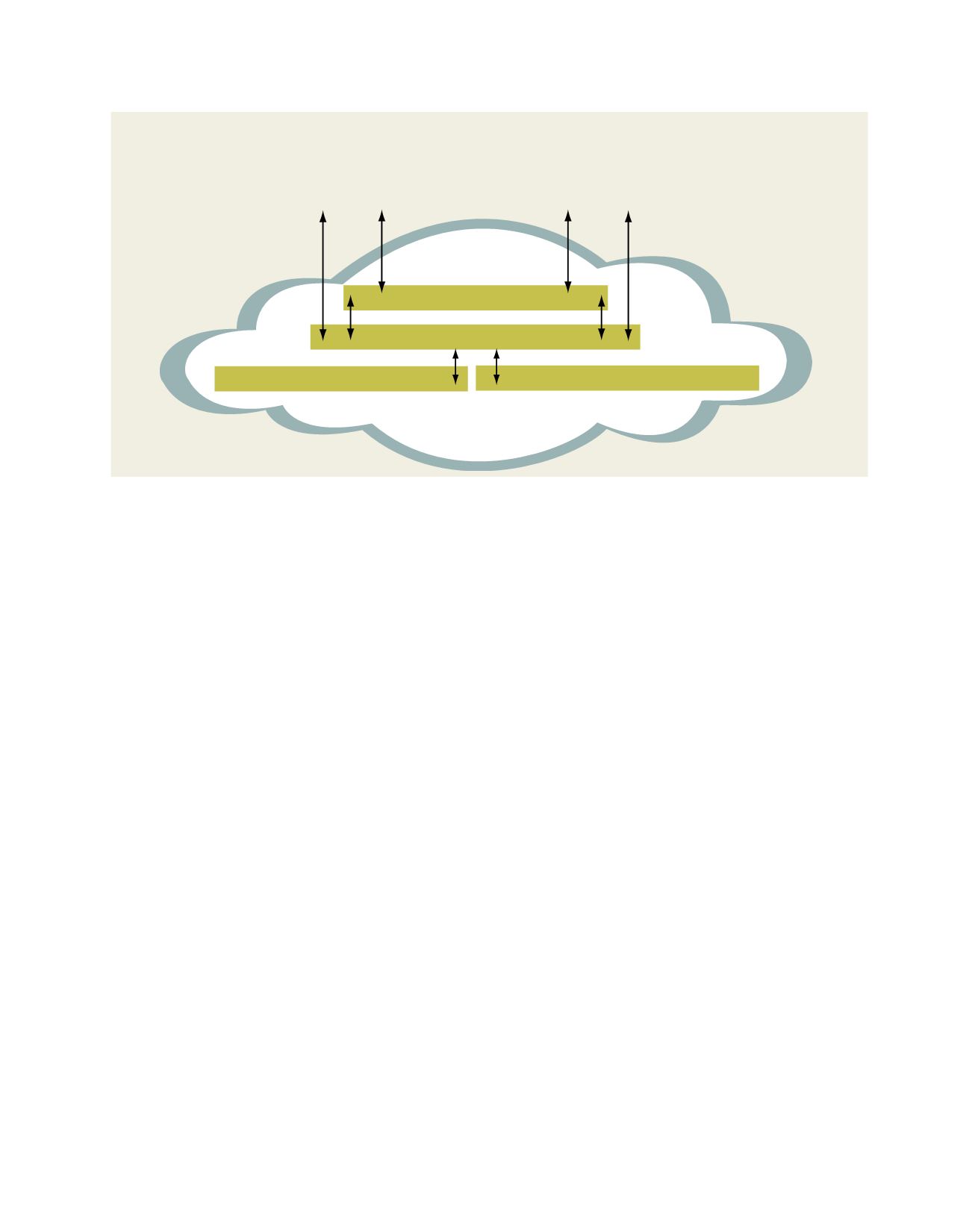
climate service providers to interact, thereby maximizing the
usefulness of climate services and helping develop new and
improved applications of climate information
• The Climate Services Information System protects and
distributes climate data and information according to the needs
of users and the procedures agreed by governments and other
data providers
• The Observations and Monitoring component will ensure that
the climate observations necessary to meet the needs of climate
services are generated
• The Research, Modelling and Prediction component will assess
and promote the needs of climate services within research
agendas
• The Capacity Building component will support systematic
development of the necessary institutions, infrastructure and
human resources to provide effective climate services.
Many of the foundational capabilities and infrastructure that make
up these components already exist or are being established, but they
require coordination and strengthened focus on user needs. The role
of the Framework should therefore be to facilitate and strengthen,
not to duplicate.
Implementation of the Framework
The need for technical expertise
Implementation of the Framework is a technical activity and will
need the full support of a range of technical experts from both user
and provider communities to sustain and advance its components
(observation, research, information management and exchange
and service delivery) in order to meet the objectives defined
by governments. An important element of the implementation
strategy will be the creation of a range of technical committees
comprised of experts, drawn from national institutions, who will
work together to build a sustainable Framework to provide global
access to climate services.
Users
Government, private sector, research, agriculture, water, health, construction
disaster reduction, environment, tourism, transport, etc
Capacity Building
User Interface Platform
Observations and Monitoring
Research, Modelling and Prediction
Climate Services Information System
A schematic of the components of the Global Framework for Climate Services with capacity-building
occurring within and between all components
Source: WMO