



 24 / 168

[
] 24
the Framework, substantial national benefits will be accessible.
Collecting data to agreed standards, building regional capaci-
ties in a range of climate-sensitive sectors and exchanging data
and expertise regionally and globally are all activities that are
largely sustained and enhanced by Government engagement
with the Framework. Therefore, a key element of the work
plan should be a sustainable, ongoing programme that engages
all Governments to participate in and support the work of the
Framework. A second key element should be the implementa-
tion of ‘fast track’ initiatives to address key shortcomings in the
provision of climate services.
Implementation priorities
Implementing the Framework will require that two sets of actions
be undertaken in parallel:
• Establishing leadership and management capability to take the
Framework forward
• Quickly carrying out a number of high-profile capacity-building
projects to enable the delivery of climate services to meet the needs
of climate-vulnerable communities in the developing world.
Projects undertaken should aim to build the capacity of developing
nations to sustain the provision of climate services over the long
run, with funding largely derived through resources given for aid
purposes.
Governance of the Framework
A governance mechanism is needed to provide high-level ownership
and direction for implementing the Framework and for overseeing
its ongoing planning and management, including monitoring and
evaluation functions. It is required as a key means of motivating
international cooperative action across multiple sectors and organi-
zational interests, which is a central challenge to the success of the
Framework. It is also needed to mobilize and guide resources to the
Framework from multiple funding sources. The governance mecha-
nism will support essential normative functions such as
developing technical standards, disseminating informa-
tion, modelling cross-sector interaction and developing
coherent advocacy messages.
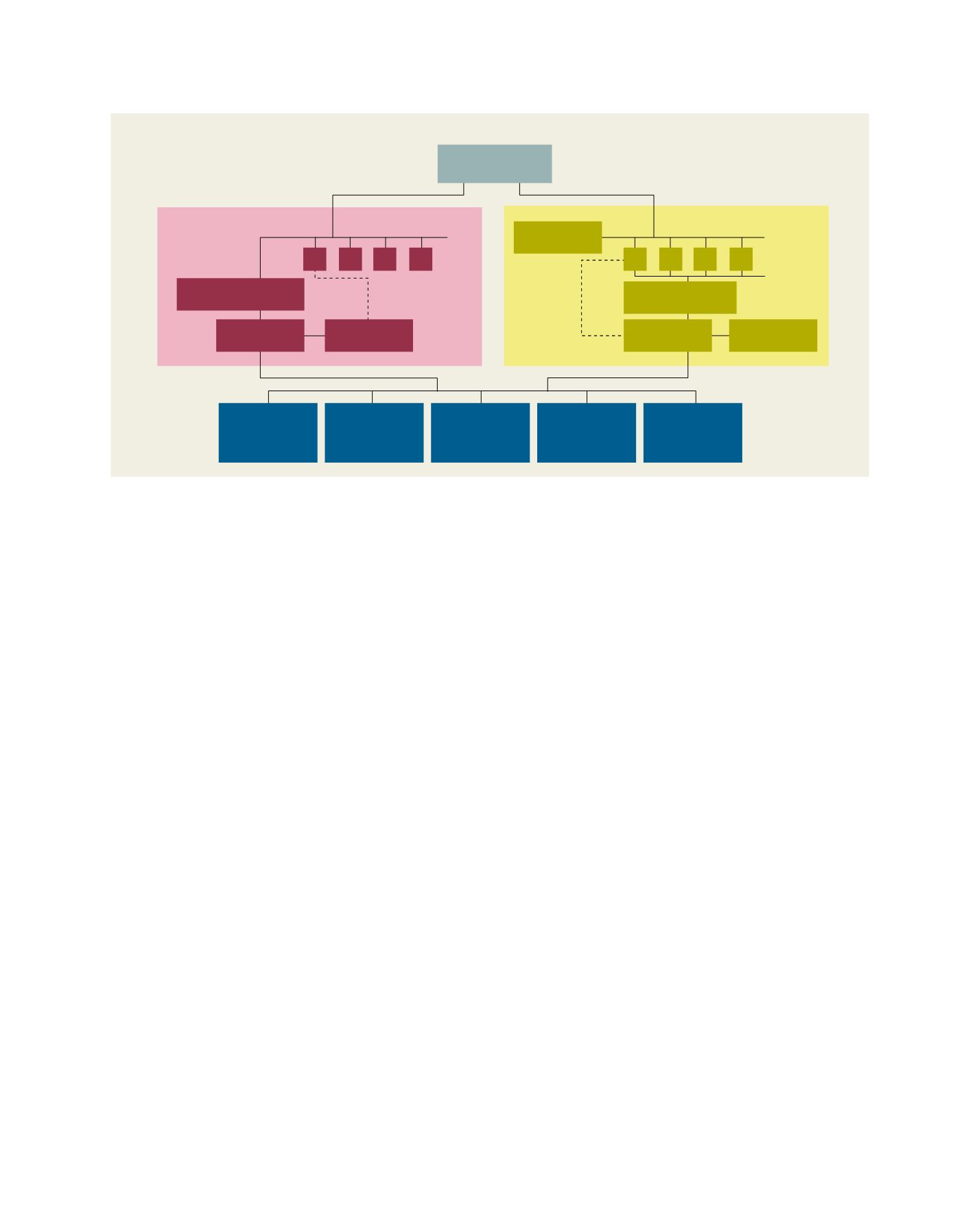
Proposed options for governance
The Taskforce has put forward two options for govern-
ing and implementing the Framework:
• Option A: A new intergovernmental board within
the United Nations System
• Option B: A joint committee linked to the working
mechanisms of those United Nations System entities
committed to supporting and using the Framework
as a mechanism for furthering their programmes
where climate sensitivity is an issue.
After detailed consideration of these options, partic-
ularly of their ability to comply broadly with the
requirements outlined above, the Taskforce recom-
mended that option A be adopted. However, at the time
of preparing this article it remained for Governments to
choose their preferred option.
According to option A, there would be a small
secretariat based in a United Nations agency to
support the work of the highest level governing
body and its committees. The head of the secretariat
would be accountable to the chair of the board for
all strategic and work programme matters and to the
hosting agency for local administrative and fiduci-
ary matters. The Taskforce proposes that the WMO
is the best equipped organization to host the secre-
tariat and that the Secretary General of the WMO
convene the first intergovernmental plenary meeting
of the Global Framework for Climate Services by the
end of 2011.
UN System Entities
UN System Entities
Option A
Option B
A
B C D
Executive
Committee
Secretariat
Joint Board on
the Framework
UN CEB
Intergovernmental
Board on the Framework
Executive
Committee
Secretariat
A
B C D
Governments
Management
Committee on
User Interface
Platform
Management
Committee on
Climate Services
Information System
Management
Committee on
Observations and
Monitoring
Management
Committee on
Research, Modelling
and Prediction
Management
Committee on
Capacity-Building
A schematic of the two governance options for the Global Framework for Climate Services
Source: WMO