



 38 / 168

[
] 38
This success story is about how risk-free development can be
achieved by addressing environmental issues with DRR perspec-
tive. The women organized themselves as an activist group, made
people aware and committed themselves to saving trees from being
cut and protecting the natural environment. Broader community
appreciation led to the inclusion of men in a women-led initiative.
Some innovative elements of the DRR process include the emer-
gence of environmental conservation as a livelihood issue, men
joining a movement led by women, community action forcing
the Government to revisit policy and practice on environmental
matters, collective local action against corruption, participatory
analysis and action as a collective group, and disaster risk miti-
gation as a way of life rather than as a project activity. These
initiatives have had ripple effects in neighbouring villages and
districts, making this an unprecedented model of people-led DRR
and development.
Outcomes
An independent assessment conducted by the Space Application
Center using satellite data showed the following.
The project area of DGSM has shown remarkable improve-
ment in land use/landcover. Out of 6,224 hectares of forest loss
between 1959 and 1969, nearly 50 per cent (2,664 hectares) has
been regained through a community forestation drive. Overall,
forest statistics indicate that the project area has forest cover of
more than 60 per cent, which is fairly good considering the state
of forest in other areas. The watersheds, which were
reeling under biomass scarcity before the initiation of
eco-development camps, now have surplus biomass,
which has significantly contributed to the economic
prosperity of the project villages.
To conclude, in order to initiate any capacity-build-
ing programme we first need to agree on a common
framework and its components. India agreed on the
four pillars of training, public awareness, institu-
tional development and bringing about structural
and non-structural interventions, and these priori-
ties are working well. The challenge is to continue
this initiative on a long-term basis. A projects-and
programmes-based approach must be converted to
form part of a regular development agenda. Japan’s
great earthquake of 11 March 2011, coupled with
the tsunami, fire and nuclear radiation leading to a
complex emergency situation, and the coping mecha-
nisms employed, is a living example of how people
and institutions should behave and work together
in minimizing the misery of the people. Hence, we
need to shift our focus from visible (ex-post response
centric approach) to invisible (ex-ante mitigation, and
capacity development) as the key approach for DRR,
with ongoing activities in mainstreaming DRR as a key
focus in the development agenda.
Completely changed scenario: from disaster to sustainable development
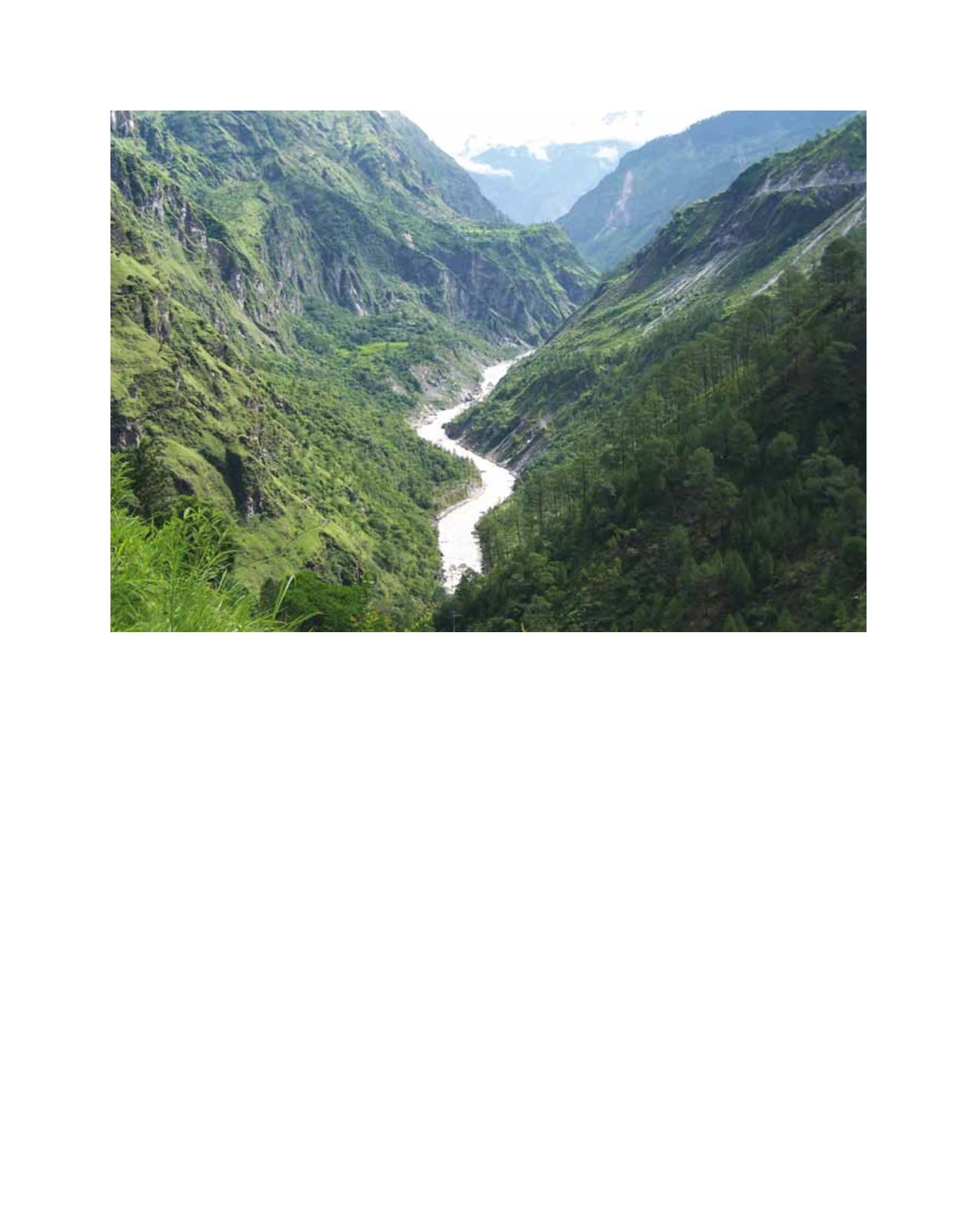
Image: Santosh Kumar, NIDM