



 44 / 168

[
] 44
strategy aims to develop and embed new ways of doing things that
enhance existing arrangements across and within governments,
businesses and the community.
A collective responsibility for resilience
The National Strategy for Disaster Resilience recognizes that a disas-
ter resilient community is one that works together to understand
and manage the risks that it confronts.
Disaster resilience is the collective responsibility of all sectors
of society, including governments, businesses large and small, the
non-government sector and community organizations, and indi-
viduals. It has been acknowledged at the highest level that if all
these sectors work together with a united focus and a shared sense
of responsibility to improve disaster resilience, they will be far
more effective than the individual efforts of any one sector.
Role of government
: Under Australia’s constitutional arrange-
ments, primary responsibility for the protection of life, property
and the environment rests with the eight states and territories who
are the first responders to incidents within their jurisdictions. The
Australian Government assists the states and territories by provid-
ing national leadership in supporting and developing their capacity
to deal with emergencies and disasters.
Governments at all levels have a significant role in
strengthening the nation’s resilience to disasters, by:
• developing and implementing effective, risk-based
land management and planning arrangements and
other mitigation activities
• having effective arrangements in place to inform
people about how to assess risks and reduce their
exposure and vulnerability to hazards
• having clear and effective education systems so
people understand what options are available and
what the best course of action is in responding to a
hazard as it approaches
• supporting individuals and communities to prepare
for extreme events
• ensuring the most effective, well-coordinated
response from emergency services and volunteers
when disaster hits; and
• working in a swift, compassionate and pragmatic
way to help communities recover from devastation
and to learn, innovate and adapt in the aftermath of
disastrous events.
Emergency management agencies within Australian
governments are working collectively to incorporate
the principle of disaster resilience into aspects of disas-
ter management, including preventing, preparing for,
responding to, and recovering from disasters (PPRR).
This PPRR disaster management methodology has
become ingrained into planning arrangements for all state
and territory emergency service response and combat
agencies over the past two to three decades in Australia.
Role of business
: There has been strong acknowledge-
ment by Australia’s Governments that private enterprise
businesses can and do play a fundamental role in
supporting a community’s resilience to disasters.
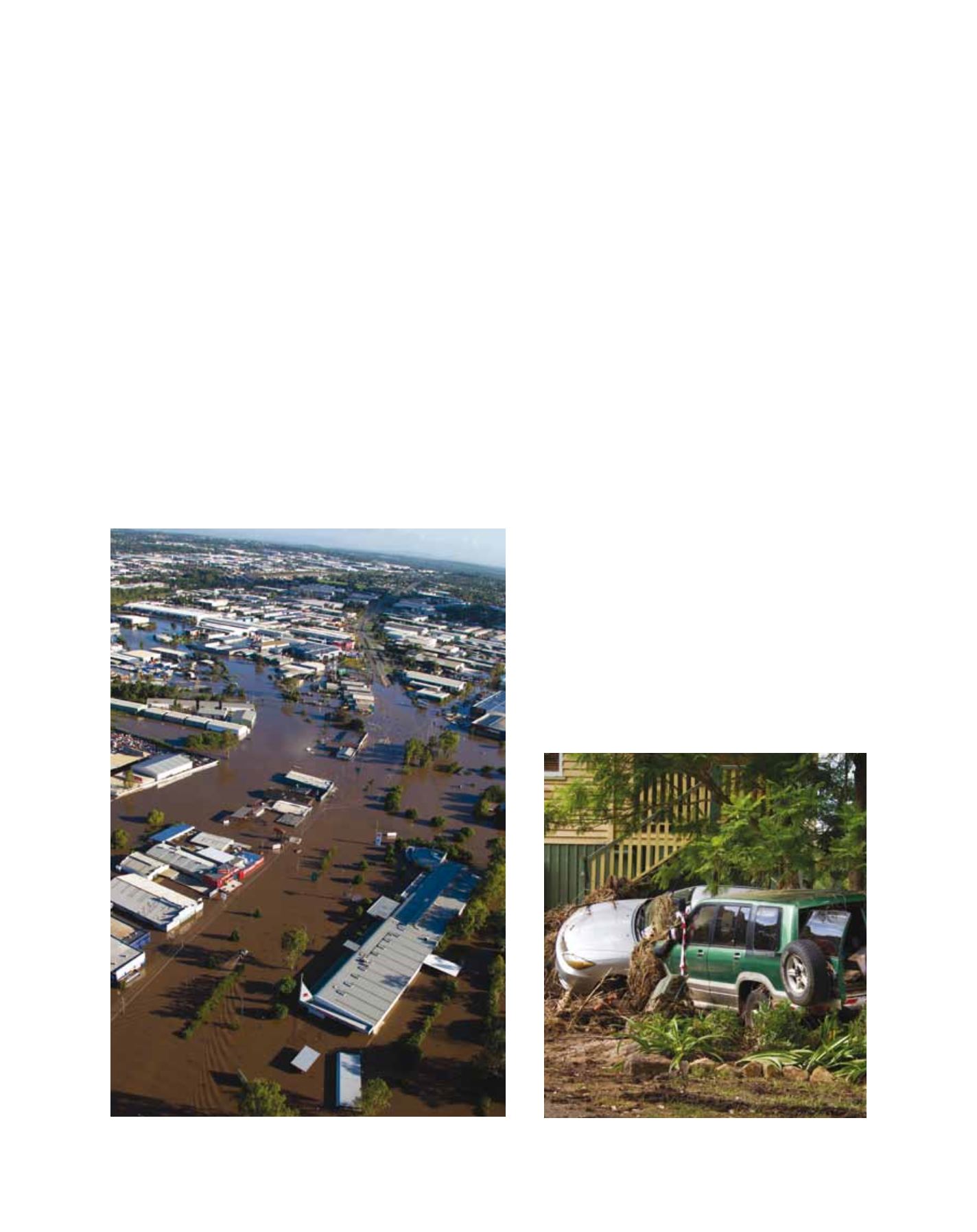
The Queensland floods caused unprecedented destruction of property
Image: EMQ
Brisbane city under water
Image: EMQ