


 48 / 168

[
] 48
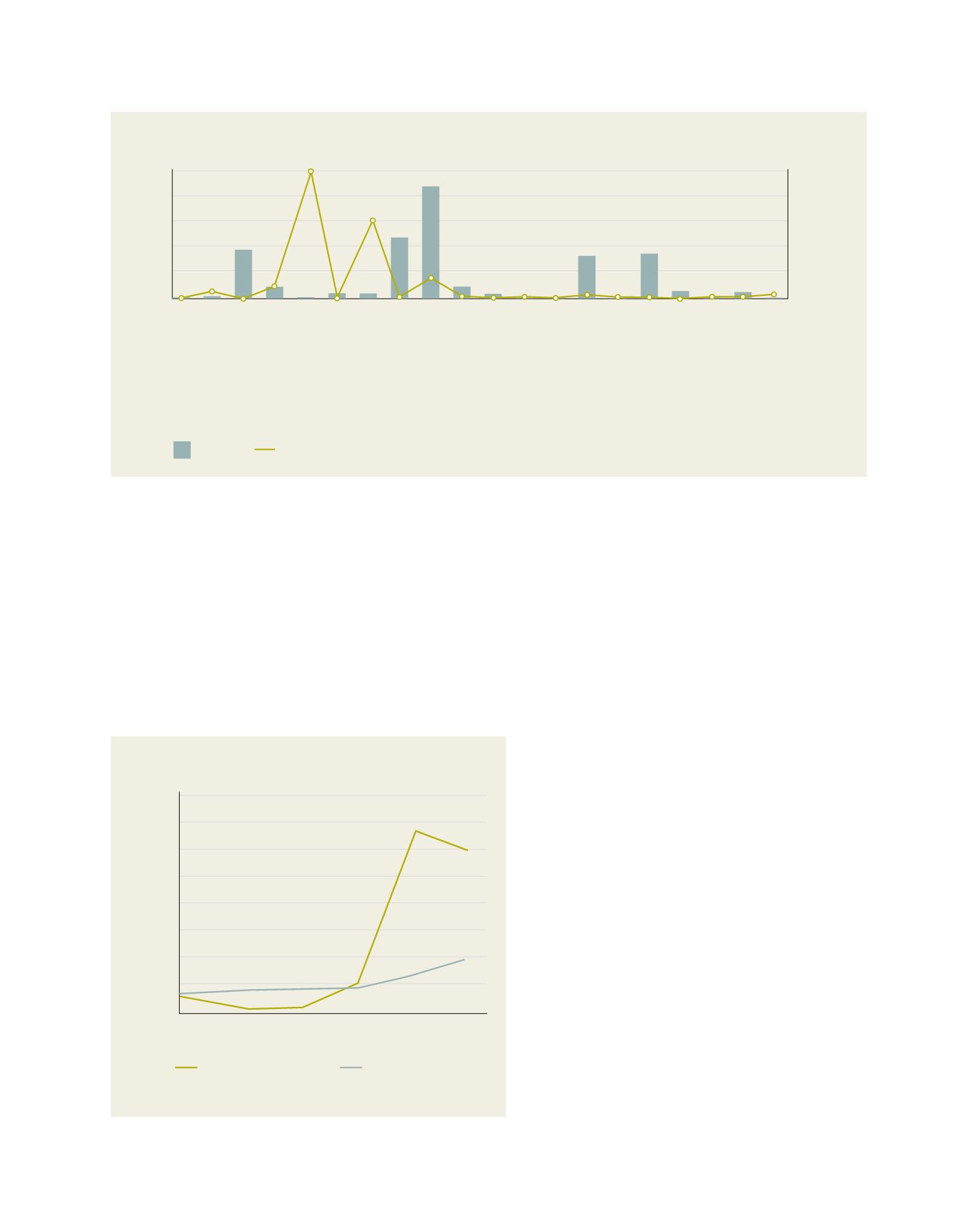
on prevention, which until now has been less than
post-disaster spending.
Investing in people
Although the Indonesian government has realized the
economic value of DRR, funding must compete with
many other potential development investment oppor-
tunities for limited public budgets. There is a need for
information to demonstrate the economic and financial
case for DRR investments as a basis for informed finan-
cial decision making. It is unfortunate that to date such
information, for instance cost-benefit analysis of DRR,
has been very limited.
Two studies in particular address the issue of DRR
investment in Indonesia. The first is an ex-ante appraisal
by Mechler (2004) of an integrated water management
and flood protection scheme for Semarang, Indonesia.
The appraisal concluded that the proposed scheme
would significantly reduce the direct and indirect
economic impacts of potential disasters, with a cost/
benefit ratio of 2.5, internal rate of return of 23 per
cent and net present value of US$45.5 million.
8
The
second is a research report by Saut Sagala on disas-
ter risk reduction investments in West Java and West
Sumatra, Indonesia, which discusses the types of DRR
investments in the two provinces.
9
In 2007 the Disaster Management Bill was passed,
marking a paradigm shift from response-oriented
disaster management to disaster risk reduction. The
following year saw the establishment of the National
Agency for Disaster Management (BNPB), a ministerial
level independent body that is far more powerful than
its predecessor, the disaster management (DM) coor-
dinating body. This was followed by the establishment
of agencies at the provincial and district/city levels.
Since Indonesia is highly exposed to mortality risk and
economic loss due to disaster, it is imperative for the country
to make efforts to reduce the risks faced by communities and
enhance their resilience. Such efforts are particularly relevant
if we consider that climate change has increased disaster events
and heightened the intensity of meteorologically influenced
events in the country. A recent World Bank and UN Publication,
Natural Hazards, Un Natural Disasters: the Economics of Effective
Prevention (2010)
suggested that to avoid future loss of GDP due
to disaster, Indonesia needs to increase Government spending
3,000
2,400
1,800
1,200
600
0
130,000
104,000
78,000
52,000
26,000
0
Events
Victims
Climate change
Conflict
Drought
Earthquake
Earthquake and Tsunami
Epidemic
Eruption
Fire
Floods
Floods and Landslides
Forest Fire
Hunger
Industrial Accident
Landslides
Plague
Strong Wind
Surge
Terrorism
Transportation Accident
Tsunami
Events
Victims
Figure 1: Disaster events and victims, 1815-2011
Source: BNPB/DIBI
1,000
1,200
1,400
1,600
800
600
400
200
0
Spending (US$ Milions)
Post-disaster spending
2001 2002 2004 2005 2006 2007
Pre-disaster spending
Figure 2: Disaster-related expenditure
Source: de la Fuente 2009
7