


 56 / 168

[
] 56
Disaster and Emergency Management Presidency (AFAD)
networks are shared with the public through the web site of the depart-
ment and stored in the National Seismic Data Center. Other studies
conducted by the Earthquake Department include:
• Earthquake hazard mapping on a local, regional and national level
• Assessment of active faults that may produce earthquakes
• Paleoseismicity
• Development of an earthquake early damage assessment system
• Province-based modelling of seismic behavior of the ground for safe
and secure settlements
• Development of building codes for implementation in earthquake-
prone regions.
A multi-stakeholder consultancy mechanism, the Earthquake
Advisory Board, has been established under AFAD. With its support, the
Earthquake Department is preparing the National Earthquake Strategy
and Action Plan, which will be finalized and launched by August 2011.
The AFAD Earthquake Department is a member of several interna-
tional seismological organizations such as the European Seismology
Commission and the Euro-Mediterranean Seismological Center.
Education
AFAD is responsible for education, training and awareness raising activi-
ties in the field of DRR. The target groups of these activities are decision
makers, national and local officials from directors-general to experts
working on disaster and emergency management, non-governmental
institutions and the public.
Starting from the assumption that well-informed populations can
protect themselves better against risks and can cope more efficiently
with danger in emergencies, AFAD pays special attention to publishing
and distributing informative texts and visual materials on disasters and
emergencies in order to raise public awareness.
There is always a need to review and update technical information
of this kind. For this reason, AFAD organizes theoretical and practical
education and training programmes for specific topics in the field of
disaster and emergencymanagement with a continuously updated curric-
ulum, to improve the skills of managerial and technical staff working in
this field.
International relations
AFAD, with the assistance of the Foreign Relations Coordination Office,
is cooperating with South East European countries through the Disaster
Preparedness and Prevention Initiative for South Eastern
Europe (DPPI-SEE) and South East European Cooperation
Process (SEECP). It is working with Mediterranean coun-
tries through the Euromed Programme for the Prevention,
Preparedness and Response to Natural and Man-Made
Disasters (PPRD South); with European countries through
the Council of Europe EUR-OPA Agreement and the
European Union; with Black Sea region countries through
the Organization of the Black Sea Economic Cooperation
(BSEC) and also the UN, NATO-the Euro-Atlantic Disaster
Response Coordination Center (EADRCC) and the
Economic Cooperation Organization (ECO).
AFAD is collaborating with several United Nations
(UN) organizations such as the UN Development
Programme, the UN International Strategy for Disaster
Reduction (UNISDR) and the UN Platform for Space-
based Information for Disaster Management and
Emergency Response (UN-SPIDER). AFAD is also an
authorized user of the International Charter for Space
and Major Disasters, which supports post-disaster activi-
ties by providing satellite images.
AFAD is also collaborating bilaterally with Albania,
Azerbaijan, Bosnia and Herzegovina, Macedonia and
Romania and trilaterally with Afghanistan and Pakistan
on DRR as well as other disaster and emergency manage-
ment subjects in the framework of the bilateral and
trilateral agreements and/or memorandum of under-
standing signed mutually.
Targets
Disaster and emergency management systems in Turkey
have evolved from a post-disaster approach to pre-disaster
planning from the political, institutional, academic and
practical points of view. The country has adopted the HFA
as a key guidance document during this transition period
and has been paying particular attention to DRR progress
in accordance with HFA priorities.
The objectives of Turkey, and institutionally of AFAD,
are as follows:
• To work in harmony with national and international
stakeholders
• To finalise the National Disaster Management Strategy
and Action Plan
• To prepare multi-hazard and multi-risk maps for the
entire country
• To establish information, monitoring, early warning and
communication systems and preparation of operation
standards for these systems
• To complete urban risk analyses and mitigation plans
• To create databases for collecting, analysing and synthe-
sizing data related to disasters and emergencies.
Other goals on which Turkey and AFAD are making
good progress are the popularization of a culture of risk
mitigation and reduction through education, information
and awareness raising activities, and the establishment
of accreditation standards for voluntary institutions,
organizations and people involved in the disaster and
emergency management system.
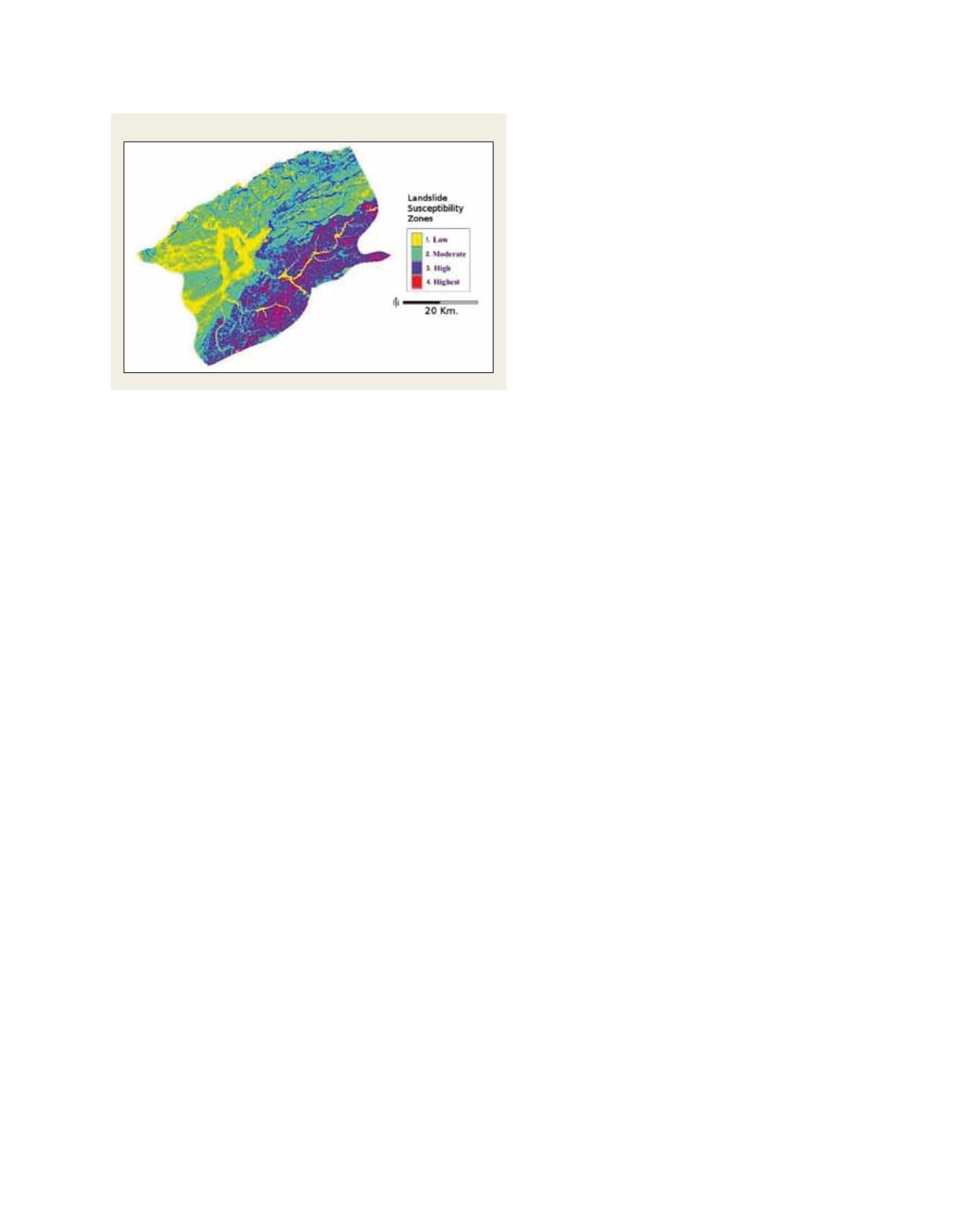
Figure 2: Landslide susceptibility map of Bartin Province