


 60 / 168

[
] 60
described include recommendations for emergency
stock items for people with disabilities; awareness-
raising among communities of the needs of people
with disabilities, especially during emergencies; and
recommendations for important roles that people with
disabilities can play in preparing for and managing
emergency situations.
Building DRR into local development
GOAL’s experience in Gracias a Dios over recent
years has taught an important lesson: while significant
progress has been made, it is not sustainable to train
communities in disaster preparedness as a standalone
activity. This training needs to be integrated into the
community over the long term. It must demonstrate
visibly effective measures regarding disasters, their
prevention and mitigation, in order to change the fatal-
in partnership with tribal federations. In 2008 GOAL, together with
COPECO and the US Office of Foreign Disaster Assistance (OFDA),
completed a study of ‘Indigenous Knowledge in Risk Management
in Gracias a Dios’. This study includes many traditional practices in
DRR and makes a number of recommendations for future interven-
tions. A key aspect of GOAL’s strategy for disaster preparedness
in Gracias a Dios is to re-establish and build on traditional coping
mechanisms.
Protection of vulnerable groups
GOAL’s DRR programme focuses on vulnerable groups with particu-
lar emphasis on meeting the needs of people with disabilities in
emergencies. GOAL has identified a number of practical ways to
address the needs of this particularly vulnerable group, and these
have been documented in a manual titled
The Inclusion of Persons
with Disability in Situations of Emergency in Honduras
, developed by
GOAL and HandiCAP under the DIPECHO programme. Measures
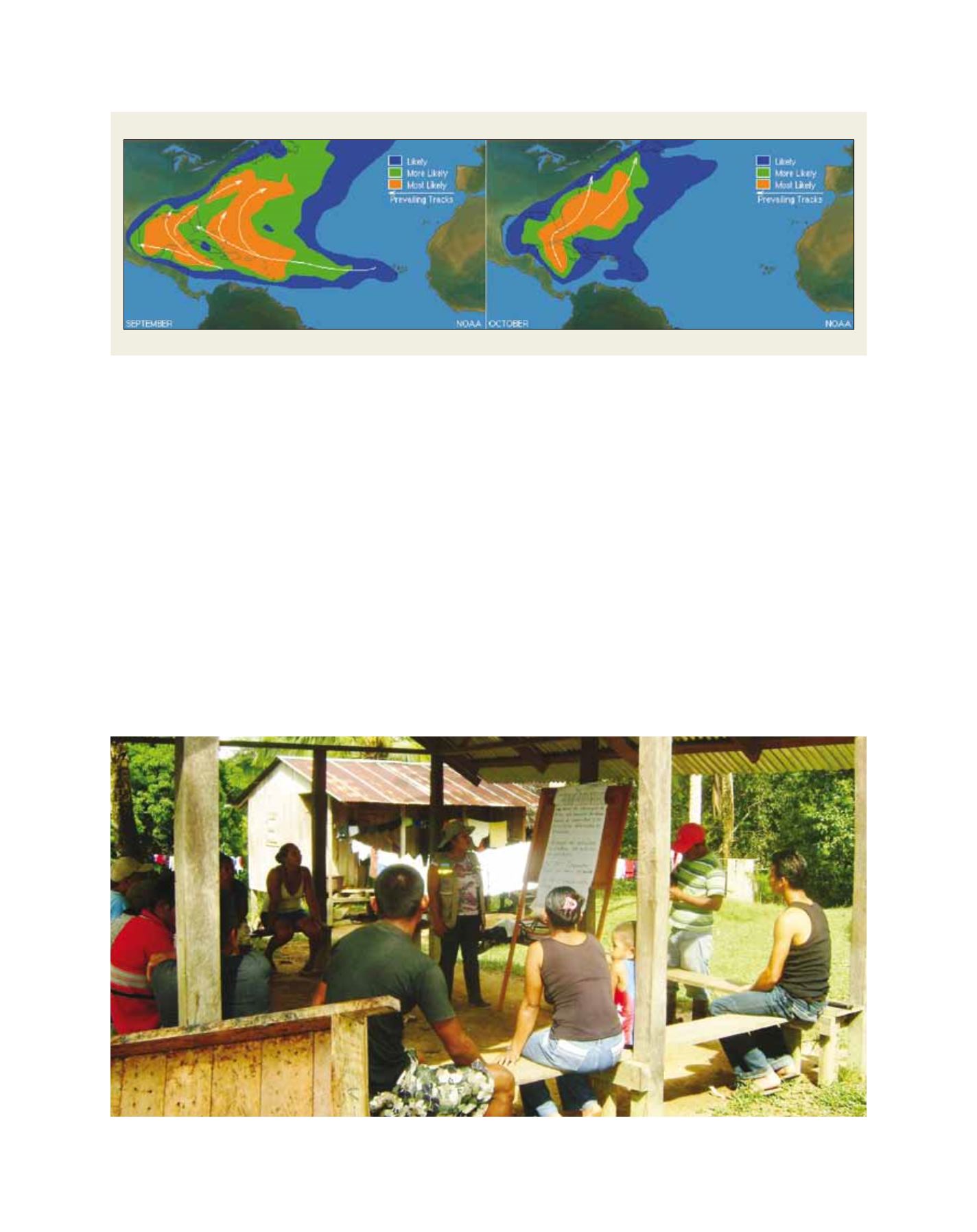
Typical hurricane track images published by NOAA
Source: NOAA
Communities in Gracias a Dios need to develop new capacities and increased resistance to confront disaster risks
Image: GOAL