


 58 / 168

[
] 58
manage. Examples include rain-fed farming villages that
switch to irrigation, thus eliminating their exposure to
natural droughts. However, those communities could
be subjected to policies and rules set by the irrigation
systems which they might not be able to control or
know of in advance.
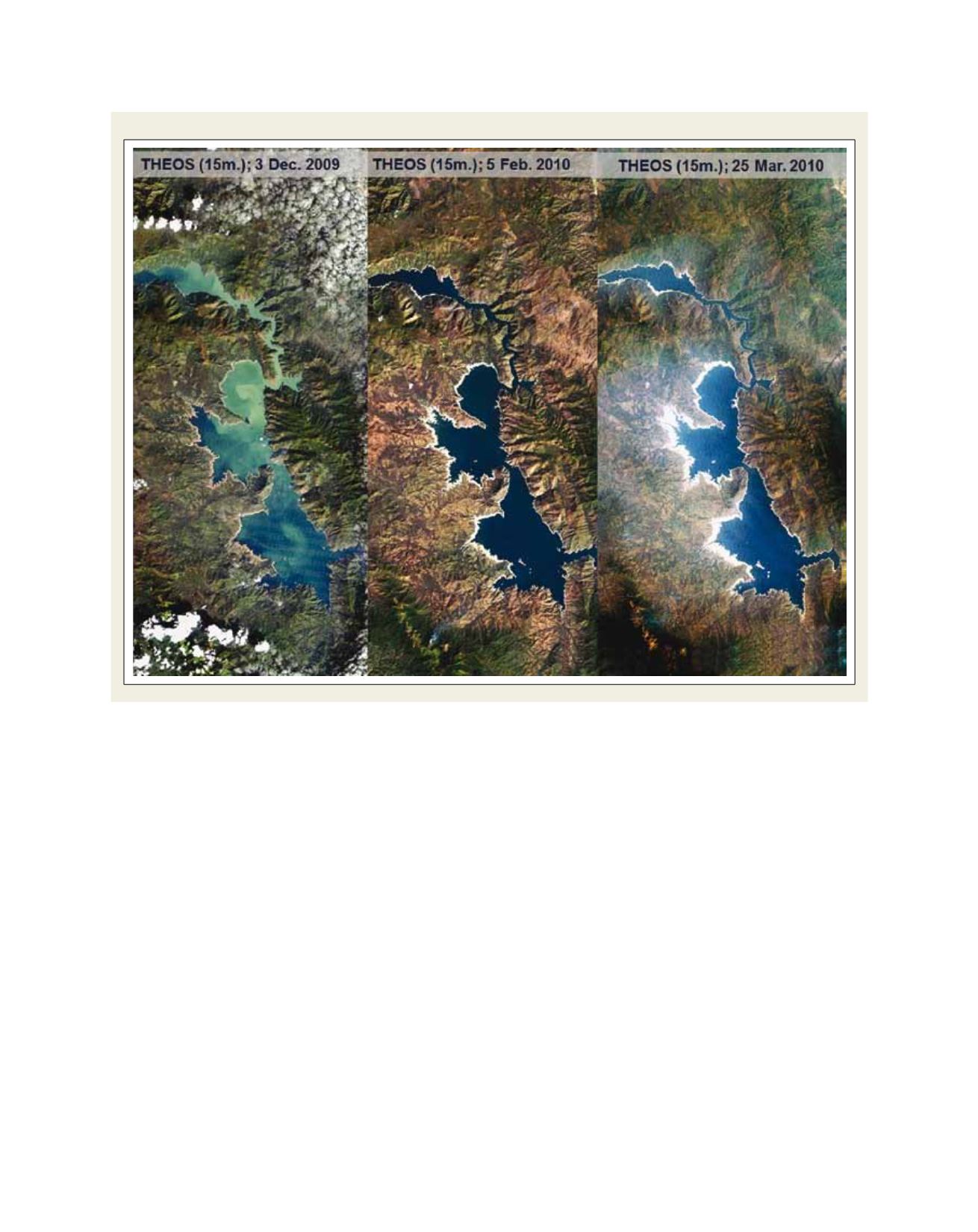
Shared information via satellite systems
Earth observing systems have played a major role in
disaster management, mitigation and preparedness
in Thailand, using information collected over vast
geographic areas at regular intervals, and based on
comparable measurement and classification standards.
The satellite platforms are not directly affected by events
on the ground or in the atmospheric column, therefore
they can be effectively used to monitor relief and reha-
bilitation actions to ensure that those in need receive
appropriate assistance. In addition, the system has also
clearly demonstrated value propagation when data from
multiple sources and agencies have been shared and
bundled into packages that serve the demands of users
in the field as well as at the policy level.
impacts on the environment and livelihoods, or on the ethics and
transparency of the projects.
At the national level, the concept of community based disaster
risk management (CBDRM) through reducing the sensitivity of
systems and sectors to extreme weather and geological hazards
has been widely adopted and mentioned in several policy docu-
ments. However, actual implementation at the desired community
level could not be easily done due to the lack of confidence
among community members regarding the preventive risk reduc-
tion approach. Yet changes are slowly on the way, thanks to the
efforts and initiatives of many Government and non-governmental
organizations devoted to this approach to promoting and educat-
ing communities on the long-term sustainability and co-benefits of
CBDRM, not only in reducing disaster risk but also in increasing
well-being and providing other social advantages to communities.
It is also worth noting from a number of cases that although
the risks from natural hazards could have been reduced through
exposure and/or sensitivity reductions, communities might still be
vulnerable to disasters at the same or even a higher degree. This
could occur in situations where the decision to change the risk
profiles of the communities exposed them to new types of risks,
especially policy-related risks that they are not able to control or
Water surface monitoring using THEOS multi-date image over Bhumipol Dam, Tak province
Source: GISTDA