


 11 / 85

[
] 11
responsible for the health aspects of pandemic preparedness and
response, has prepared guidance for its member states, the UN system
and non-governmental organizations (NGOs). These kinds of initia-
tives help ensure that key personnel are informed and prepared, and
will ultimately help save lives in a pandemic.
It is also clear that the broader humanitarian community will have
a critical role to play, as academic research suggests that upwards of 95
per cent of deaths due to a pandemic will occur in developing coun-
tries, and that vulnerable populations there will suffer most. In light
of this, 23 organizations involved in the delivery of humanitarian aid
– including the Red Cross/Red Crescent Movement, international
NGOs and UN agencies – signed a declaration on 29 October 2007,
pledging to work together to get ready to respond to the consequences
of an influenza pandemic on vulnerable populations. Two subsequent
inter-agency simulation exercises were held in 2008, helping organi-
zations identify gaps and inconsistencies in their respective pandemic
plans; further joint activities are planned in 2009.
At the 2008 Sharm El Sheikh International Ministerial Conference
– the sixth in a series of intergovernmental meetings on avian and
pandemic influenza since 2005 – more than 120 countries and 26
international and regional organizations collectively reaffirmed their
determination to continue efforts for multi-sectoral, multi-level and
multi-country pandemic preparedness.
It has been recognized that emerging infectious diseases are signif-
icantly correlated with socio-economic, environmental and ecological
factors, and thus in turn require coherent and connected approaches
to prevention and control across many sectors, including animal and
human health and wildlife. This coordination and collaboration under-
lies the principle of ‘One World, One Health’ developed by the Wildlife
Conservation Society in 2004 and a strategic framework launched in
2008 by WHO, FAO, OIE, UNICEF, UNSIC and the
World Bank, which have the aim of achieving better
prevention of, preparation for and response to the health,
social, economic and political impacts of infectious
diseases emerging at the animal-human-ecosystem inter-
face.
4
The successful use of the ‘One World, One Health’
concept in planning and implementation of programmes
will contribute significantly to the overall goal of protect-
ing the world from emerging infectious diseases of animal
origin. Strengthening of laboratory, epidemiologic and
public health response capacities (part of the One World,
One Health concept) will in turn increase the ability of
countries to identify and respond to pandemic influenza.
Conclusion: vigilance is vital,
complacency dangerous
Over the last several years, substantial and significant
progress has been made in pandemic preparedness
worldwide. The number of countries that have devel-
oped a pandemic preparedness plan has steadily
increased, and more countries have conducted simula-
tion exercises of their plans. Nevertheless, many plans
remain unendorsed at the highest political level and
lessons from simulations are not being included in plan
revisions, indicating that many plans are neither legally
nor logistically feasible.
It is imperative that all countries and international orga-
nizations continue to devote resources to be better
prepared to save lives and minimize socio-economic
disruption in a pandemic. It is now important to consol-
idate achievements in pandemic planning, and make
plans operational by further advocating, endorsing,
testing and systematically reviewing plans with lessons
learned. National authorities need to ensure that logisti-
cal and legislative provisions are made for effective
non-pharmaceutical measures including (at a minimum)
isolation of cases, quarantine of close contacts of cases
and social distancing, and that pharmaceutical control
strategies, such as use of anti-viral drugs for treatment
and prevention of infection in certain groups, and
vaccines, are implementable as far as possible. Since
successful pandemic preparedness increases the resilience
of national institutions in the face of other emergencies,
national authorities should strive to integrate pandemic
planning into national disaster management structures
so as to increase its sustainability and broaden its bene-
fits. It is also essential that national pandemic
preparedness efforts be undertaken jointly by all stake-
holders – including representatives of public sector
bodies, private entities, civil society and Red Cross or Red
Crescent societies, media organizations and faith groups.
No country or region should prepare for pandemic in
isolation – hence the absolute need for nations to work
within the context of intergovernmental agreements and
means for joint working at regional and global levels.
We must avoid being complacent given that a
pandemic is such a major threat to the security of the
human race. We have an opportunity to be ready now,
and we cannot afford to miss it.
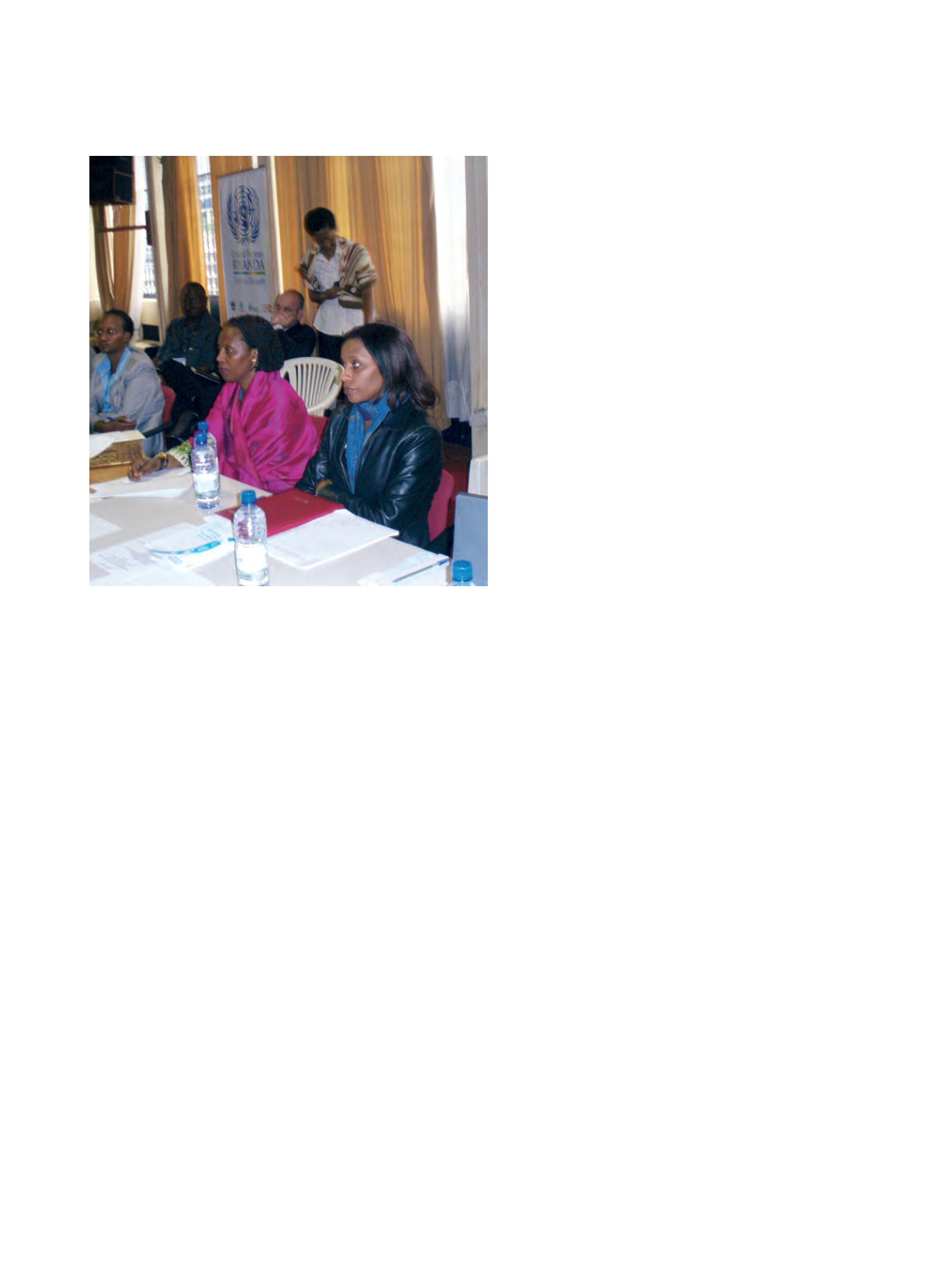
Participants at the tabletop simulation exercise held on 23 October 2008 under the
auspices of the One UN System in Kigali, Rwanda
Image: UNSIC