


 12 / 85

[
] 12
Limiting the impact of pandemic
influenza through community-level actions
Jim Catampongan, Avian and Human Influenza Coordinator, Asia and Pacific,
International Federation of Red Cross and Red Crescent Societies
I
nfluenza pandemics are rare but recurring events. Ten
pandemics have been recorded over the last 300 years, with
starting points ranging from 10 to 49 years apart. In the 20th
century, pandemics occurred in 1918, 1957 and 1968.
Considered one of the deadliest disease events in human history,
the ‘Spanish influenza’ in 1918 claimed more than 40 million
people worldwide. By any calculation, that outbreak killed more
people in a year than the Black Death of the Middle Ages killed
in a century; it killed more people in 24 weeks than Aids has
killed in 24 years.
According to Robert Kaufman, head of the International Federation
of Red Cross and Red Crescent Societies’ (IFRC) programme for
avian and human influenza: “There are usually as many as three
pandemics per century. Four decades have now passed without a
pandemic and the alarm bells are ringing.”
Although no one can predict when the next pandemic will occur,
both scientists and policy makers around the world have acknowl-
edged that another one is inevitable.
1
Since 1968, all
prerequisites for the start of a pandemic have been met,
except that the virus has not yet readily and sustainably
spread among human beings. Nevertheless, the highly
pathogenic avian influenza (HPAI) H5N1 virus has
already caused widespread outbreaks in wild birds in
over 60 countries
2
; it has also claimed the lives of 256
people from 15 countries
3
and presents a 63 per cent
death rate, high by any measure.
Considering that the virus is now endemic in coun-
tries in Asia and that outbreaks have recurred despite
aggressive control measures, the next pandemic may just
be a matter of time. The World Health Organization
(WHO) notes that neither its timing nor severity can be
predicted with any certainty; however, it is estimated
that 20 - 40 per cent of Earth’s population will become
ill because a pandemic virus is new and human beings
have no pre-existing immunity.
4
It is feared that the
burden of the next influenza pandemic will be over-
whelmingly focused in the developing world, where
public health systems are weak and resources for
preparedness and readiness have to compete with other
pressing priorities.
5
It is also expected to bring devas-
tating effects on the socio-economic, educational and
health condition of the entire population across the
world. Entire transportation systems and public utili-
ties including water supply systems, schools, colleges,
industries, banks and government offices may be forced
to close during outbreaks.
Community preparedness and individual resilience
is essential
Many national governments have already developed and
rehearsed pandemic influenza preparedness and
response plans. As these plans focus primarily on health
sector response at the central and national government
level, additional effort must be dedicated to integrating
non-health sector, non-state and non-government
components into the plan, as well as further defining
response at community level. This necessity rests at the
heart of the role the IFRC will play across Asia and
around the world.
“Red Cross and Red Crescent Societies will save the
most lives and prevent the spread of infection most effec-
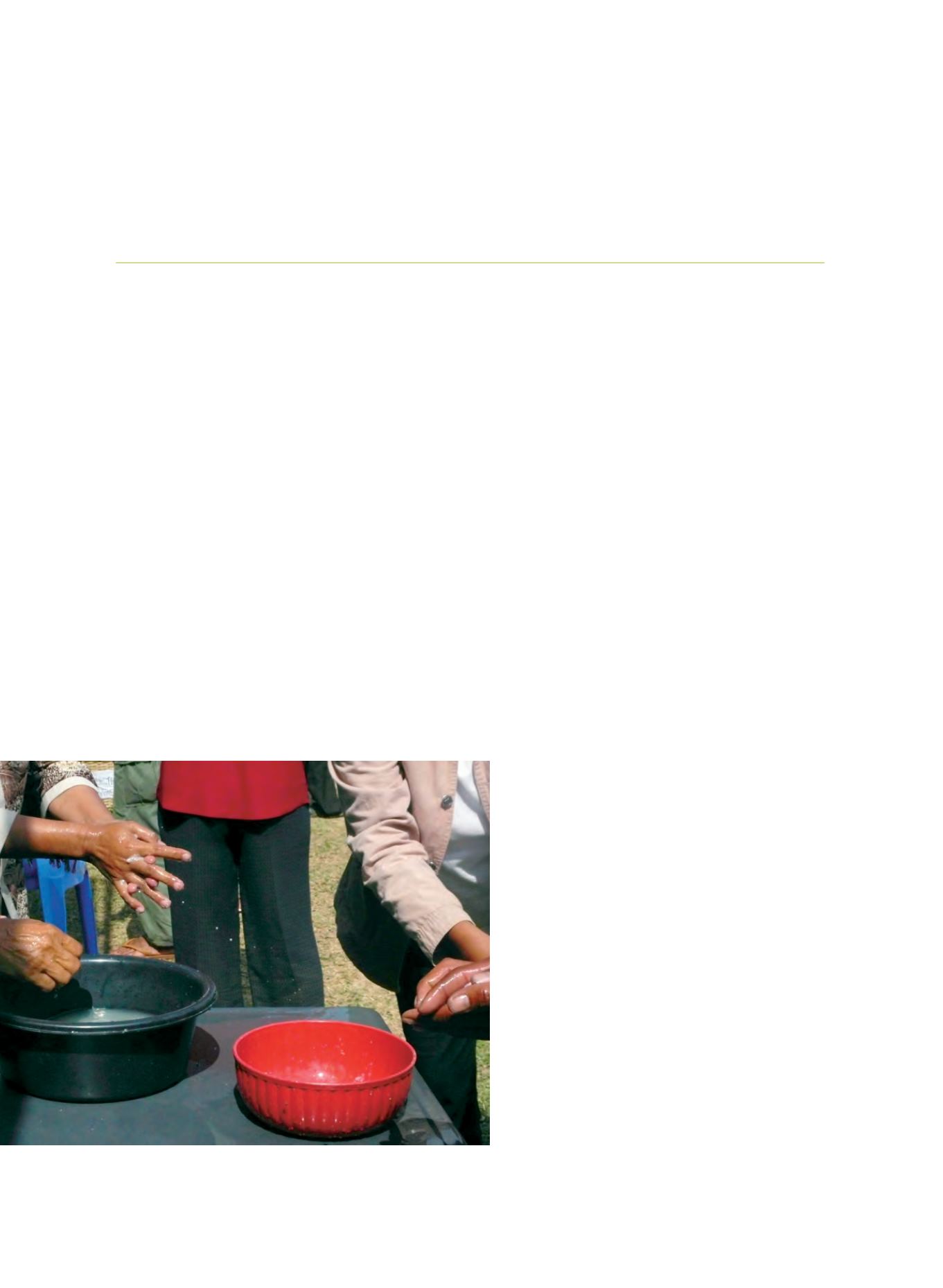
Basic education in proper hand washing techniques in countries like Cambodia can
go a long way to preventing the transmission of influenza
Image: IFRC