


 21 / 85

[
] 21
In the case of H5N1, human cases appear to follow exposure to infected
birds or live poultry markets. The ability to retrospectively identify
such exposures among human cases is highly dependent on the inten-
sity of the investigation. Given the number of infected poultry and the
rarity of human infection, few exposures result in human infection.
Since 2006, in parallel with the declining number of affected
countries, the reported number of persons infected with H5N1 each
year has declined. The overall mortality rate has remained above 60
per cent since 2005. Early treatment with antiviral drugs appears
to improve the chances of survival and young children appear to
have better survival chances than older children and adults.
Country to country variation in mortality might have more to do
with early detection and treatment than with any inherent virus
properties.
While the decline in new H5N1 human cases is encouraging,
changes in the intensity of surveillance for human cases may also
explain some of the decline. As the expected H5N1 pandemic has
failed to materialize, there is a natural sense that the risk of person-
to-person transmission developing has diminished, despite the lack
of scientific evidence of any change in the risk.
Reducing risk and mitigating the impact of pandemic influenza
The best strategy to reduce the likelihood of pandemic influenza is
to reduce the likelihood that an animal carrying a virus that has
developed the capability to transmit from human to human will come
into contact with a susceptible person. As influenza viruses are
constantly mutating, control of influenza in animals, particularly
poultry and swine, is essential. Surveillance for novel influenza A
viruses in domestic animals and swift action – investigation and
laboratory confirmation followed by culling infected flocks or herds
– is a constant requirement.
Once a possible human infection with a novel influenza
A virus has been identified, rapid investigation and labo-
ratory assessment is mandatory. Current guidelines
recommend antiviral drug therapy for contacts of an
infected person or of a documented outbreak of animal
influenza. This scenario has played out repeatedly in coun-
tries with H5N1 disease in poultry and may be responsible
for preventing transmission of the virus. Clusters of
human cases of novel influenza A virus infection are an
especially important target for surveillance as these could
represent person-to-person transmission. As called for in
the International Health Regulations, every country must
have the capability or access to the capability to identify
and report novel influenza A virus infections – as a public
health emergency of international concern – and to take
measures to reduce transmission. These steps are as vital
to protect the population of a country where such an emer-
gency occurs as they are to protect the rest of the world
from the global threat of a pandemic.
Based on the results of mathematical modelling, mount-
ing an intense intervention to extinguish of
person-to-person transmission of novel, readily trans-
missible influenza virus appears justified if it is logistically
feasible and if transmission is not widespread. This inter-
vention, a containment operation, would include active
surveillance for new infections supported by laboratory
testing, treatment and prophylaxis with antiviral drugs,
isolation of infected persons and their contacts, strict,
time-limited entry and exit screening protocols for the
area experiencing person-to-person transmission (the
containment zone) and, depending on the virus, use of
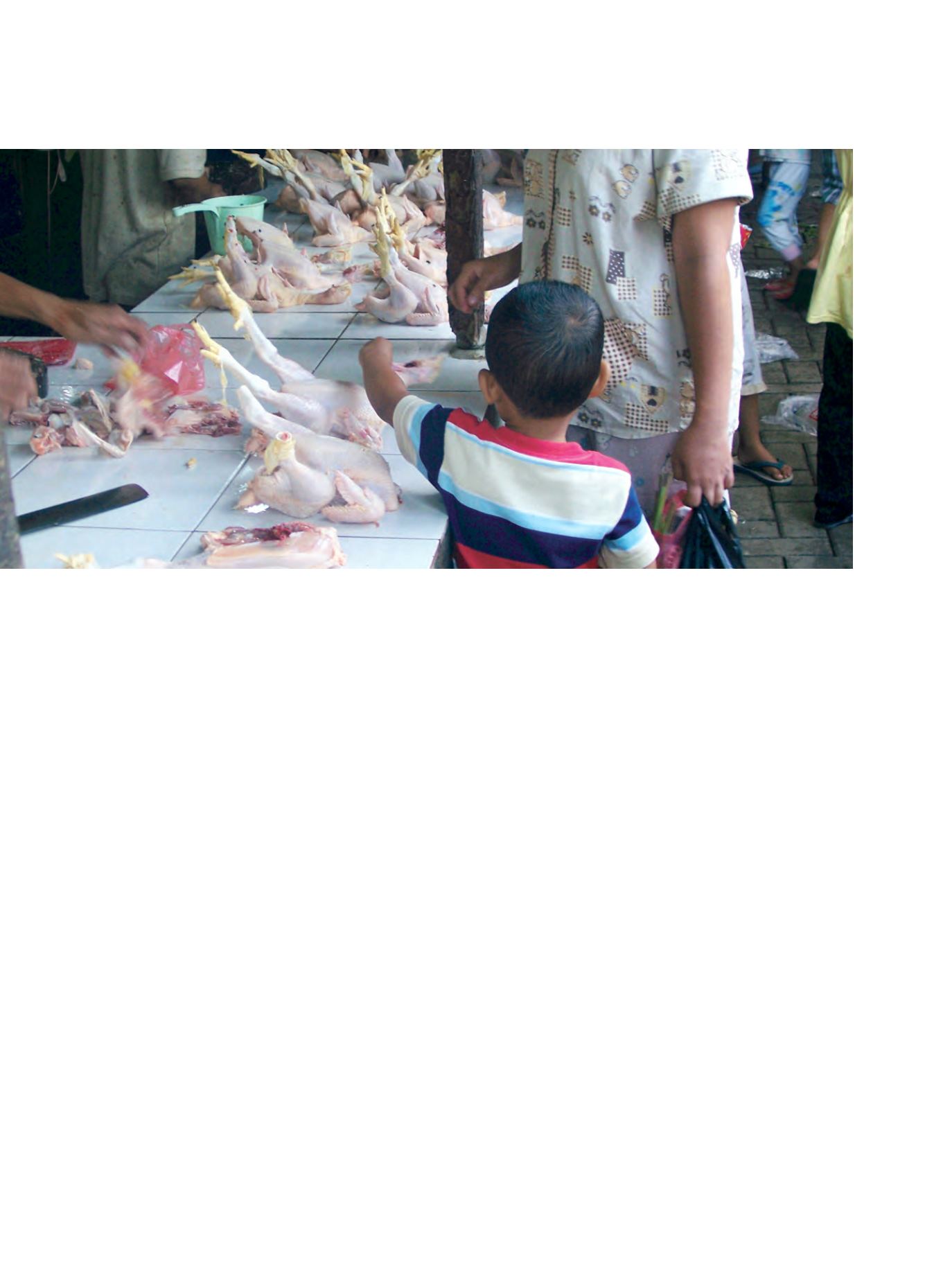
It is important to minimize the likelihood of susceptible people coming into contact with an animal carrying a virus that can transmit from human to human
Image: US CDC