


 22 / 85

vaccines prepared against animal viruses that might offer some protec-
tion against the mutated potentially pandemic strain. Extensive,
detailed planning and training will be required for this strategy to have
the best chance of extinguishing transmission. Whether these measures
could successfully interrupt transmission and forestall a pandemic
cannot be known with certainty and will depend on the unknown
characteristics of a virus that has not yet been identified.
Actions following widespread transmission of a novel
influenza A virus
Once infection with a novel influenza A has become established in
human populations, several public health measures must be brought
to bear simultaneously. These efforts include characterizing the clini-
cal and epidemiologic features of the disease, developing a well-matched
vaccine, communicating effectively and fully, implementing measures
to reduce exposure to infected persons – including isolating those who
are ill and encouraging their household contacts to stay home to prevent
transmission beyond the household, and working to assure the contin-
uation of vital societal functions. As these measures are implemented,
policy makers have to be particularly sensitive to assuring that scarce
resources are allocated in a just and ethical manner. Although specific
implementation plans will naturally vary among countries and
resources available, the general outline applies to all countries.
Detailed planning, exercising of plans, and revising and refining
plans are the processes to assure that the public health interventions
are valid and executable. Situations where the plans can be tested in
real-life public health emergencies are an even better way to test and
identify shortfalls in plans – risk communication efforts, for example,
can be honed in responses to other emergencies. Given the unique
features of an influenza pandemic, actual events cannot supplant exer-
cises for some parts of the response.
Benefits of preparing for a pandemic
Because an influenza pandemic is such an all-encom-
passing emergency, preparedness efforts inevitably
improve the capabilities required to respond to other
public health emergencies. Decision-making processes,
internal data collection and communication procedures,
and risk communications expertize are all transferable
to other responses. In addition to improving responses
to public health emergencies, many of the elements of
preparing for an influenza pandemic also improve and
refine the tools for control of seasonal influenza. For
example, the capability to quickly measure vaccine effec-
tiveness, measures to reduce the impact of the bacterial
complications of influenza, and increasing the supply
of seasonal influenza vaccine are all by-products of
pandemic preparedness.
Better understanding and control of animal influenza
is vital to reduce the risk for an influenza A pandemic.
When a cluster of human cases of a novel influenza virus
is identified, intense, rapid efforts to suppress trans-
mission offer the possibility to extinguish transmission
and prevent a pandemic, even if the characteristics of
the virus are such that it has the potential to cause a
pandemic. If such containment efforts are not feasible
or do not extinguish all chains of transmission, the full
range of public health measures must be implemented
to reduce the impact of a severe pandemic. The global
cooperation and progress to prepare for a pandemic
achieved since 2005 must be sustained even in the face
of the current economic uncertainty. The risk of not
being ready is simply too great.
[
] 22
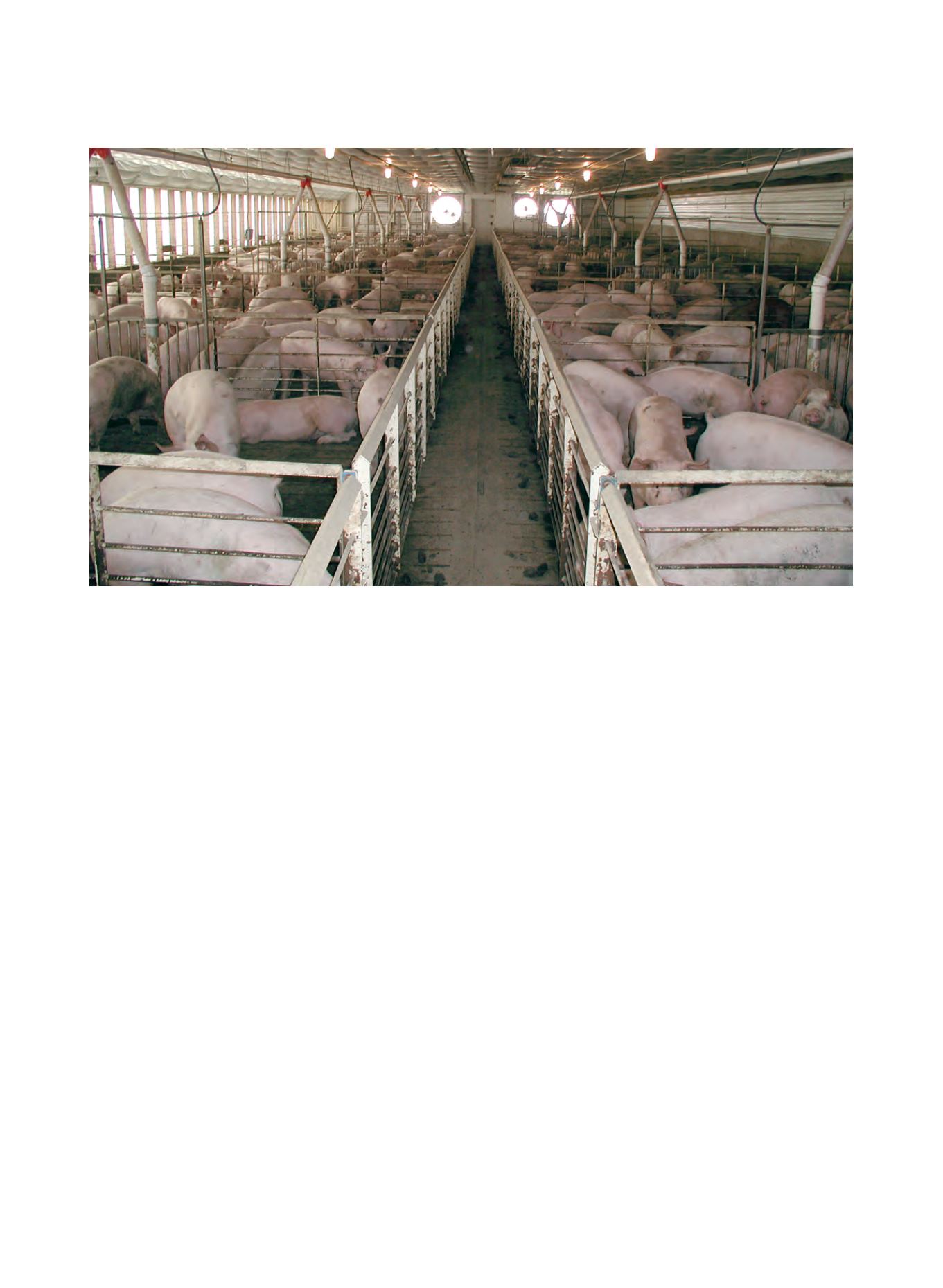
Image: US CDC
Better understanding and control of animal influenza is vital to reduce the risk of a pandemic