



 84 / 196

and NGO sources) generally reaches the affected community after a
week. Amidst the flood emergency backdrop, DRRF has been proven
to work as a cushion for flood victims.
A Disaster Management Committee (DMC) has been formed in all 20
villages that have members from the vulnerable community. Each DMC
comprises 10-12 members including one to three women. The DMC, on
being capacitated, becomes the custodian of DRR knowledge, particularly
from an applied point of view. It propagates knowledge of early warning
and safety measures, directs taskforce rescue operations, monitors relief
operations and takes up local level advocacymeasures like compensation
packages, damage assessment and embankment safetymeasures with the
administration.
While disseminating knowledge to the community, the DMC in
facilitation with the project team adds value to indigenous knowledge
and community coping mechanisms, such as drying up cow dung
paste for fuel during the flood season and the preparation of earthen
hearths, locally made earthen and bamboo containers on a raised
platform for grain storage etc. The DMC also monitors the smooth
functioning of the various task forces during the emergency, such as
warning, rescue, first Aid, shelter and relief. However, the project
team also facilitates the capacity building exercises of the taskforces
on a regular basis in the normal season.
During the 2007 flood the task force in coordination with DMC
evacuated 135 families in Bhadwar village. Seven people from
Bhadwar and Sivarampur villages were saved from drowning in the
Kamla Balan river. The Government of India has recommended that
DMCs should be part of the Panchayati Raj Institutions (PRI) to take
part in disaster management planning and implementation.
Consequently, the EFICOR project team has advocated that the exist-
ing DMCs should be part of the respective Panchayat committees.
An alternative cropping pattern was introduced to diversify liveli-
hoods. A local paddy variety called Aghani has been piloted, which is
sown in March and harvested in June before the advent of the flood
season. Farmers in north Bihar traditionally opt for a high yielding paddy
variety that will not withstand heavy flood. If successful this attempt to
revive the local variety will ensure food grain security for farmers despite
flooding. The project has also been piloting a wheat variety that in the
recent harvest gave a hike in the yield rate of about 50 per cent per acre.
However, creating wider acceptance among the farming
community in the area remains a challenge.
The project, in sync with the participatory planning
process, has set up mitigation structures like evacuation
routes, tube wells on high-raised platforms to save them
from being contaminated during floods, culverts for
floodwater drainage, rescue kits, engine-driven fibre
boats and multi-purpose flood shelters. In the recent
2007 Bihar flood, the multi-purpose shelter at Gandharin
village sheltered about 80 families for about seven days.
The DRR intervention, albeit a recent initiative, has
given EFICOR an edge on macro level advocacy by facil-
itating access to policy-making bodies like the National
Disaster Management Authority (NDMA) of the
Government of India. DRR lessons are presented to the
NDMA through an NGO taskforce, preparing flood guide-
lines to be implemented by the state government. The
project’s experience suggests that well planned DRR initia-
tives, with community capacity-building backed up by
common minimum governance measures, can establish a
resilient community with minimum loss of life and liveli-
hood. May this endeavour be a stepping stone towards a
dignified life for the flood affected community in Bihar
and the rest of India.
2
[
] 82
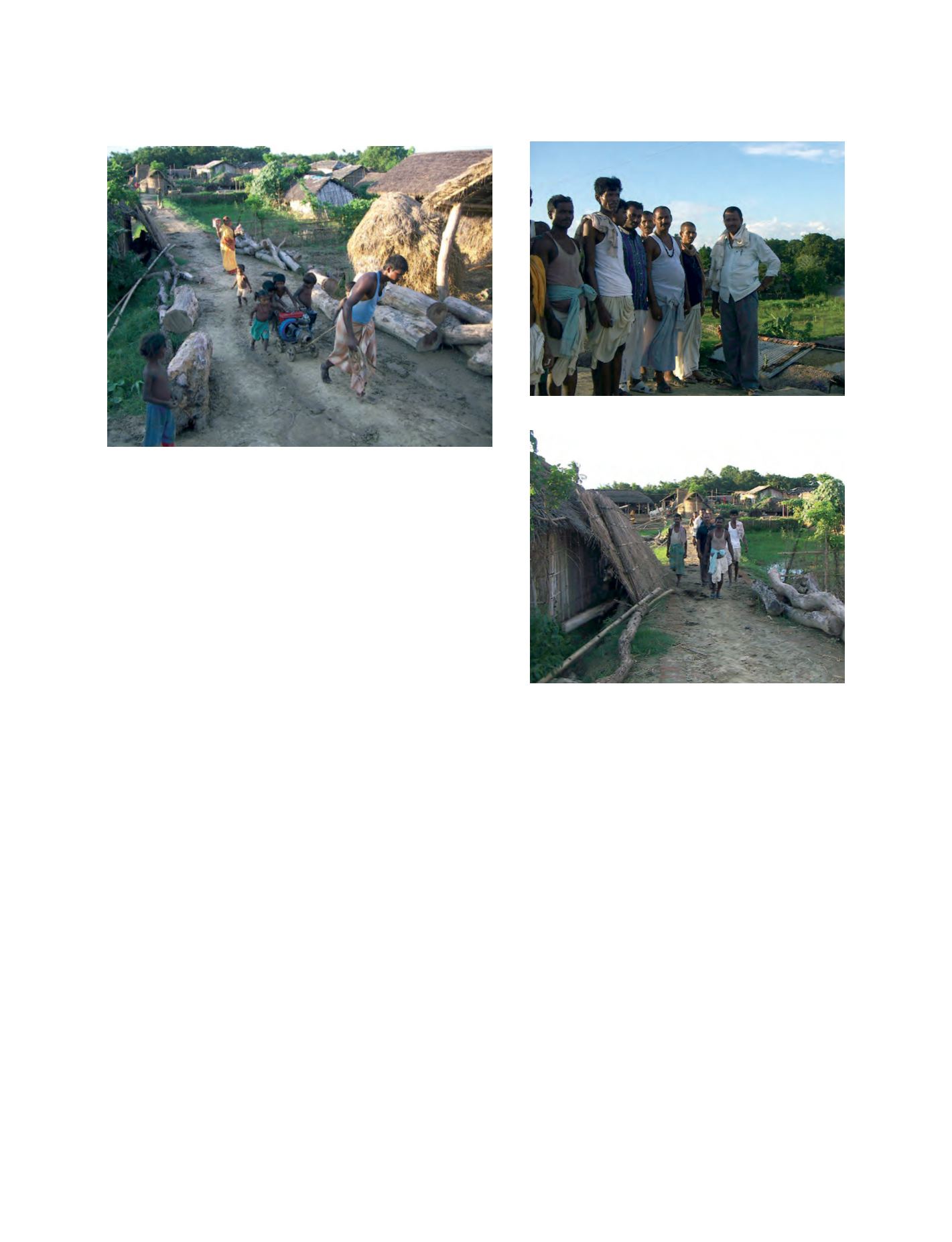
Bhadwar, a flood affected village
Image: EFICOR, DRR Project, Madhubani, Bihar
DMC members at Bhadwar village
Image: EFICOR, DRR Project, Madhubani, Bihar
DMC collecting DRR funds in Bhadwar village
Image: EFICOR, DRR Project, Madhubani, Bihar