


 86 / 196

[
] 84
• Grassroots organizations have an established pres-
ence in affected areas, relevant experience and
expertise based on an understanding of the local
context
• They often have the working relationships with and
access to poor people that are essential to ensure
that the needs and priorities of the most vulnerable
and marginalized are taken into account
• Grassroots organizations have an ability to mobilize
communities and harness indigenous knowledge
and resources (including access to a strong volun-
teer base).
However, there are also significant limitations and chal-
lenges to working with civil society groups related to
such issues as diversity and fragmentation of the sector,
the relative small size of local actors, low absorption
capacities, limited financial resources, weak manage-
ment structures, accountability and representation
issues.
countries where the commitment of governmental actors is limited,
their resources and capacities are insufficient, or they are struggling
with conflict or economic crisis.
A third flaw is focusing too strongly on physical measures aimed at
protecting buildings, infrastructure and critical facilities with limited
attention to ‘people-centered’ social vulnerability and livelihood
issues. Participatory disaster risk assessments at the local level show
that vulnerability can vary substantially within communities and that
context specific solutions need to be sought. These assessments also
show that people, despite their vulnerability, often also possess
remarkable skills, capacities and local knowledge on which local DRR
initiatives need to build. Thus a multi- and inter-disciplinary approach
is essential, in which technical and physical interventions are merged
with social and culturally sensitive approaches.
Civil society has a unique contribution to make towards develop-
ing these people-centered approaches and building safer, more
resilient communities for a number of reasons:
• Local people and locally-based organizations are the main
immediate and proximate actors in disaster reduction, response
and recovery
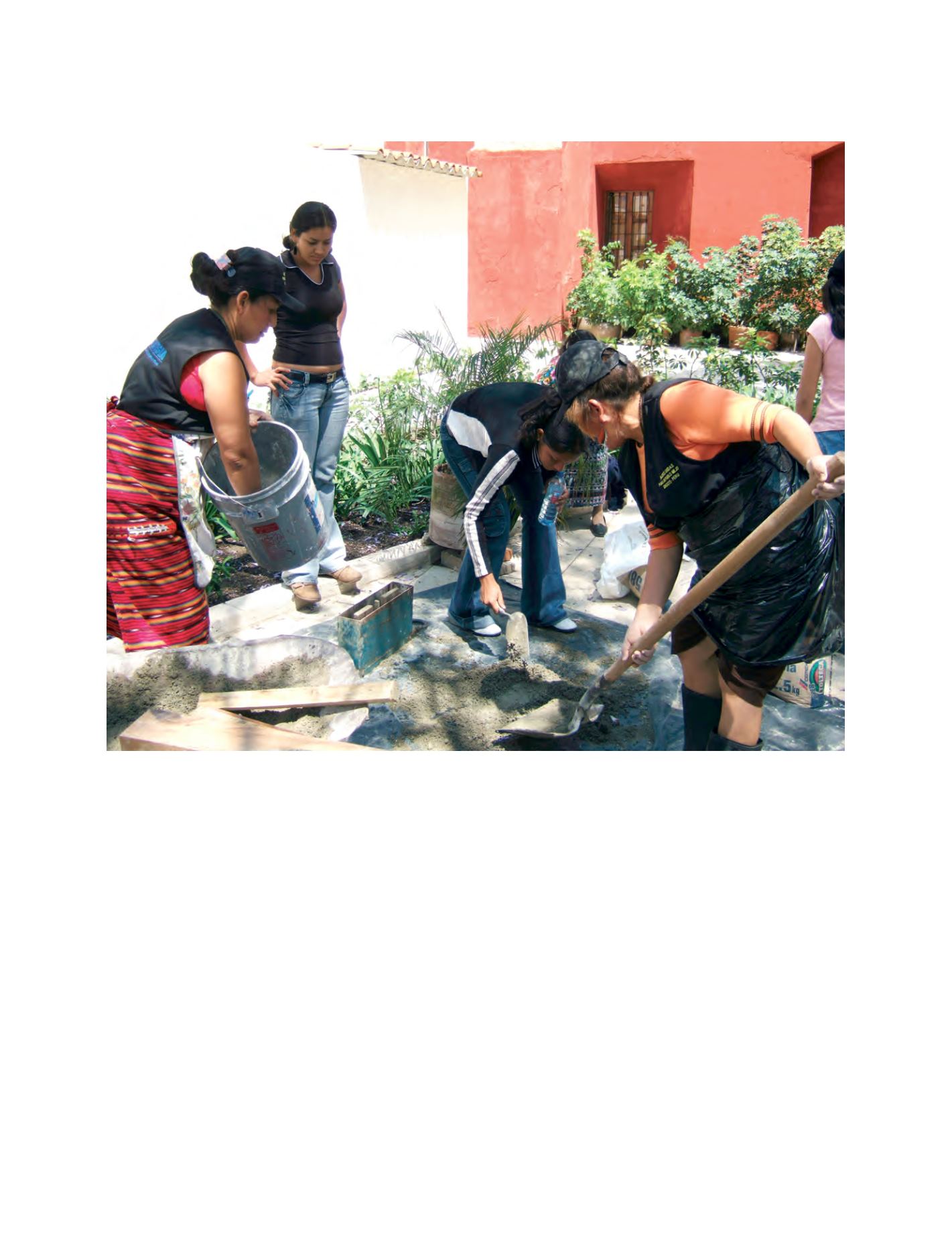
An indigenous women's group builds earthquake-resilient homes, Guatemala, March 2008
Image: Maya Schaerer, IFRC/ProVention