



 87 / 196

[
] 85
A more people-centred approach to DRR should therefore not be
seen as the sole responsibility of civil society but as a collective
responsibility of all actors in the DRR system. ProVention has over
the last years substantially increased its involvement and support for
local risk reduction work. It is developing a Community Disaster
Resilience Fund, which is being piloted in India and aims to provide
small grants directly to at risk communities. The Consortium also has
strong links with GROOTS, a global network of grassroots women’s
organizations. It is an active member of the Global Network of Civil
Society Organizations for DRR and is collaborating with the devel-
opment of the Global Alliance for DRR.
The 2008 ProVention Forum, which was held in Panamá on 8-10
April, looked at different ways to promote people-centred DRR
approaches. The Forum’s climate and DRR session discussed how
local perspectives can be integrated more effectively in global and
national policy making on disaster and climate risk. A session on
grassroots and indigenous women looked at ways to build upon
women’s skills and indigenous knowledge when developing DRR
strategies. The communicating risk session explored ways to use
participatory video to directly engage communities in awareness
raising and risk assessment. The upscaling grassroots efforts session
discussed issues of scale and sustainability of civil
society DRR initiatives. The youth session looked at
different ways to engage young people in the DRR
debate. The risk financing session discussed the role of
Public Private Partnerships in bringing together differ-
ent sets of stakeholders to address resource and
economic gaps affecting risk reduction decision-
making. Finally, the urban risk charrette included field
visits to informal settlements in Panama City and
discussions with at-risk communities. For more infor-
mation on the ProVention Annual Forum, see the forum
web page.
2
Giving local people a voice in the global DRR
processes, however, needs to go beyond inviting grass-
roots representatives to global meetings or developing
good practice CBDRM case studies. For the current DRR
system to make a real difference on the ground, a
stronger representation of civil society representatives
in key decision making bodies, an important shift in the
current resource flows and significant investments in
DRR capacity building at the local level will be required.
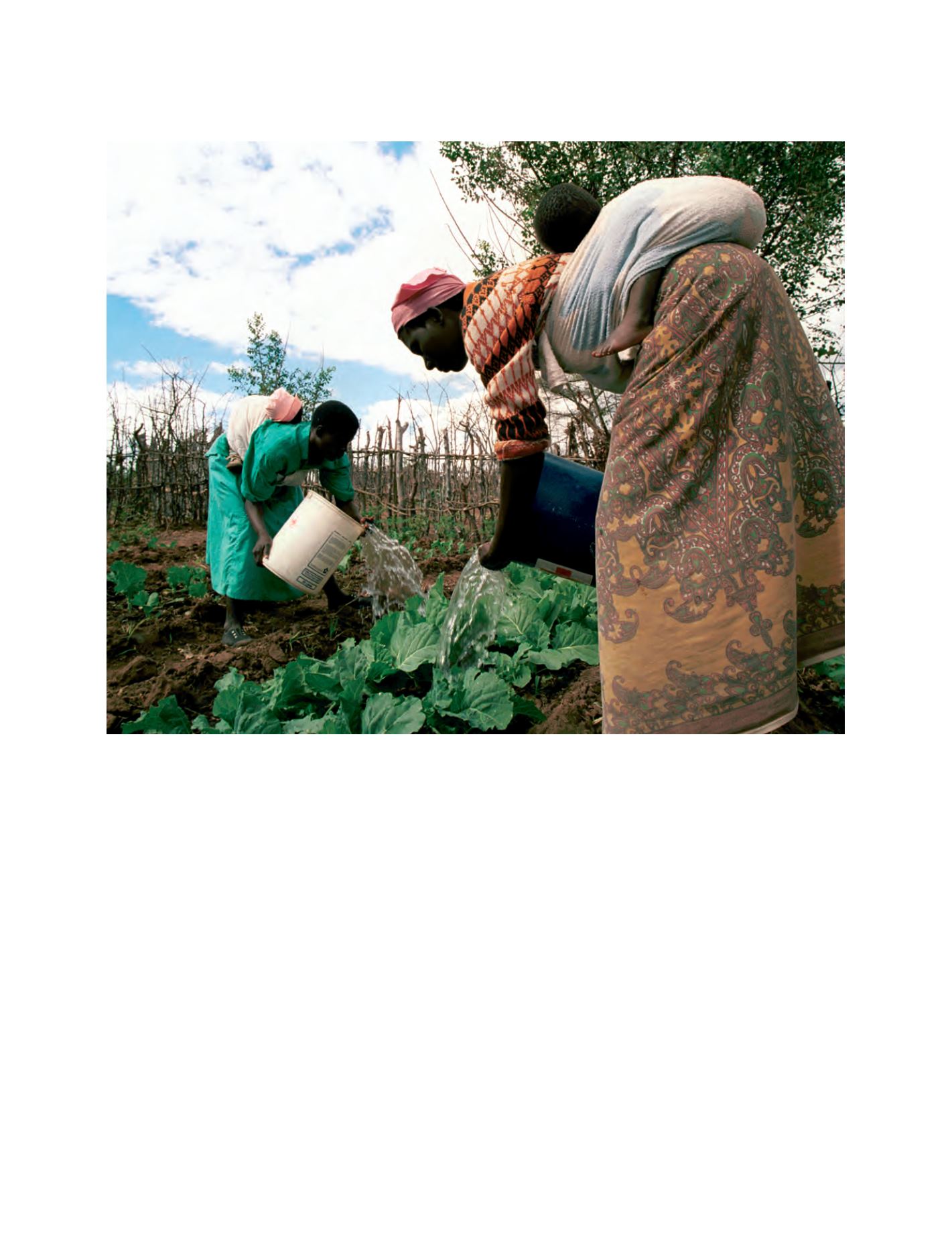
Backyard gardens improve food security for Aids-affected households in Zimbabwe
Image: Yoshi Shimizu/IFRC