


 93 / 196

[
] 91
recognize that impact is directly related to the degree of
vulnerability of an individual or community and there-
fore that risk analysis requires a detailed understanding
of hazards and vulnerability.
The reality of the countries where we work has
encouraged us to adopt a broad view of hazards. In addi-
tion to the more orthodox hazards associated with
weather, geology, and biological threats – diseases and
pests that affect humans, crops and livestock – we
recognize conflict, poor policies, poor governance,
consequences of the global economy and the impacts of
climate change as hazards that pose risks to the commu-
nities with whom we work.
Consequently, we have also taken a broad view of risk,
incorporating the concept of ‘extensive risk’
1
which is
characterized by large numbers of highly localised events
affecting relatively few people and economic assets; but
whose cumulative impact over years of cyclical recur-
rence can corrode the assets of the poor to a greater
extent than better publicised major disasters which may
result in widespread death and destruction.
The magnitude of impact that any hazard or set of
hazards will have on individual or community assets
and livelihoods is directly related to the vulnerability of
those individuals. Vulnerability describes why individ-
uals and communities are not able to anticipate, cope
with, respond to, or recover from hazards and their
impacts.
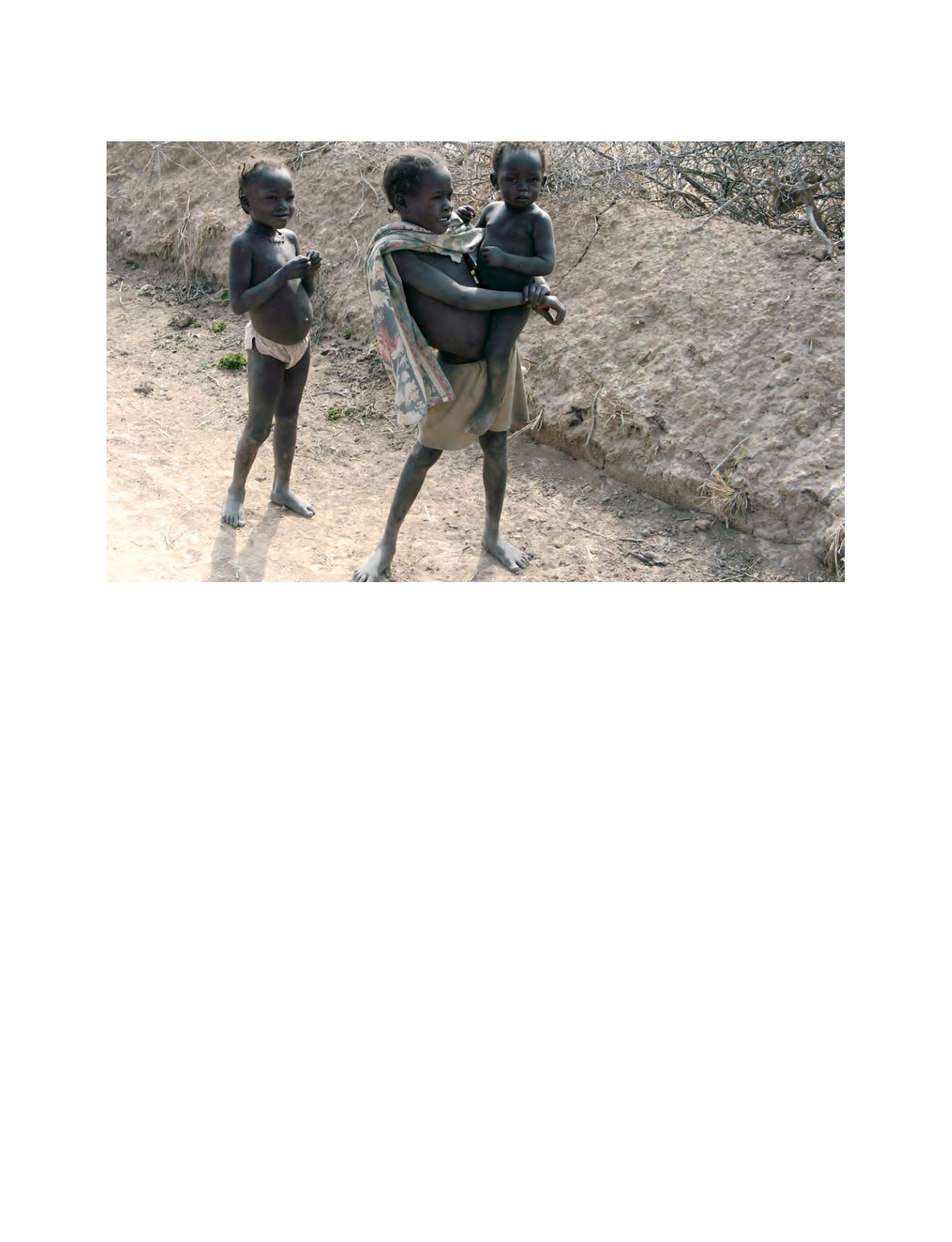
An example of the nature of extensive risk may be seen
in Nyamlel, in south Sudan, where a risk analysis process
closely related threats of fuel and food price rises. These phenomena
are already negatively impacting the countries in which we work and
disproportionately affecting the poor. The prolonged drought expe-
rienced across southern Africa in the last seven or eight years is
making maize production increasingly difficult, and the recent exten-
sive flooding in Kenya and southern Somalia are consistent with
what climate change models predict for these areas in the long term.
Generally speaking, the poor are most at risk as they tend to be
economically, socially and physically marginalized. They have fewer
resources to draw upon, have less influence over decisions affecting
their lives, risk losing a disproportionate amount of their assets in
small localized events, and may be forced to live and make their
living from environmentally degraded areas that have a high degree
of exposure to multiple hazards. It is generally accepted that devel-
opment is unsustainable without a proper understanding of how and
to what extent communities are vulnerable to disasters, and the estab-
lishment of interventions which minimize this vulnerability.
This pattern of recurrent, evolving and increasing hazards
contributes to chronic hunger and food insecurity and wide scale
environmental degradation, and puts the lives and livelihoods of the
poorest under enormous and continual stress. For Concern to
contribute to the global eradication of poverty it is essential that we
work with the poor in helping them manage risk by increasing their
resilience and capacity to anticipate, respond to and recover from
shocks and stresses.
Risk management
Over the last few years, Concern has used a working definition of
risk as being the frequency of exposure to a hazard or hazards, and
the magnitude of their impact on people’s assets and livelihoods. We
Nyamlel, South Sudan. Children play in front of an earth bund that protects agricultural land from seasonal floods
Image: Peter Crichton