


 95 / 196

[
] 93
complemented with programmes to reduce vulnerability, so as to
make appreciable differences to poor people’s lives in the shorter term.
In Zambia, the longer-term advocacy programme to strengthen the
capacity of the health services to deliver anti-retroviral to those who
are HIV positive is complemented by subsidising the cost of diesel
mills in villages – a measure which reduces the increased workload
on women resulting from the reduction of available labour in the
community because of sickness, death and nursing responsibilities.
Risk analysis, by its nature, is not restricted to one programme
sector, and therefore helps draw together the most important issues
for a community, facilitating the easier integration of programme
sectors, cross cutting issues and potential areas for advocacy at the
outset of programme identification and design. It informs geograph-
ical and sectoral programme choices, considers the affects of poverty
as well as the root causes, identifies trends, contributes to the antic-
ipation of future risk, and helps prioritize programme choices by
grouping and ranking hazards into a hierarchy. It helps suggest how
best to protect our programmes from these hazards, so as to ensure
their greater sustainability.
A preliminary risk analysis in the central highlands of Angola illus-
trated a number of these points. The Concern programme was
intending to focus on an agricultural diversity programme, education,
HIV/Aids awareness, and support to the government’s decentraliza-
tion process. However, risk analysis identified malaria as a principal
hazard as it not only threatened the health of the poor, but could
also have undermined the sustainability of the proposed programme
activities. The peak malaria season coincided with the peak agricul-
tural labour requirements (in an area that had lost most of the
draught animals and was thus highly dependent on human labour)
and would result in lower programme participation rates. The
schools programme would be jeopardized because the
incidence of malaria would lead to poor attendance, as
children would either have been sick or needed to
provide substitute labour for sick adults, and the cost of
medical care would mean the diversion of limited money
resources from school expenses. In response, Concern
determined that helping communities to address malaria
– through expanding the roles of existing partners or
encouraging specialist malaria focused organizations to
work in the area – would have to be an essential
complementary activity to the programmes already iden-
tified.
Our mandate directs us to work in a group of
extremely poor countries, many of which are regressing
economically, almost all of which are threatened by
recurrent hazards, and all of which have large – and in
many cases increasing – numbers of people living in
absolute poverty.
Given the predictable nature of hazards in almost all
of our target countries, and their impact on the poorest
people living in them, the key issue for us is to trans-
late this appreciation of the centrality of risk
management into good, documented practice. To pursue
this we have identified seven countries in Africa, Asia
and the Caribbean where, over the next three years, we
will focus on geographical areas where the risk manage-
ment approach – using risk analysis as a primary driver
of programme design – is adopted. It is intended to
document and disseminate lessons learnt and examples
of good practice from this initiative.
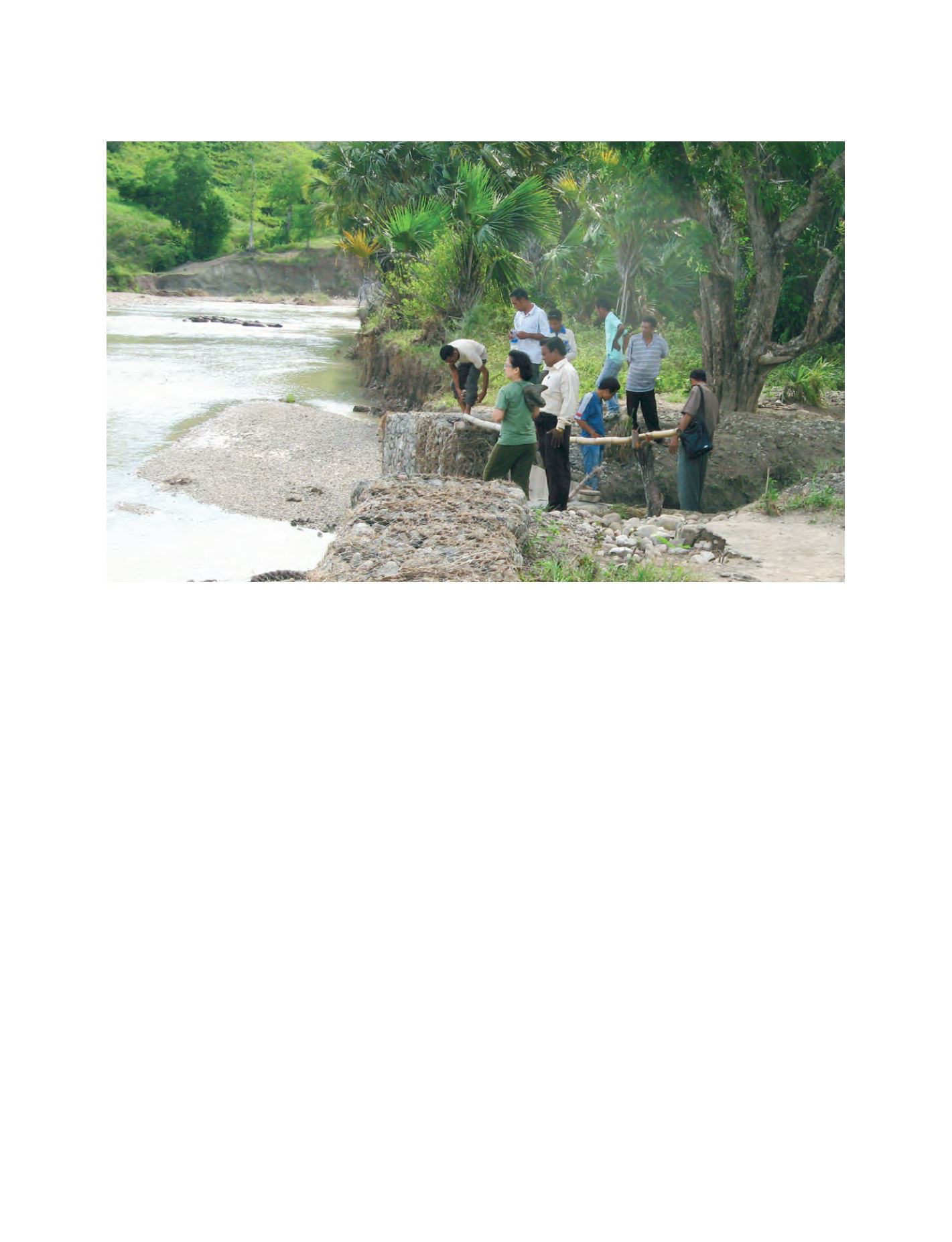
Lautem, East Timor. Locals maintain their livelihoods by protecting irrigation canals
Image: Peter Crichton