


 83 / 196

[
] 81
district, and briskly embedded some of the findings of
PADR; the laying out of evacuation routes, community
infrastructure and connectivity, for example. FFW inter-
vention addressed household food insecurity for a period
of three months, reinstated community infrastructure such
as roads and ponds, rebuilt damaged individual houses
with raised platforms and laid out evacuation routes as
designed by the community. Moreover, the involvement of
the community in the process worked as a safety valve to
ventilate the psycho-social trauma that arose out of flood
hazard, thereby restoring their sense of confidence.
The FFW intervention produced a conducive atmos-
phere for long-term intervention in community-based
disaster management, with a focus on risk reduction that
involves community preparedness, mitigation and
response. Considering resource availability and programme
feasibility options, 20 villages of the Andhrathari,
Madhepur and Khutona blocks of Madhubani district were
chosen as the operational area, with the support of DFID
through Tearfund UK and Tear Australia.
The following components of disaster risk reduction
(DRR) were nestled into the community mobilization
process.
A Disaster Risk Reduction Fund (DRRF), as enshrined
in the disaster management act 2005, was introduced
into the community discussion process as part of
preparedness measures against the floods. The commu-
nity, despite initial inhibitions, unanimously decided in
favour of it, and decided to contribute INR5-10 per
family per month, (the figure varies from village to
village). In a span of three months the DRRF was set up
in all the villages. As of March 2008 the total amount of
INR125,000 had been deposited. The fund came to the
aid of the community during the 2007 flood by propping
up its foodstuffs purchasing power during the emergency.
For instance, the people of Gandhrain and Bhadwar
villages in Andhrathari block managed to purchase food
grain that sustained them for about seven days during
the emergency. Relief assistance (both from government
Relief intervention in 2004 worked as a catalyst to build rapport with
flood-affected communities in Bihar, allowing EFICOR to think about
long-term intervention in terms of rehabilitation.
A planning tool process called Participatory Assessment of Disaster Risk
(PADR) was initiated in November 2004 to understand the community
perspective on disaster management, which enveloped hazard assessment,
risk associated with hazards, vulnerability assessment and community
coping capacity. The PADR process gave EFICOR a chance to replicate
the lessons gleaned through the Disaster Mitigation and Preparedness
Program (DMPP) implemented in the flood affected Khammam district
of Andhra Pradesh, with the support of Tearfund UK in 2003.
Subsequently, a food for work (FFW) programme ensued for a period
of three months with the support of the Canadian Food Grain Bank
(CFGB). The programme was implemented in 20 villages of Madhubani
Policy influencing
and ensuring
governance
Disaster Risk
Reduction to build
a resilient
community
Diversification
of livelihood in
primary sector
Community
capacity
building Disaster
Management
Committee
& Taskforce
Disaster Risk
Reduction Fund
Preparedness
measures and
mitigation
structures
The community mobilization process includes several
components of DRR
Source: EFICOR, DRR Project, Madhubani, Bihar
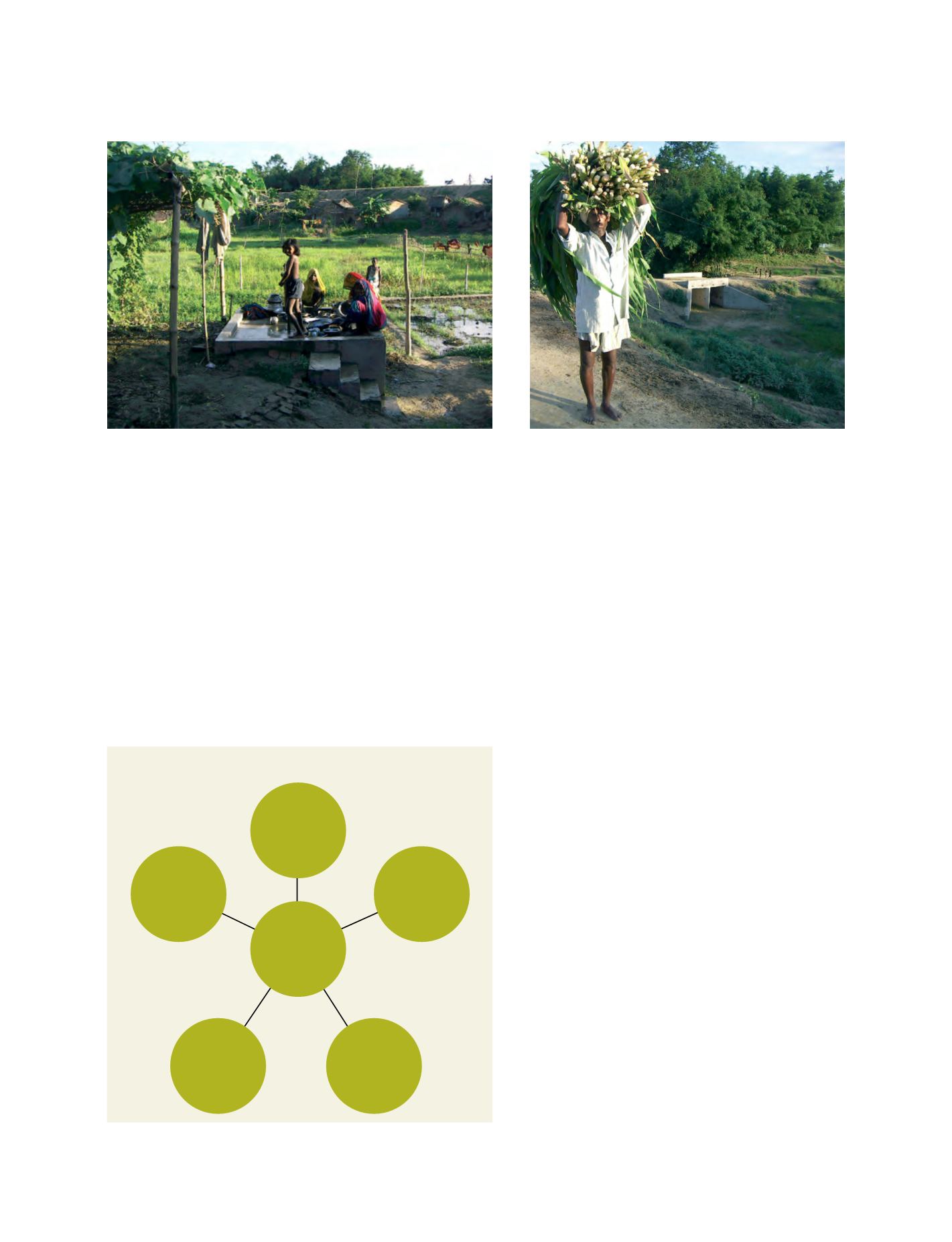
A high raised tube well which provides safe drinking water
Image: EFICOR, DRR Project, Madhubani, Bihar
A farmer carries sugar cane (an early crop) bundle
Image: EFICOR, DRR Project, Madhubani, Bihar