



 138 / 218

[
] 136
T
HE
C
ARIBBEAN IS
often described as one of the two most
natural-disaster prone regions in the world by virtue of
its geographic location and geological setting. The
geographic location of the islands of the Caribbean coincides
with a zone of severe tropical storm activity and converging
unstable air masses that traverse the region annually between
June and November. Many of the islands of the Caribbean owe
their origin to the volcanic activity present at the zone of subduc-
tion where the Caribbean plate overrides the Atlantic plate.
Because of their genesis and location, many of the islands are
subject to volcanic eruptions, earthquakes, and other associated
phenomena including tsunamis. In an effort to reduce the poten-
tial impacts of natural disasters in the region, an extensive range
of disaster mitigation, preparedness and reduction strategies have
been developed and implemented at national and regional levels.
Programmes related to weather
phenomena in the Caribbean
Weather-related phenomena significantly affect the socio-
economic development of Caribbean countries through
impacts on public health, agriculture, and tourism. The most
recent example demonstrating the intricate relationship
between weather-related phenomena and national develop-
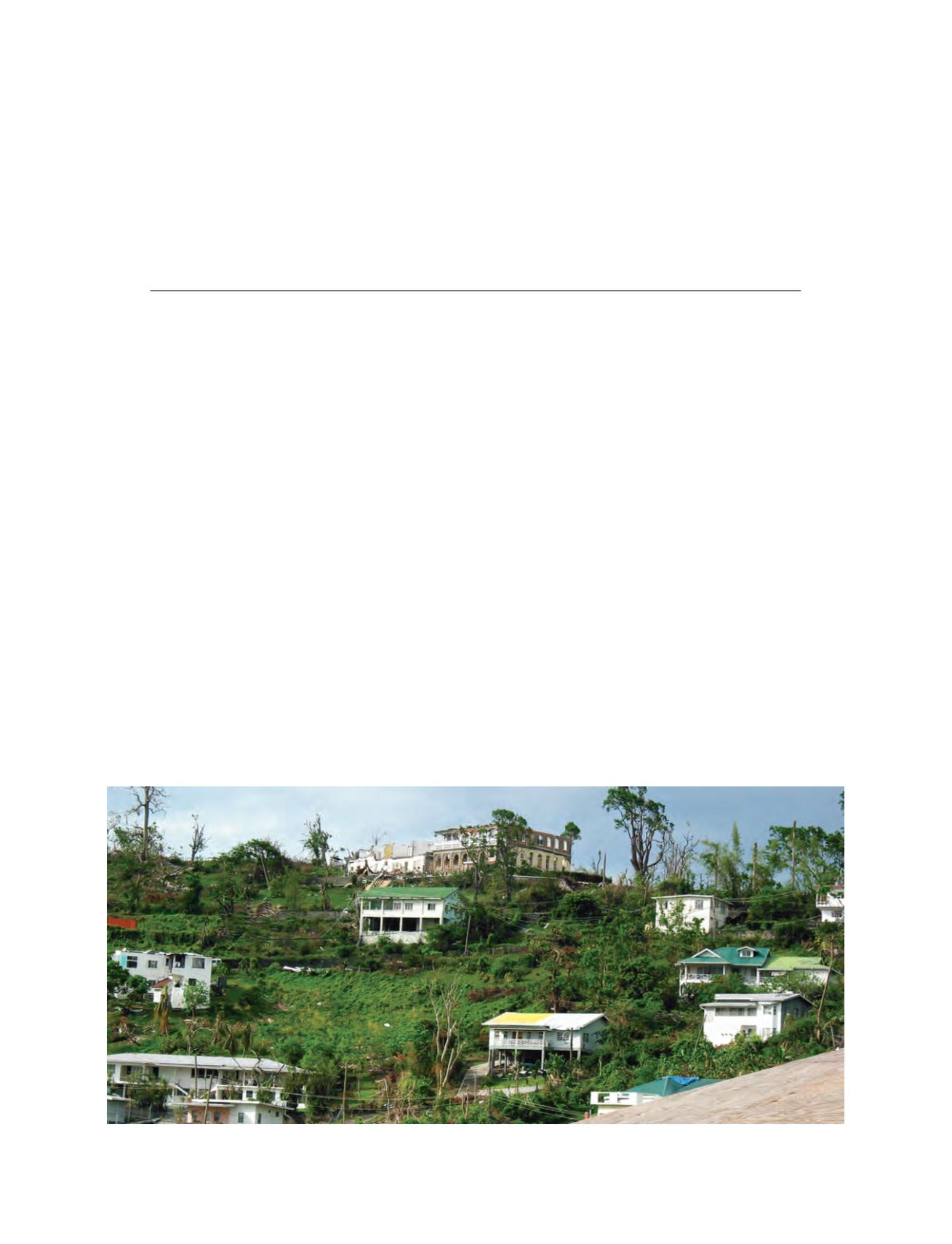
ment within the Caribbean is the impact on Grenada following
the passage of Hurricane Ivan in 2004. In addition to a signif-
icant death toll, 90 per cent of structures were either damaged
or destroyed in the wake of Ivan. The nutmeg industry, which
accounts for a significant amount of the island’s foreign
exchange earnings, suffered a tremendous setback that will
take decades to mitigate.
The Caribbean Disaster Emergency Response Agency
(CDERA) is a Caribbean community and common market
(CARICOM) organization responsible for coordinating disas-
ter management including risk reduction, preparedness and
mitigation across member states in the Caribbean region.
However, each member state generally has at least one agency
that is responsible for national disaster management and
which coordinates its activities with CDERA. Given the
annual passage of hurricanes through the Caribbean region,
most of these national agencies have a strong focus on
Climate change and its impact on natural
risk reduction practices, preparedness and
mitigation programmes in the Caribbean
David A. Farrell, Kathy-Ann Caesar, and Kim Whitehall,
Caribbean Institute for Meteorology and Hydrology, Barbados
Property damage on Grenada caused by Hurricane Ivan. Damage to the official Governor General’s residence is shown in the top portion of the image
Photo: Esther Jones